Return Policy: What Shoppers Should Know Before Buying
Key Takeaways
- Return policies define how long you have for returns, the condition of the product, and what happens when you return it: a refund, replacement, or store credit.
- Before you buy, you should look into the cost of return shipping, any exceptions for certain products, how fast you get your refund, and whether there are any special rules for marketplaces.
- Comparing the store return policy with return policies of other companies could help you avoid surprises.
Online shopping makes product and price comparisons much easier. However, returning items that do not fit your requirements may prove to be difficult at times. It is therefore necessary to understand the terms and conditions of a store before placing an order so that you are prepared for any hidden costs and deadlines. No matter whether you want to buy clothes, electronics, or anything else related to home requirements, certain things need to be considered with respect to the return policy.
What Is a Return Policy?
A return policy refers to the guidelines set by the store regarding the return of goods purchased. This includes items that can be returned, when you can return them, their condition at the time of return, how you’ll receive your refund, and if there are shipping costs.
These guidelines are important because products ordered online may not be what you expect. The clothing may not be the right size, electronic equipment may lack some features you thought were there, or household items may look different from their pictures. With these guidelines, you will know what options are available in case such problems occur.
There is no standard return policy, however. One store may allow unopened products for return after 30 days, while another allows more time for eligible products to be returned. While one store allows returns without paying for the shipping cost, another one will reduce the total refund to cover the cost of shipping.
Knowing this information will help you determine the real cost and convenience of the products you want to purchase.
What Should You Check Before Making a Purchase?
It becomes even more critical to check the return policy before buying a costly product, apparel, a gift item, or anything hard to assess from pictures.
Return Period and Eligibility
The return period is the time retailers accept eligible products back. The start of the return period may vary depending on the retailer and is calculated either from the date of purchase or delivery.
Determine if the return deadline for all products in the store is the same or if it varies according to item categories. Sometimes electronics, personalized products, clearance items, hygiene products, or whatever else might come with their own set of requirements. If an item is designated as final sale, it means that it cannot be returned just because you changed your mind about it.
Refund Policy and Fees
See whether you will get your money back through the same payment instrument or in the form of store credit. The latter is convenient if you shop at this store regularly, but not if you do not want to continue dealing with it anymore.
Also look out for any costs involved in returning a product, such as shipping costs, restocking costs, etc.
Condition and Documentation of Product
Whereas some stores accept products that have been opened, other stores will only accept unused products with tags, packaging, or accessories intact. It is advisable to retain the order confirmation and invoice until the transaction has been completed.
Spending a few minutes to check out these conditions would save trouble later on.
How Do Online Returns Work?
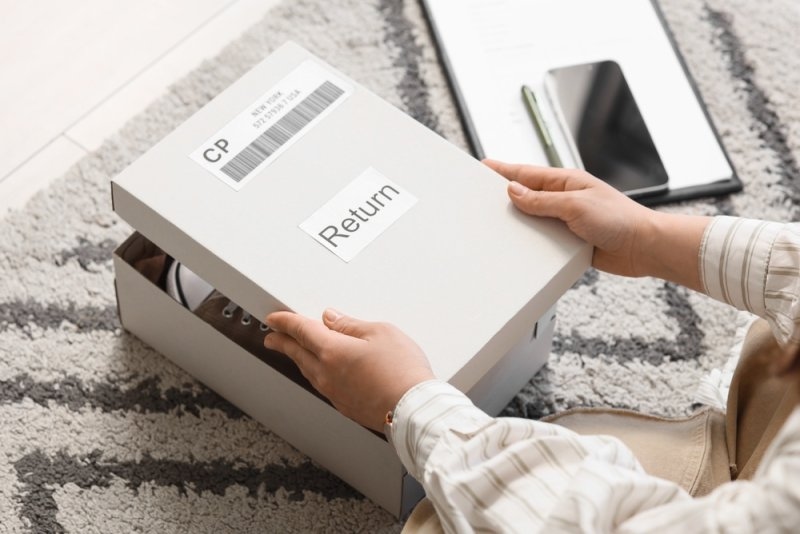
Understanding how online returns work will make the process much simpler, especially for shopping on a marketplace with different sellers. While there may be some variations, most online returns will typically go through the following process.
- Check the requirements for the return. Go to the return page or the order details page provided by the seller. Find out about deadlines, products you can return, refund options, and other information.
- Submit a return request. Select an order to return and give a valid reason for the return. Follow the seller’s guidelines for this.
- Pack the item to be returned. All the tags and paperwork you have to put on. Ensure that the item is suitably packed so that it does not get damaged when it is returned.
- Return the item. Use the enclosed shipping label or drop your item off at the seller’s location. You will be given a receipt for the return.
- Process the refund. The seller may examine the item to confirm its eligibility for return. After this, the payment processor may take some more time to refund your money.
Never assume that simply dropping off the package means that your refund request has been granted. You need to save the tracking information in case the process takes too long.
For returns made on marketplaces, find out whether the refund needs to be returned to the marketplace or directly to the seller since this may vary even with similar websites.
How to Compare Return Policies Effectively?
A good way to compare return policies would be to go beyond the number of days. Time is useful, but longer time periods do not necessarily mean greater convenience or lower prices.
Comparison of retailers based on these criteria:
- Return period: What is the duration, and what are the starting conditions?
- Charges for shipping returns: Is it paid, prepaid, or deducted from the refunded amount?
- Refund methods: Is it possible to get the refund using the same method as the payment was made?
- Return policy: Are there any conditions regarding unopened, unused products in original packaging, etc.?
- Exclusions: Is there anything special regarding sales, electronics, custom-made products, marketplace products, etc.?
- Process of returning: Is it possible to return in person at the nearest store or only by mail?
- Processing time: How long does processing take?
For instance, two retailers offer headphones. The first one gives you 30 days to return but charges the cost of return shipping. The second retailer gives you 21 days but provides free returns. If you feel confident about the purchase, either choice will work. However, if you have any concerns regarding the compatibility of the product, the first choice will be preferable.
What Makes a Store Return Policy Customer-Friendly?
A customer-friendly returns policy for an e-commerce site is a good mix of sensibility and clarity of rules. When customers order a product, they should know exactly what they’re getting without the need to reach out to the support team repeatedly.
Good, generous time limits are useful, especially if the item is a gift or requires testing. But easy steps to follow are also important. This can include the download of return shipping labels, convenient drop-off facilities, appropriate refund notification, and fees.
Also, customer service is required to resolve any issues regarding the damage or wrong shipment of the product.
Examples of Various Policies for Various Purposes
Look at some examples in the context of online shopping:
- Garments and shoes: Adjustable policies, size details, and realistic return durations may assist if the proper fit is uncertain.
- Electronic devices: Issues related to compatibility, activation, accessories, and reduced return time limits should be considered.
- Furniture and household items: Return of such items may depend on large-item pickup fees, assembly needs, and packaging guidelines.
- Gift items: Additional holiday return deadlines and gift receipts can simplify the return process for the recipients.
- Custom-made products: It is worth noting that customized items are not eligible for standard change-of-mind returns, but there can be solutions for faulty and incorrect orders.
These examples explain why shoppers should consider the real item and not presume that all products of the same seller have the same policy.
You may also like: Why Standing Desks Are Essential for a Healthy Workspace
Are Return Policies the Same as Your Legal Rights?
No. There is a link between the voluntary return policy of a merchant and a buyer's rights, but these two notions should not be treated as one and the same.
In the United States, retailers have the right to develop their own policies on how they handle returns due to buyer's remorse under the condition that such policies are legal. Defective goods, fraudulent advertising, incorrect delivery, and others may be covered by different regulations.
There may be some differences between the policies depending on the state, nature of transaction, and particular details of the sale.
Do not think that just because there was a sign “final sale,” everything will be fine. On the contrary, it would be wrong to think that any purchase that you did not like automatically entitles you to a refund.
For cross-border purchases, consider the seller's location, delivery arrangements, and applicable consumer rules. A policy written for one country may not describe every protection available to a shopper elsewhere.
Common Return Mistakes to Avoid
Even a flexible policy may not help if you miss its requirements. A few tips will make sure that you don't end up paying extra, both in terms of money and wasted time, during a return process.
- Waiting until the last minute: The sooner you start the process after deciding that an item doesn't suit you, the better. Late deliveries and approvals can complicate the process.
- Throwing away the packaging too soon: Packaging material, boxes, and other protective stuff may be necessary, especially when it comes to electronics.
- Thinking that the shipment will be free: Don't believe in the general reputation of the seller; check the individual policy for each order.
- Shipping an item without permission: Some sellers require an approval process before sending the items back.
- Neglecting the refund notification: Keep all the relevant emails and tracking information in case the process takes longer than usual.
- Confusing the exchange for a refund: It is essential to know whether the seller plans to return the money or exchange the item.
This list will prove useful when making a pricey purchase.
How To Make Smarter Shopping Decisions?
When purchasing, the product must be evaluated along with the potential for returning it. To do so, one should study product specifications, sizing information, vendor reviews, warranty conditions, and return policy requirements.
Then, one should take into account the overall price of the item and not only its cost. It is important to include delivery costs, restocking fees, and the period needed for arranging the return. When the product is bought from an independent seller, check the conditions on the retailer's site and the seller's site independently.
Lastly, keep a record of the policy or order form when purchasing an expensive item. Retailers can change their return policy, and it may become useful in case of a dispute.
Also Read: Save More With the Best Time to Buy a New Phone This Year
Conclusion
Understanding the return policy could mean the difference between a hassle-free shopping trip and an expensive one. Make sure to check out the return period, terms for a refund, any costs associated with sending back items, and any limitations per item before making a purchase. Do not judge stores simply by their prices; instead, consider all other aspects in comparison with the others.
Frequently Asked Questions
Can a retailer change its return rules after I place an order?
A retailer can revise its policy, but whether and to what extent a revision impacts an existing purchase will depend on terms, timing, and laws in effect. Be sure to save any policy and order confirmation in effect at the time of purchase.
Is returning an item the same as canceling the warranty on that item?
No. Returning and warranties are two different things. A warranty is applicable for a certain period of time and covers eligible defects, whereas a return policy concerns whether the seller will accept a return.
What if the seller refuses my return?
Look at the reasons behind the refusal in comparison with the policy and order documentation. Contact the seller to clarify the situation and submit any documentation.
Can I return a product without its original box?
That depends on the retailer, product category, and reason for return. Some accept eligible products without their original packaging, while others require it. Check the specific terms before shipping the item.
How can I avoid losing money on a return?
Check the deadline, refund method, shipping fees, and condition requirements before buying. Keep proof of purchase, follow the approved return procedure, and retain tracking information until the refund is complete.