Tretinoin vs Retinol: Which One is Right for Your Skin?
Key Takeaways
- The choice between Tretinoin vs Retinol is about your skin objectives, tolerance, and the amount of time you have for results.
- Tretinoin is quicker to act for acne and to give results for visible aging and can be more irritating.
- Retinol is milder with less associated itchiness, making it appropriate for a novice or those with sensitive skin.
- Although both ingredients benefit anti-aging skincare, they fit various skin types.
- It is more important than having the strongest moisturizer that you use a consistent, smooth skin routine.
Determining the right skin care product to use is more difficult than it sounds. The comparison of Tretinoin vs Retinol is bound to come up when you go to any pharmacy and search online. Neither promises to make the skin soft and smooth, to bring about a reduction in wrinkled skin, to clear the skin pores, nor to bring about a healthier look to the skin.
The better choice isn't necessarily based on fashion; it is based on your skin goal, knowledge, and tolerance. Not all of the time, the option to choose the more powerful product is not the smartest choice. In this blog, you will know the difference between Tretinoin vs Retinol, know how each ingredient works, and know which one can better be employed for your skin care regimen.
Understanding Tretinoin vs Retinol Before Choosing
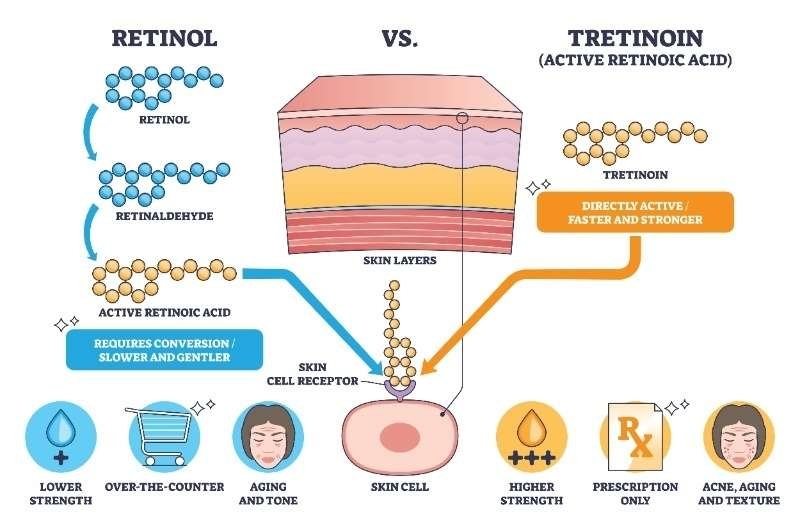
The debate around Tretinoin vs Retinol usually starts with one question: aren't they basically the same? Not exactly. Both belong to the vitamin A family known as retinoids. They improve skin renewal, increase collagen production, and unclog pores, plus gradually reduce fine lines and uneven texture. Still, the path they take inside the skin differs.
Tretinoin vs Retinol is really a comparison between immediate activity and gradual conversion. Tretinoin is already active when applied. Retinol must first convert into retinoic acid inside the skin before it starts working.
How Does Tretinoin Work Beneath the Skin?
Tretinoin is a prescription retinoid that talks right to your skin cells. It gets them turning over faster, keeps pores clear, fades acne marks, and helps your skin make more collagen—usually working quicker than most other creams.
Because Tretinoin gets to work right away, you'll often notice changes sooner. But that power has a downside: your skin might get dry, peel, turn red, or feel irritated at first. It’s normal, just part of your skin adjusting. Easing in slowly usually leads to better, more comfortable results down the line.
How Does Retinol Support Gradual Skin Renewal?
Retinol is more of a slow burner. It has to go through a few steps before becoming active. That slower path makes it easier on your skin, but it still improves texture and tone if you stick with it.
Lots of people start their skin routine with retinol because it strikes a nice balance—it’s effective but easy on new users. The changes take a while, but you’re less likely to quit from irritation. It’s just more beginner-friendly.
Don't Miss: Decorate And Save: Furnish Every Room Without Breaking the Bank
Comparing Retinol vs Tretinoin Side By Side
Understanding Retinol vs Tretinoin becomes much easier when both ingredients are compared directly.
| Feature | Tretinoin | Retinol |
|---|---|---|
| Strength | Prescription strength | Over-the-counter ingredient |
| Speed of Results | Usually faster | Gradual improvement |
| Skin Irritation | Higher during adjustment | Generally milder |
| Best For | Moderate acne, wrinkles, sun damage | Early aging, texture improvement, and beginners |
| Availability | A prescription is required in many countries | Easily available in skincare products |
Looking at Tretinoin vs Retinol, neither product wins every category. Honestly, there’s no universal winner here. What works best depends on you and your skin.
If you’re fighting stubborn adult acne, you’ll probably get better results with tretinoin. Meanwhile, a person in their late twenties starting anti-aging skincare may achieve excellent results using retinol consistently without experiencing significant irritation.
Suggested Reading: Ultimate Guide to the Best Kitchen Gadgets and Appliances
Choosing Based on Your Skin Goals
Many skincare routines fail because people choose products based on popularity instead of purpose. The Tretinoin vs Retinol discussion should begin with one simple question: What problem are you trying to solve?
The answer changes everything.
Tretinoin Works Better for Visible Skin Correction
For deep wrinkles, stubborn dark spots, or skin that’s been through a lot of sun, tretinoin is usually the heavyweight champion—it acts directly on skin cells, so you see results faster than with retinol.
That doesn't mean faster is always easier. During the first few weeks, peeling, dryness, or sensitivity may increase before the skin adjusts. Patience matters here.
Retinol Fits a Preventive Anti-Aging Skincare Routine
People who are just beginning anti-aging skincare often benefit more from retinol. It encourages collagen production gradually, softens fine lines, improves skin texture, plus supports healthier-looking skin without overwhelming it.
For many users, retinol becomes the foundation of a long-term smooth skin routine because it is easier to tolerate several nights each week. Slow progress is still progress.
Also Read: Why Pure Beech Jersey Knit Bed Sheets Are Worth Investing
Final Thoughts
When you're applying an anti-aging regimen, don't assume that one is more effective than the other; it's about picking the one that works best for you. It's about identifying the one that will definitely do your skin a favor in the long run. Both have amazing properties to enhance texture, boost collagen production, diminish visible wrinkles, and provide healthier-looking skin. The difference is the strength, speed, and the skin's response.
For people starting their skincare routine, it's quite often easier to maneuver into anti-aging care using retinol, and it helps you create a consistent, smooth skin routine. When you're considering a skincare line for topical care, you might want to try Tretinoin for persistent acne, deeper wrinkles, or severe sun damage—with medical supervision, of course.
To get cash back, deals, and shopping rewards on your skincare, you must check out Items.
Frequently Asked Questions
Is it safe to use tretinoin or retinol around the eyes?
Yes, but carefully. The skin around the eyes is more delicate and sensitive. Use a very small amount and never go closer than your eyelids, and if it is dry, use a moisturizer after use.
Is it possible to change from retinol to tretinoin later?
Absolutely. Many people start off using retinol to get their skin accustomed to the product before then switching to tretinoin (with medical supervision). Typically, a gradual change is much more manageable.
How long does it take for results to show up?
Within a couple of weeks, most people would feel smoother skin, but the actual results in wrinkles, pigmentation, or acne are visible after two to six months. It's consistency that is more important than applying more.
Is age a factor when deciding between tretinoin and retinol?
There is an element of age, but more of skin. For a person experiencing acne in his 20s, Tretinoin may be effective, whereas for someone who has sensitive skin in his 40s, regular use of Retinol could produce better results as part of an anti-aging skincare regimen and a smooth skincare routine.