

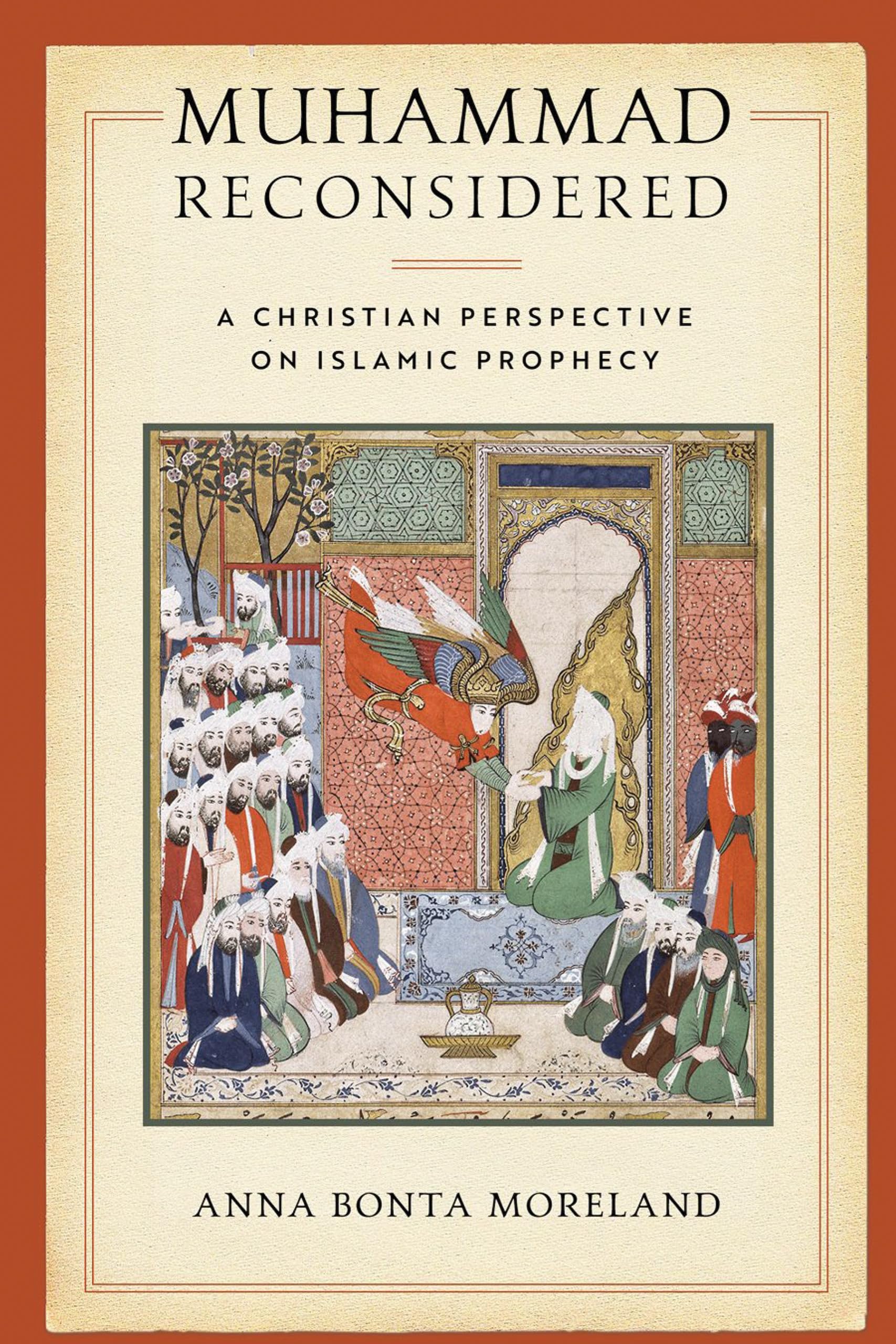
Muhammad Reconsidered rectifies the failures of scholarly attempts to understand Islam in the West and to take Islamic theology seriously . Engaging Islam from deep within the Christian tradition by addressing the question of the prophethood of Muhammad, Anna Bonta Moreland calls for a retrieval of Thomistic thought on prophecy. Without either appropriating the prophet as an unwitting Christian or reducing both Christianity and Islam to a common denominator, Moreland studies Muhammad within a Christian theology of revelation. This lens leads to a more sophisticated understanding of Islam, one that honors the integrity of the Catholic tradition and argues for the possibility in principle of Muhammad as a religious prophet. Moreland sets the stage for this inquiry through an intertextual reading of the key Vatican II documents on Islam and on Christian revelation. She then uses Aquinas's treatment of prophecy to address the case of whether Muhammad is a prophet in Christian terms. Muhammad Reconsidered examines the work of several Christian theologians, including W. Montgomery Watt, Hans Küng, Kenneth Cragg, David Kerr, and Jacques Jomier, O.P., and then draws upon the practice of analogical reasoning in the theology of religious pluralism to show that a term in one religion―in this case “prophecy”―can have purchase in another religious tradition. "Moreland begins this book by taking issue with Samuel Huntington's well-known essay/book The Clash of Civilizations (1993/1996). Huntington argued that there was a fundamental incompatibility between Islamic cultures and Western cultures influenced by Christianity. Moreland argues, contra Huntington, that Christians and Muslims can dialogue about Mohammed from a Christian perspective on Islamic prophecy." ― Choice "Anna Moreland's illuminating and powerfully argued book is essential reading for anyone concerned about how Catholic Christians should engage with their Muslim neighbors. It provides an insightful and badly needed account of how, according to Aquinas, God communicates through prophetic utterances and acts. This is theology at its best." ―Alasdair MacIntyre, author of After Virtue and Dependent Rational Animals "Anna Bonta Moreland's Muhammad Reconsidered makes a significant contribution to Catholic theology of Islam and interreligious dialogue between Muslims and Christians. Her style is lucid, learned, and accessible. She opens new doors. This book will be of interest to Christian and Muslim scholars and the lay public." ―Gavin D'Costa, University of Bristol “Due to its focus both on issues directly related to dialogue as it has developed over the last quarter century or so and on the historiography of Christian engagement with Islamic theology, Anna Bonta Moreland's Muhammad Reconsidered can be one of the foundational texts in the discipline.” ―Zeki Saritoprak, author of Islam's Jesus Anna Bonta Moreland is associate professor of theology at Villanova University. She is the author of Known by Nature: Thomas Aquinas on Knowledge of God . A genuine understanding of religious traditions has become a theopolitical necessity in the West. While many secularists expected an inevitable decline of religious belief as Enlightenment modernity took hold around the globe, it seems that the exact opposite has occurred. As the authors of God’s Century: Resurgent Religion and Global Politic wrote in 2009, “Over the past four decades, religion’s influence on politics has reversed its decline and become more powerful on every continent and across every major world religion.” These authors argue that despite the prediction of the “secularization theory,” the twenty-first century can ironically be coined “God’s Century.” In other words, religion has become and will likely continue to be a vital player in the global political realm. With regard to Islam in particular, Europe is now facing an influx of Muslim immigrants that does not fit this myth of the emergence and death of religion, does not subscribe to the seventeenth-century theists’ understanding of religion, and rejects the religious/secular divide imposed by European colonialists. For many new residents of Western Europe,religion forms the central fabric of their lives. How will a post-Christian Europe absorb these new residents into their local communities? And how will it develop an understanding of Islam that does not reduce it to modern universal principles applicable to anyone or equate it with extreme acts of violence? Instead of shoehorning Islam into modern fabrications of “religion,” fruitful dialogue could emerge if we read Muslim religious claims through Christian theological traditions rather than in spite of them. Pierre Manent persuasively argues in Beyond Radical Secularism (2016) that Europeans (in his case, his fellow French citizens) are ill prepared both to incorporate Muslims into their political community and to understand Islam. This is due not only to prejudices
| Gtin | 09780268107253 |
| Age_group | ADULT |
| Condition | NEW |
| Gender | UNISEX |
| Product_category | Gl_book |
| Google_product_category | Media > Books |
| Product_type | Books > Subjects > Religion & Spirituality > Christian Books & Bibles > Theology > Ecumenism |