

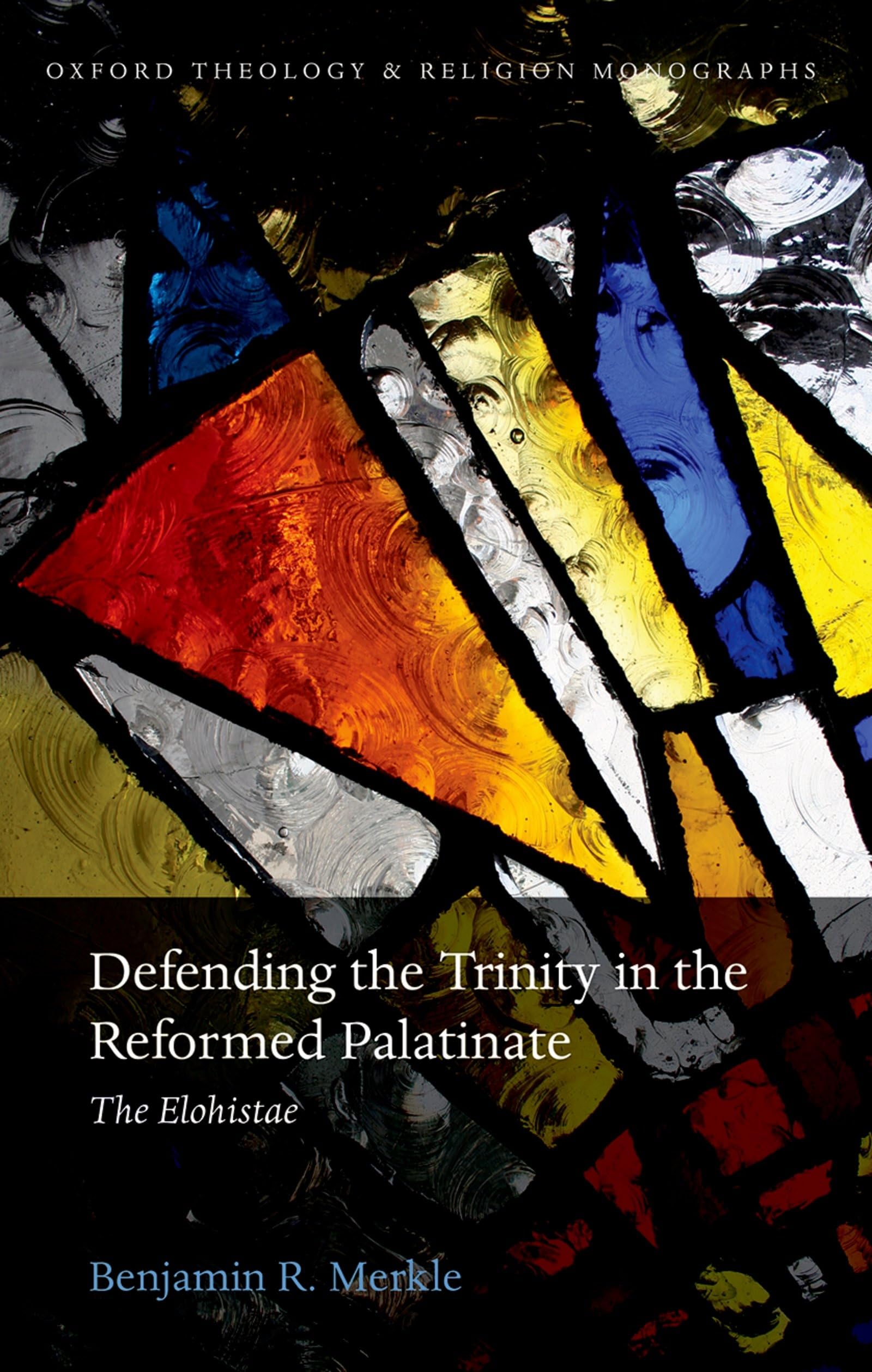
This study centers on Girolamo Zanchi's De Tribus Elohim (1572), placing it in its political and theological setting. De Tribus Elohim focussed on the grammatical peculiarity of the Hebrew word Elohim (God). "Merkle's careful analysis of Zanchi's De Tribus Elohim and its reception may serve as a helpful introduction to the variegated 'world of Reformed exegesis.' Defending the Trinity is recommended for readers interested in the history of scriptural interpretation and the development of trinitarian theology within the early modern Reformed tradition."--Brent A. Rempel, Reading Religion This study centers on Girolamo Zanchi's De Tribus Elohim (1572), placing it in its political and theological setting. "Merkle's careful analysis of Zanchi's De Tribus Elohim and its reception may serve as a helpful introduction to the variegated 'world of Reformed exegesis.' Defending the Trinity is recommended for readers interested in the history of scriptural interpretation and the development of trinitarian theology within the early modern Reformed tradition."--Brent A. Rempel, Reading Religion This study centers on Girolamo Zanchi's De Tribus Elohim (1572), placing it in its political and theological setting. Benjamin R Merkle is a Fellow of Theology and Classical Languages at New Saint Andrews College, in Moscow, Idaho. Benjamin R Merkle is a Fellow of Theology and Classical Languages at New Saint Andrews College, in Moscow, Idaho.
| Gtin | 09780198749622 |
| Mpn | 60120 |
| Age_group | ADULT |
| Condition | NEW |
| Gender | UNISEX |
| Product_category | Gl_book |
| Google_product_category | Media > Books |
| Product_type | Books > Subjects > Religion & Spirituality > Christian Books & Bibles > Bible Study & Reference > Commentaries > Old Testament |