

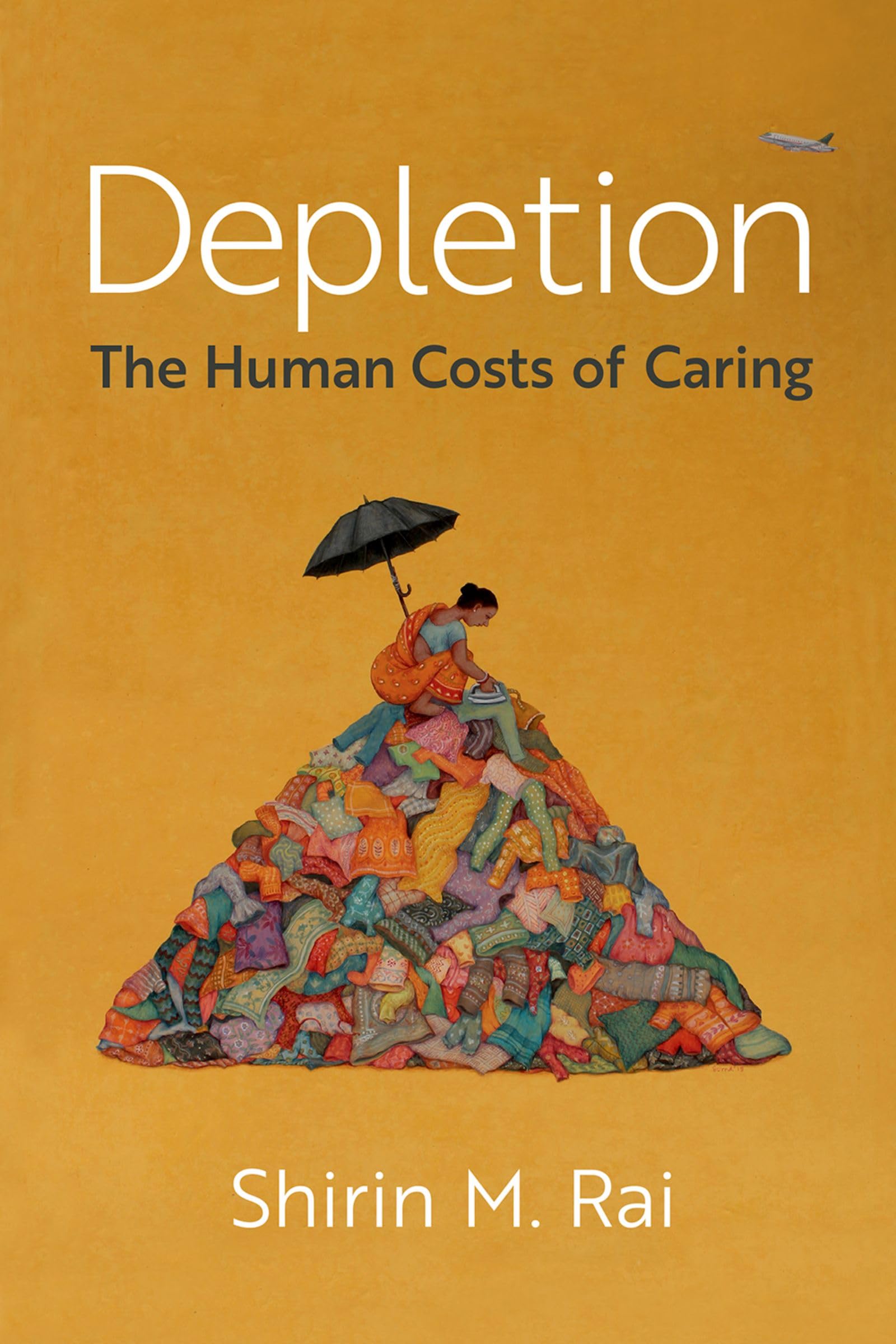
When thinking about the work of caring for others we often neglect the human cost born by those performing this care. Feminists have long talked about the ways in which unpaid work, particularly performed in the home, is habitually undervalued by society; but the work of caring for people, both paid and unpaid, can also take a toll on the health of individuals, households, and communities when we give more than we receive. This lopsided gap between outflows and inflows, as this book argues, is depletion. In Depletion , Shirin M. Rai examines the human costs of care work and how these are reproduced across the boundaries of class, race, gender, and generation. Depletion can be physical, as measured by the body mass index, exhaustion, sleeplessness, and vital health signs. It can also be mental, manifesting as self-doubt, guilt and apprehension, and the failure to take time for oneself, family, friends, and community. Moreover, depletion has effects that extend well beyond the individual, to households and communities. Including case studies from different parts of the world and building on various methodologies, Rai looks at the costs of care work, or what she calls "social reproduction" in several forms: biological reproduction, unpaid work in the home, and cultural and ideological work necessary to maintain social relations beyond the household. Various chapters examine the costs of commuting to work and for care, the value of unpaid work performed by women of different classes, the costs of household work performed by children, and the costs to communities when local economies are challenged by corporate interests. Lastly, Rai argues that depletion must be recognized in order for it to be reversed--the struggles to reverse depletion are struggles for a good life, generative of new imaginings of how care work, both draining and joyful, can be reorganized for a better future for all. "This is a highly original, important, and engaged conceptual and practical reflection on depletion - a multifaceted concept central to understanding challenges to sustainable and equitable elements of social reproduction and provisioning of livelihoods. Strongly recommended reading for those interested in the dynamics of social reproduction in conditions of global capitalism." -- Isabella Bakker, York University " Depletion is an important, innovative contribution to the political economy of care. It argues that the work of care entails depletion of physical and mental health, which diminishes the wellbeing of carers. Public policy can support replenishment of their capacities, but to prevent depletion requires transformation of social and economic relations to redistribute both care and resources. This book is essential reading for all courses on International Political Economy." -- Diane Elson, University of Essex "This book develops an original discourse on the concept of depletion, which describes the current burden of unpaid and paid women's work, and proposes a formidable journey through the different political economy landscapes. This book is a must for anyone who is interested in understanding the living conditions of women in the world today and possible ways for women to overcome their depletion." -- Leopoldina Fortunati, University of Udine "What an impressive combination of materials and methods, all brought together incisively in a brilliant conceptualization of depletion. A true tour de force!" -- Nancy Fraser, New School for Social Research "This book provides critically important insights into the crisis of care, using the profound yet relatively unrecognized concept of depletion: the multiple and varied human costs of social reproduction. We ignore these costs at our peril; as Rai shows, they affect individual lives and livelihoods, but also society, economy, and even the planet. Anyone who is envisioning a more equitable, just, and viable future for humanity needs to read this book." -- Jayati Ghosh, University of Massachusetts Amherst "A stunningly original, immensely timely, and profoundly important dissection of the human cost of social reproductive labor. Eloquent and at times deeply harrowing, this is an essential reference point for all subsequent debate on this vital topic." -- Colin Hay, Sciences Po, Paris "Shirin Rai's Depletion offers a conceptual breakthrough in feminist political economy. Beautifully written, brilliantly argued, methodologically clear, this is the book with the highest of stakes. It contains a planetary warning, offered from a feminist perspective, and suggests strategies to reverse the current course of human and non-human depletion of resources. It should be read and built upon by activists, scholars, policymakers - by all who wish this world could be otherwise and are willing to work for it." -- Aida A. Hozic, University of Florida "This important book provides innovative tools for theorizing capitalism and for political organizing that puts people's well-being ah
| Gtin | 09780197777725 |
| Mpn | Refer To Sapnet. |
| Age_group | ADULT |
| Condition | NEW |
| Gender | UNISEX |
| Product_category | Gl_book |
| Google_product_category | Media > Books |
| Product_type | Books > Subjects > Politics & Social Sciences > Politics & Government > Political Science > History & Theory |