

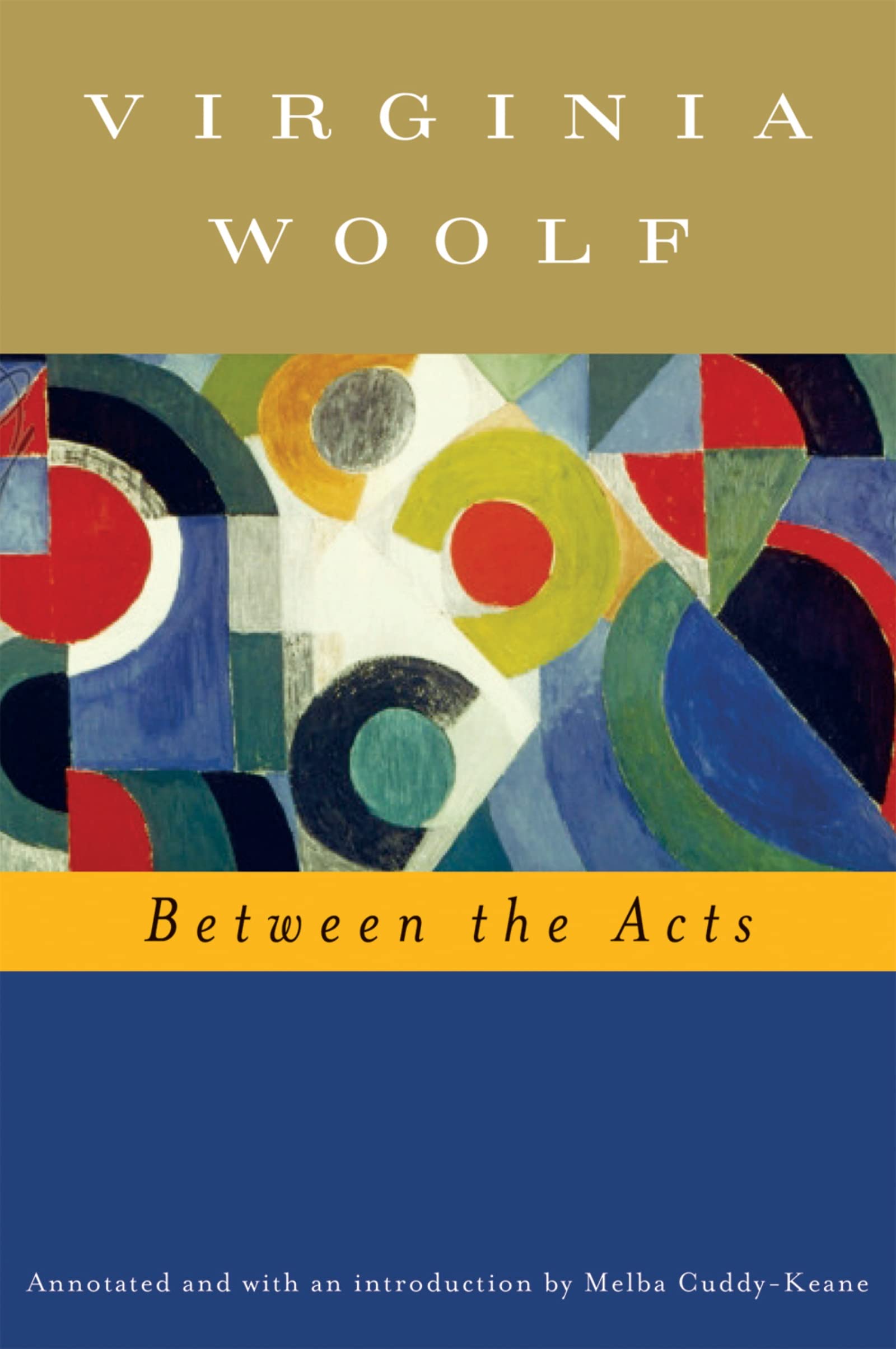
The annotated, authorized edition of the renowned author’s last novel with commentary by literary critic and Virginia Woolf specialist Melba Cuddy-Keane. Between the Acts takes place on one summer’s day at a country house in the heart of England, where the villagers are presenting their annual pageant as World War II looms. In the garden of Pointz Hall, the Oliver family’s country seat, everyone from the village has gathered to present the traditional pageant—scenes from the history of England starting with the Middle Ages. As the story of England unfolds, the lives of the villagers also take shape. The past blends with the present and art blends with life in a narrative full of invention and lyricism. Through her character’s passionate musings and private dramas, and through the enigmatic figure of the pageant author, Miss La Trobe, Virginia Woolf’s final novel both celebrates and satirizes Englishness. Even so, the coming of war hangs over the whole community, heralding a new act. This authorized edition from the Virginia Woolf library features: Biographical Preface - Chronology - Introduction to the text - Extensive notes - Suggestions for further reading This annotated edition is the perfect companion to more fully understand Between the Acts , its importance in twentieth century literature, and Virginia Woolf's world. "Virginia Woolf stands as the chief figure of modernism in England and must be included with Joyce and Proust in the realization of experiments that have completely broken with tradition."-- The New York Times Between the Acts takes place on a June 1939 day at Pointz Hall, the Oliver family's country house in the heart of England. In the garden, everyone from the village has gathered to present the annual pageant--scenes from the history of England, beginning with the Elizabethan Age and ending with "ourselves," the audience. As the story unfolds, the lives of the villagers also take shape. We learn of the strained relationship between Isa Oliver and her husband, Giles, discontented stockbroker and son of Bart Oliver, the owner of Pointz Hall. When a storm rushes in and hastens the completion of the play, the performers and the audience take their leave, and Giles and Isa are finally left alone. In its juxtaposition of interior life and social life, personal history and world history, Woolf’s final novel reveals the richness of what happens between the acts. Virginia Woolf (1882-1941), one of the major literary figures of the twentieth century, transformed the art of the novel. The author of numerous novels, collections of letters, journals, and short stories, she was an admired literary critic and a master of the essay form. Mark Hussey , general editor of Harcourt's annotated Woolf series, is professor of English at Pace University in New York City and editor of the Woolf Studies Annual. Melba Cuddy-Keane is professor of English and Northrop Frye Scholar at the University of Toronto. VIRGINIA WOOLF (1882–1941) was one of the major literary figures of the twentieth century. An admired literary critic, she authored many essays, letters, journals, and short stories in addition to her groundbreaking novels, including Mrs. Dalloway, To The Lighthouse, and Orlando. IT WAS a summer’s night and they were talking, in the big room with the windows open to the garden, about the cesspool. The county council had promised to bring water to the village, but they hadn’t. Mrs. Haines, the wife of the gentleman farmer, a goosefaced woman with eyes protruding as if they saw something to gobble in the gutter, said affectedly: "What a subject to talk about on a night like this!" Then there was silence; and a cow coughed; and that led her to say how odd it was, as a child, she had never feared cows, only horses. But, then, as a small child in a perambulator, a great cart-horse had brushed within an inch of her face. Her family, she told the old man in the arm-chair, had lived near Liskeard for many centuries. There were the graves in the churchyard to prove it. A bird chuckled outside. "A nightingale?" asked Mrs. Haines. No, nightingales didn’t come so far north. It was a daylight bird, chuckling over the substance and succulence of the day, over worms, snails, grit, even in sleep. The old man in the arm-chairMr. Oliver, of the Indian Civil Service, retiredsaid that the site they had chosen for the cesspool was, if he had heard aright, on the Roman road. From an aeroplane, he said, you could still see, plainly marked, the scars made by the Britons; by the Romans; by the Elizabethan manor house; and by the plough, when they ploughed the hill to grow wheat in the Napoleonic wars. "But you don’t remember . . ." Mrs. Haines began. No, not that. Still he did remember and he was about to tell them what, when there was a sound outside, and Isa, his son’s wife, came in with her hair in pigtails; she was wearing a dressing-gown with faded peacocks on it. She came in like a swan swimming its w
| Gtin | 09780156034739 |
| Age_group | ADULT |
| Condition | NEW |
| Gender | UNISEX |
| Product_category | Gl_book |
| Google_product_category | Media > Books |
| Product_type | Books > Subjects > Literature & Fiction > Genre Fiction > Historical > 20th Century > World War II & Holocaust |