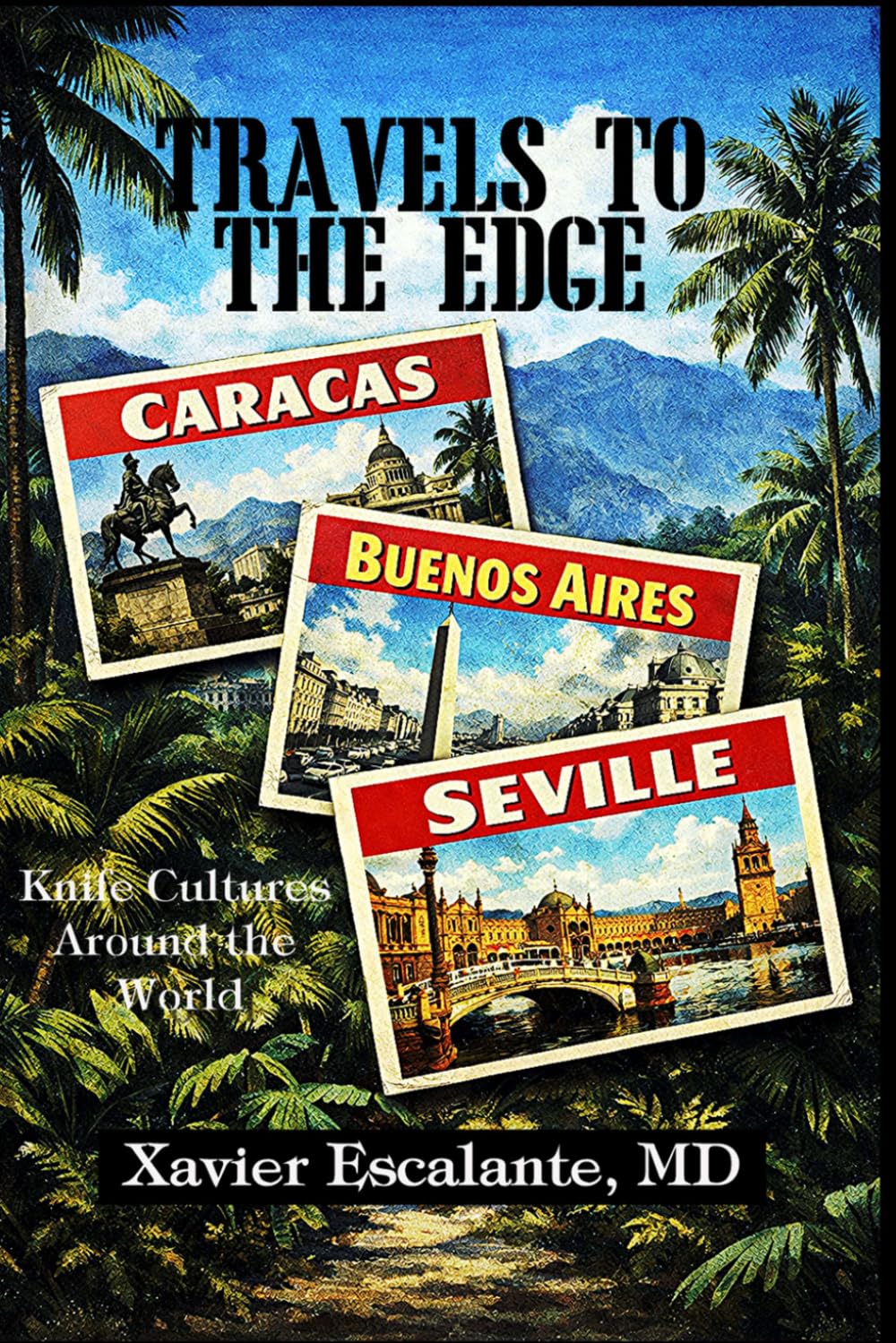
My uncle Diego belonged to a generation of Spaniards who came of age in a world still shaped by the long shadow of war, scarcity, and the quiet restlessness that follows both. He was born into a country that prized stability and obedience, yet he carried within him a temperament that resisted confinement. This book follows the arc of his first great voyage, which carried him from the familiar banks of Seville to the crowded ports of Africa, South America, and Northern Europe. It was a voyage that introduced him to new dangers, new ways of seeing, and new forms of discipline. He learned that danger often announces itself through deception, that desperation sharpens even the smallest weapon, that control requires more than strength, that distance can be both a threat and a refuge, and that the most dangerous blade is often the one hidden by law or custom. These were not abstract principles; they were truths earned through experience, through mistakes, and through the guidance of men who lived by their wits in the world’s most unpredictable places. This book does not romanticize the dangers he encountered, nor does it present him as a hero. The navaja, which would later become a symbol of my own training, appears in these pages not as an emblem of violence but as a thread connecting Diego’s Andalusian heritage to the wider world. It is a reminder that tools carry histories, that traditions travel with those who bear them, and that the meaning of an object is shaped by the hands that hold it.