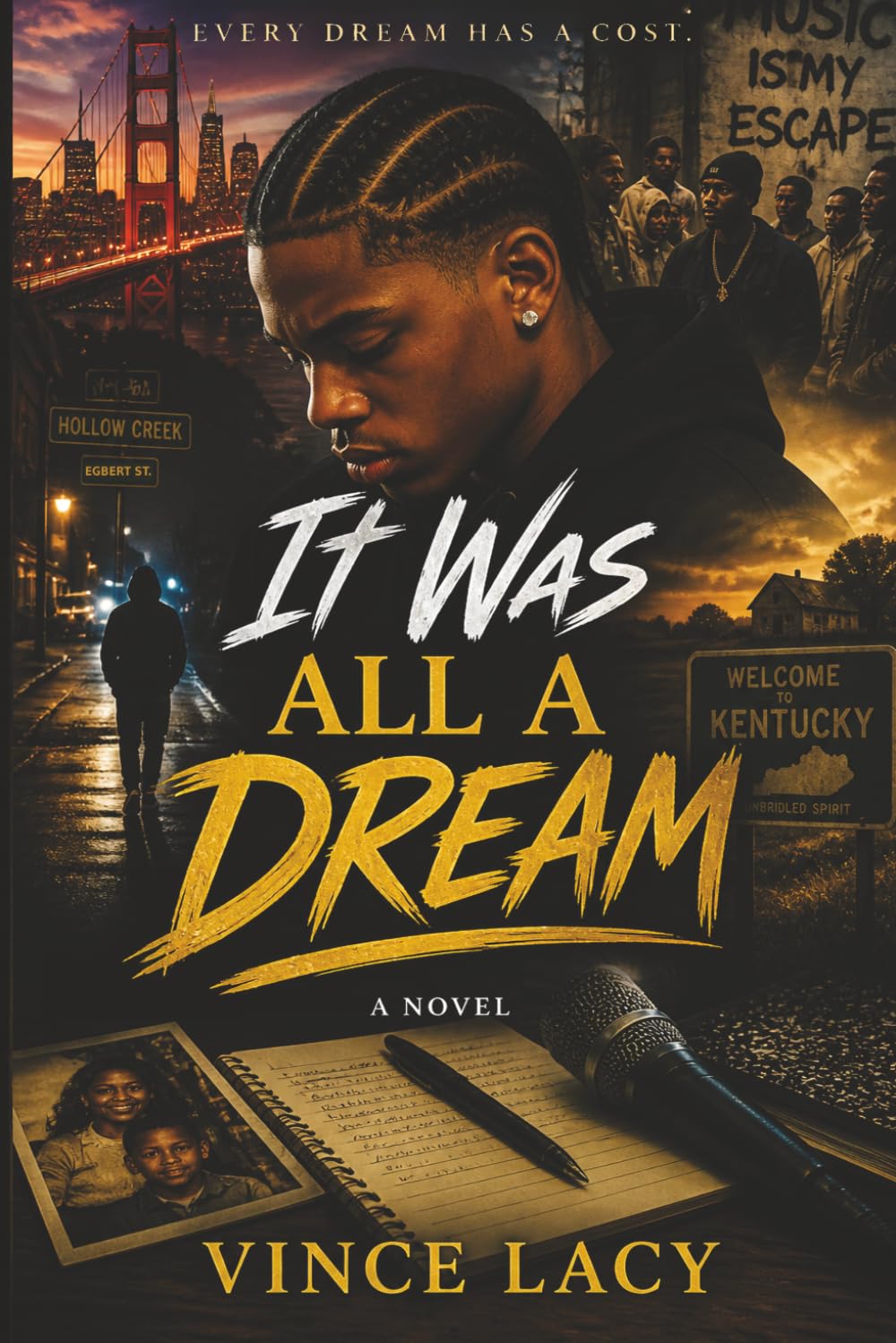
Jamal is seven years old when the world cracks open. When his mother, Linda Lynne—twenty-two, magnetic, and already losing her battle with the streets—dies, Jamal is sent to live with his father, Diamond D, a man who walks like a legend but wakes up every morning at five to drive a city bus. Diamond D still wears the rings, the cross earrings, the full-length fur coat in seventy-degree weather. He still calls himself Diamond D. But the music career never came, the Cadillac became a Chevy, and the man behind the performance is lonelier than anyone can see. San Francisco in the nineties is a city of sharp contrasts—Hunters Point to Fisherman's Wharf, Third Street's shadow economy to the Embarcadero's morning light. Jamal learns to read the streets the way other kids learn to read books. He falls in love with a girl named Story and falls under the spell of Bone Thugs-N-Harmony, trading his clean-cut look for cornrows and baggy clothes in a misguided attempt to be someone worth loving. He sells weed on Third Street and gets robbed on his first day. He discovers that his best friend Loana, the tomboy who once took his punch and forgave him, has run away and become someone he barely recognizes. Through it all, Jamal is held together by the steady hands of his grandparents—Holly Perry, who runs her house with the precision of someone who believes order is a form of dignity, and Billy Perry, who teaches him that light is information and that every photograph is a decision about how much of the world to let in. Grandma's house becomes his dock, his darkroom, his only constant in a life that keeps reassembling itself around loss. But family is complicated. When Diamond D remarries and Jamal gains a baby sister, the new household on Divisadero becomes a pressure cooker of unspoken tensions, too many people with too much history between them. Jamal learns to read the apartment's rhythms—the silence his father needs after certain shifts, the way his stepmother Simone thaws incrementally through shared cooking lessons, the particular weight of holding his sister Deejanay in his arms and understanding, for the first time, what it means to be reliably present for someone else. It Was All A Dream is a story about the architecture of grief—how it moves through you in waves and then in weather and then in seasons. It's about a boy who becomes a man not through any single moment of transformation, but through the slow, incremental work of showing up: making his bed every morning because he finally understands what it means that someone else made it for him; writing in composition notebooks because a teacher once wrote "More please" in the margins; holding his sister on Saturday mornings because some commitments are made before you understand you're making them. Vince Lacy writes with unflinching honesty about the neighborhoods that shape us, the families that fail us and save us in equal measure, and the music that becomes the soundtrack to our becoming. This is a novel about what it means to grow up in the space between who you are and who the world expects you to be—and the long, imperfect journey of closing that distance, one day, one decision, one dream at a time.