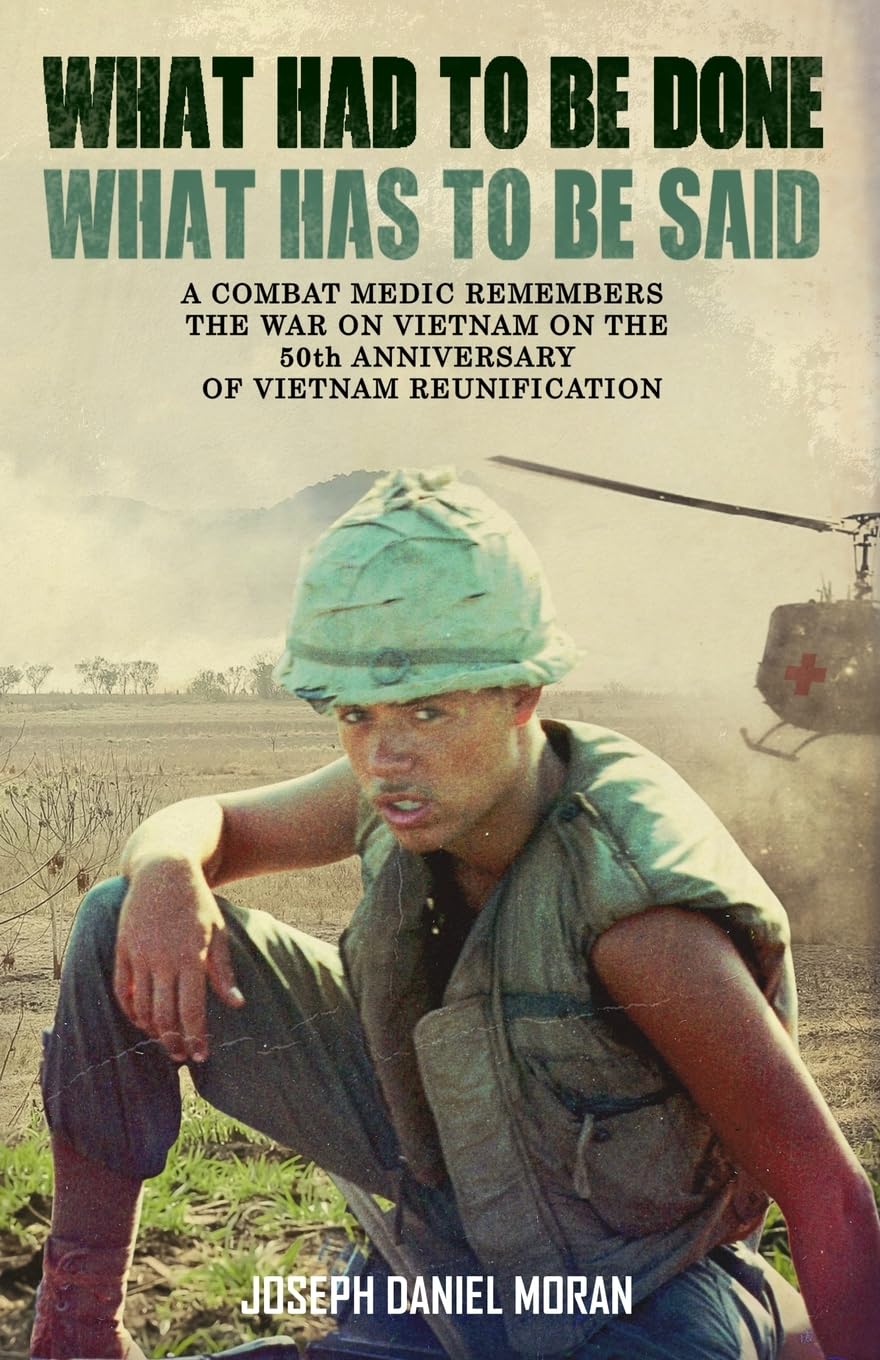
By virtue of the author's training something had to be done, by virtue of his witness something has to be said. This book is about those things. It is foremost a memoir of the authors time in the War on Vietnam as a young combat medic. The book was precipitated by a flashback experience, a vivid memory of an event that took place in August 1969. At that time he realized that War on Vietnam was still inside him waiting to be told. Within it he shares experiences and observations that remain fresh about a war that was both tragic and unnecesary. A war that resulted from faulty assumptions and misguided tactics. He speaks about the medic and corpsman role as being the interface between life and death and knowing this their special burden. He shares his metamorphosis in thinking about the war and realization that in his role as a life saver he was in effect preserving soldier lives so they might kill or be killed on another day. From the eve of destruction in the 1950s to its official end in 1975, this was one of the longest, most contentious wars in American history. Its legacy continues to influence contemporary politics, culture, international relations, and the lives of millions of Americans and Vietnamese. The author concludes that the war was more than a mistake, it was a cirme. He is not interested in simply telling war stories but trying to find their meaning and finding them largely meaningless. In it he discusses the role of luck in warfare and the acts of fellow soldiers both compassionate and brutal. As the book evolved the author realized that it had to be more than a memoir and commentary on the War on Vietnam. The book includes a observations about war as a human institution, one in which even the winners are losers. What Had to be Done/What Has to be Said is dedicated to the author's great uncle, a WWI combat medic who died at the age of 21 in the Battle of the Somme. It is the young that bear the brunt of every war. Included in an appendice are interviews with three soldiers that served in his unit. Because music of the Vietnam era has been a major influence on the author. Each chapter of the book is captioned by a populare war related song from that time period. Only the dead have seen the end of war. George Santayana Finally, everyman had to test himself and if he was courageous and lucky he found maturity. That was all the reward you could ask for or were entitled to: just growing up. Ward Just, The Translator We had to destroy the village to save it. U.S. Army Major referring to the Battle of Bến Tre during the Tet Offensive in 1968. And it's 1, 2, 3, what're we fighting for? Don't ask me, I don't give a damn Next stop is Vietnam. Country Joe and the Fish, I Feel Like I'm Fixin to Die Rag (1965) I dream of giving birth to a child who will ask: "Mother, what was war?" Eve Merriam Joseph Daniel Moran served as a combat medic with D-Troop, 17th Armored Cavalry, 199th Light Infantry in Vietnam from 1968 to 1969. He received an honorable discharge from the U.S. Army with a rank of E-5. Mr. Moran was awarded the Combat Medic Badge, Vietnam Campaign Medal, Vietnam Service Medal, two Army Commendations Medals, the last with an Oak Leaf Cluster. Mr. Moran holds a B.A. in Sociology and and M.A. in Criminology. He spent 50 years in juvelile and adult corrections serving in such roles as a supervisor, acting department chief, and licensed chemical dependency counselor. For twenty years he served as an adjunct professor in the criminal justice program of Lourdes University. In retirement Mr. Moran serves on non-profit boards, volunteers at social service agencies, mentors an inmate in the Ohio prison system, does public speaking about Vietnam and criminal justice issues, and enjoys world travel. He is married with two children.