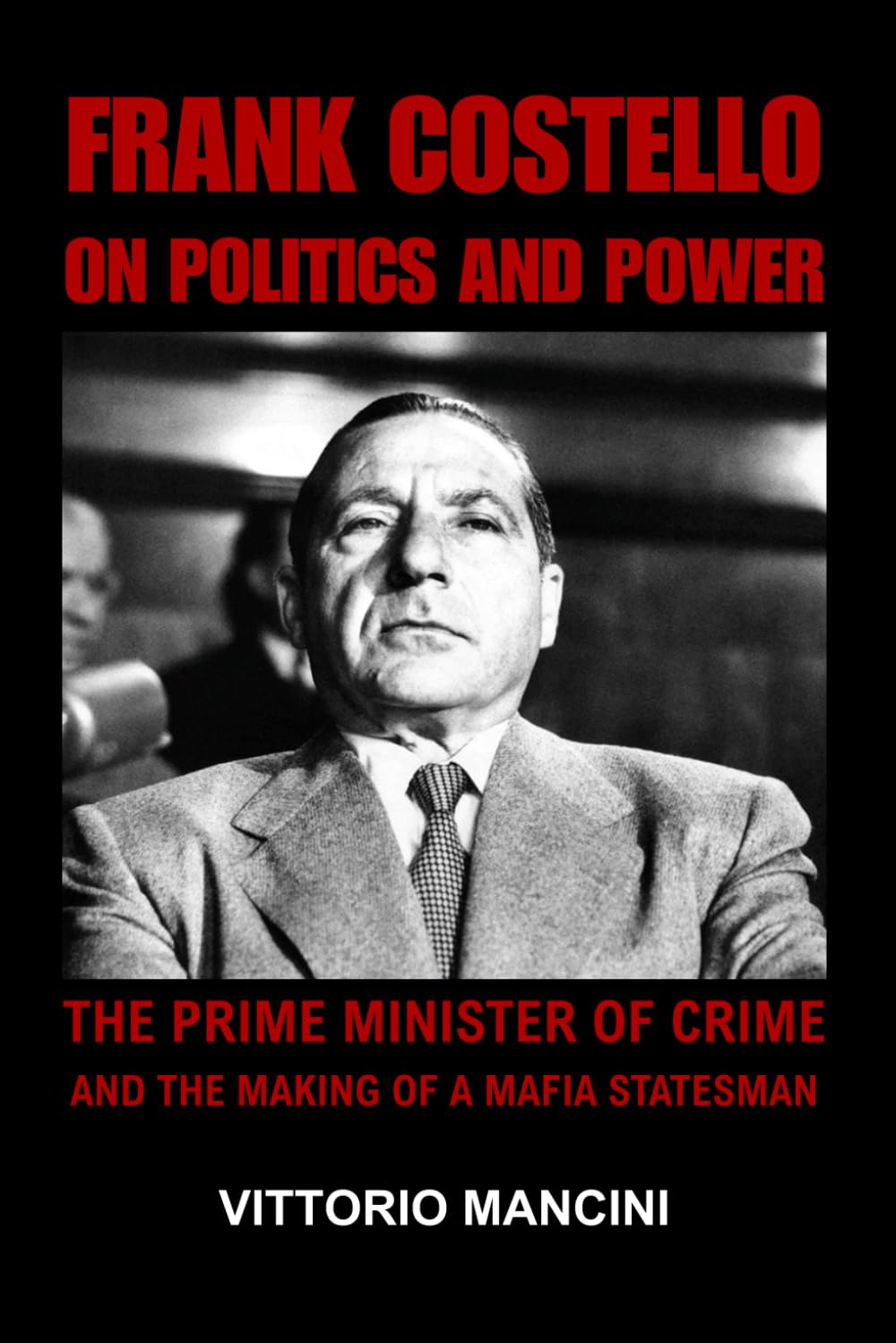
Power rarely announces itself. It moves quietly, behind doors, through favors, alliances, and influence that never appears on paper. Frank Costello understood this better than anyone. He did not rule with spectacle. He ruled with access. In Frank Costello on Politics and Power: The Prime Minister of Crime and The Making of a Mafia Statesman , Vittorio Mancini presents a deeply layered portrait of the man who redefined what it meant to lead in the American underworld. Costello was not merely a crime boss — he was an architect of relationships, a broker of influence, and a strategist who operated where politics and organized crime converged. His empire was not built on chaos, but on order. Not on fear alone, but on negotiation, discretion, and timing. This is the story of a different kind of power. A power that sits in the background. A power that shapes outcomes without appearing in them. Costello moved through the corridors of government as easily as he did the backrooms of the underworld, blurring the lines between legitimacy and control. He did not need to be the loudest man in the room. He only needed to be the one everyone listened to. From the rise of immigrant networks and the opportunities of Prohibition to the complex machinery of political influence in mid-century America, this book explores how Costello became the underworld’s most effective statesman. His legacy was not just survival — it was structure. Not just dominance — it was continuity. Empires built on force crumble quickly. Empires built on influence endure. And Costello understood the difference.