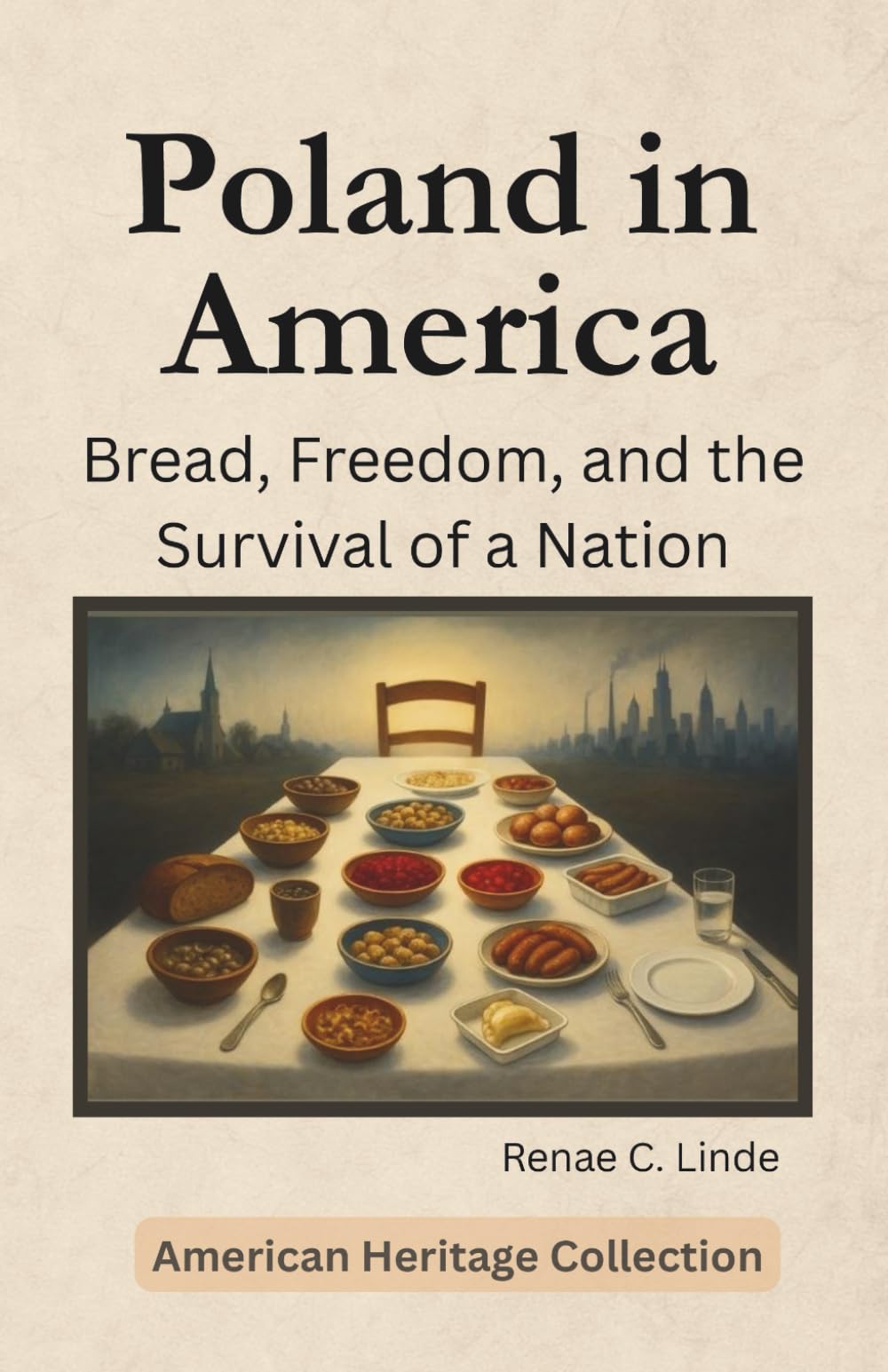
Polish Immigrants and the Cost of Survival For more than a century, Poland existed without a state. Its borders were erased. Its language was suppressed. Its people were scattered. Those who came to the United States did not leave that history behind. They carried it with them. Poland in America is a work of cultural and social history that examines how Polish immigrants rebuilt a national identity without territory, using labor, faith, and community as tools of survival. Moving from partition-era villages to the industrial cities of the American Midwest, this book traces how a peasant population became a durable political and economic force under pressure. Grounded in archival research, oral histories, and historical analysis, this book explores: Why economic survival drove mass Polish migration - How parishes functioned as cultural and political infrastructure - The role of labor, unions, and military service in establishing legitimacy - The lasting impact of World War II and the Yalta betrayal on Polish-American identity - How later generations inherited a culture shaped by distance, adaptation, and loss Poland in America is a sharp, unsentimental account of how immigrant culture survives under pressure, shaped by necessity, conflict, and adaptation. Written for readers interested in immigration history, ethnic identity, labor history, and American social development, Poland in America offers a clear-eyed account of how one nation survived by being carried into another.