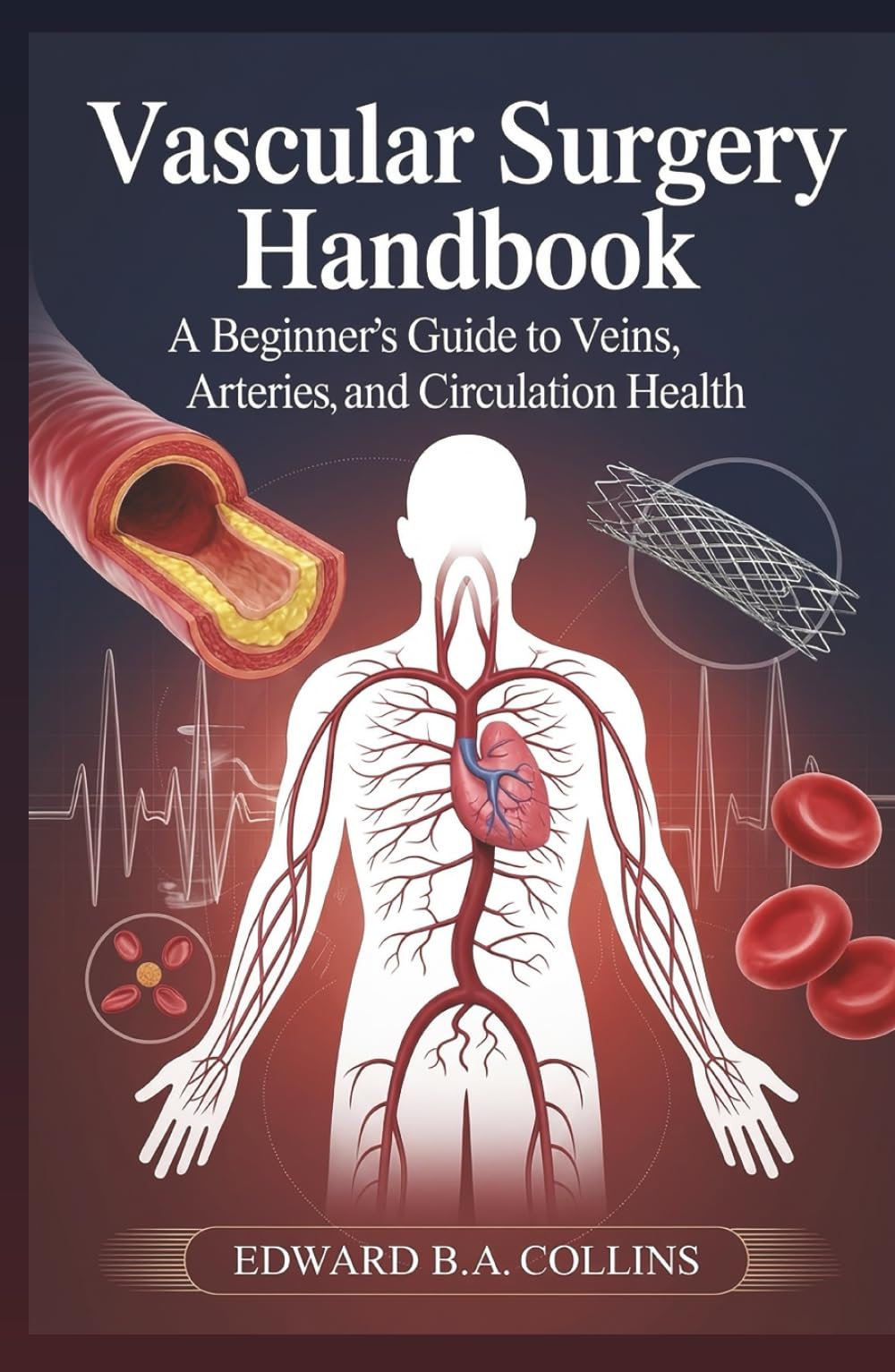
Stop Ignoring the Ache. Start Understanding the Flow. Are you paralyzed by the fear of a "silent killer" like an aneurysm? Do you wonder why your legs cramp when you walk but feel fine when you sit, or why a "spider vein" might be a sign of a deeper problem? Or are you a nursing or pre-med student trying to distinguish between the "whooshing" sound of a bruit and the rhythmic thump of a healthy pulse? The Vascular Surgery Handbook: A Beginner's Guide to Veins, Arteries, and Circulation Health , part of the acclaimed Medical Handbook for Beginners series by Edward B.A. Collins, cuts through the intimidating jargon of hemodynamics to reveal the logic of life’s pipelines. This guide treats the human vascular system not as a confusing maze, but as a masterfully engineered Plumbing System that relies on pressure, flow, and maintenance to keep you moving. From the "highways" of the arteries to the "storm drains" of the lymphatic system, this handbook empowers you to understand exactly how your circulation works and how to fix it when it fails. Inside You’ll Discover: The Plumbing Analogy: Visualize how Arteries act as high-pressure "Fire Hoses" (supply), while Veins act as low-pressure "Water Balloons" (storage). - The Ticking Time Bomb: Demystify Abdominal Aortic Aneurysms (AAA) using the "Bubble on a Tire" analogy, and learn the specific size threshold that makes surgery necessary. - The "Engine Stall": Understand Peripheral Artery Disease (PAD) and why "Claudication" causes leg pain that behaves exactly like a car running out of gas. - Stroke Prevention: Explore the Carotid Arteries as "Chimneys" and learn why the danger isn't just the blockage, but the debris that flies upstream. - The Diabetic Foundation: Master the protection of the "Diabetic Foot" by understanding the "Termites in the Basement" analogy and the critical importance of the Monofilament test. - Veins vs. Valves: Distinguish between cosmetic Spider Veins and medical Varicose Veins, and see why treating the "Tree Trunk" is the only way to fix the branches. Built on the "Made Clear" Philosophy: Following the trusted format of the Medical Handbook for Beginners series, this guide uses: Plain-Language Explanations: Complex hemodynamics are broken down into simple, actionable concepts like "The Supply" vs. "The Return." - Relatable Analogies: Understanding disease is easier when you view a clot as a "Clogged Pool Filter" or an aortic dissection as "Peeling Plywood." - Focused Learning: Chapter objectives, key term recaps, and quick quizzes reinforce your understanding. - Practical Scenarios: "Real-Life Snapshots" show how vascular decisions directly impact outcomes, from saving a "cold leg" to preventing a stroke. If you are ready to replace fear with knowledge, the Vascular Surgery Handbook is your must-have guide. Take control of your health—scroll up and grab your copy today!