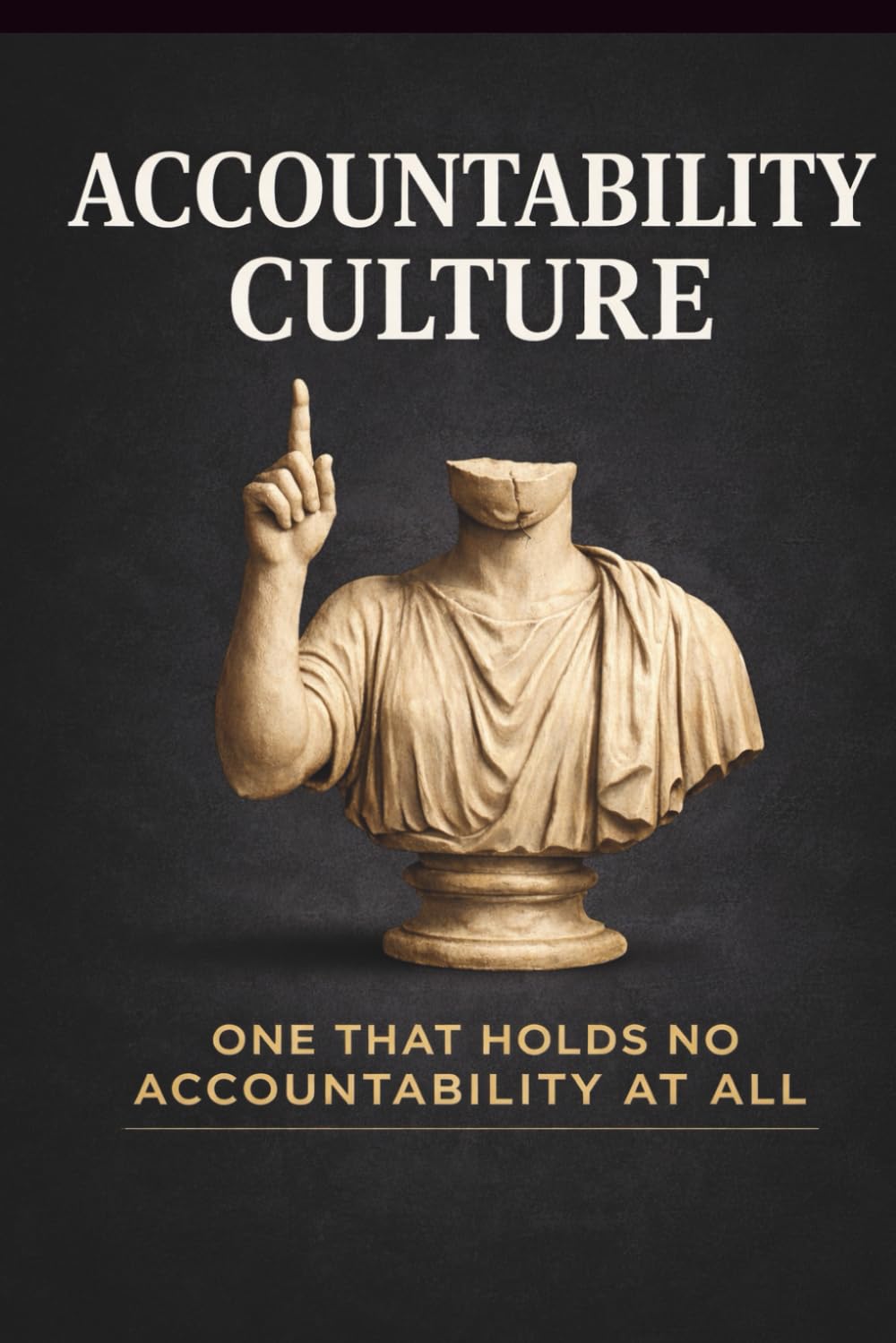
📘 Accountability Culture How the world asks individuals to carry the weight of its own mistakes. We live in a culture that preaches “personal responsibility” — but only to the powerless. When systems harm, they call it policy. When people react, they call it disorder. And when the oppressed speak up, they call it defiance. Accountability Culture exposes the quiet hypocrisy of a world that punishes emotion while protecting authority. Blending psychology, sociology, and lived insight, it traces how we teach children to apologize for their feelings, how therapy often becomes image management, and how entire systems outsource guilt to the individuals they wound. This is not a book about blame — it’s a reclamation of meaning. True accountability isn’t about punishment; it’s about connection. It’s the courage to face cause and effect without shame, and the integrity to see that repair begins where denial ends. With poetic precision and grounded clarity, Accountability Culture redefines what responsibility could look like in families, education, justice, medicine, and beyond — if only we stopped confusing calm with correctness, and silence with maturity. For readers of: Brené Brown, Gabor Maté, and bell hooks — and for anyone tired of being told to “get over it” when they were only ever trying to heal what others refused to see. If you liked Feminist Accountability by Ann Russo, Restorative Just Culture by Sidney Dekker, or The Culture of Accountability by Gianpaolo Baiocchi, you’ll be drawn to Accountability Culture — a work that bridges psychology, sociology, and moral philosophy to expose how our society praises composure while punishing emotion. Where other books focus on policy, activism, or corporate reform, Accountability Culture goes deeper—revealing the emotional and cultural reflexes that turn responsibility into performance. Written in clear, reflective prose, it invites readers to see accountability not as punishment or shame, but as repair, understanding, and human truth. We turned accountability into a weapon and called it virtue. Accountability Culture reminds us it was always meant to be a mirror — not for shame, but for seeing ourselves clearly enough to change.