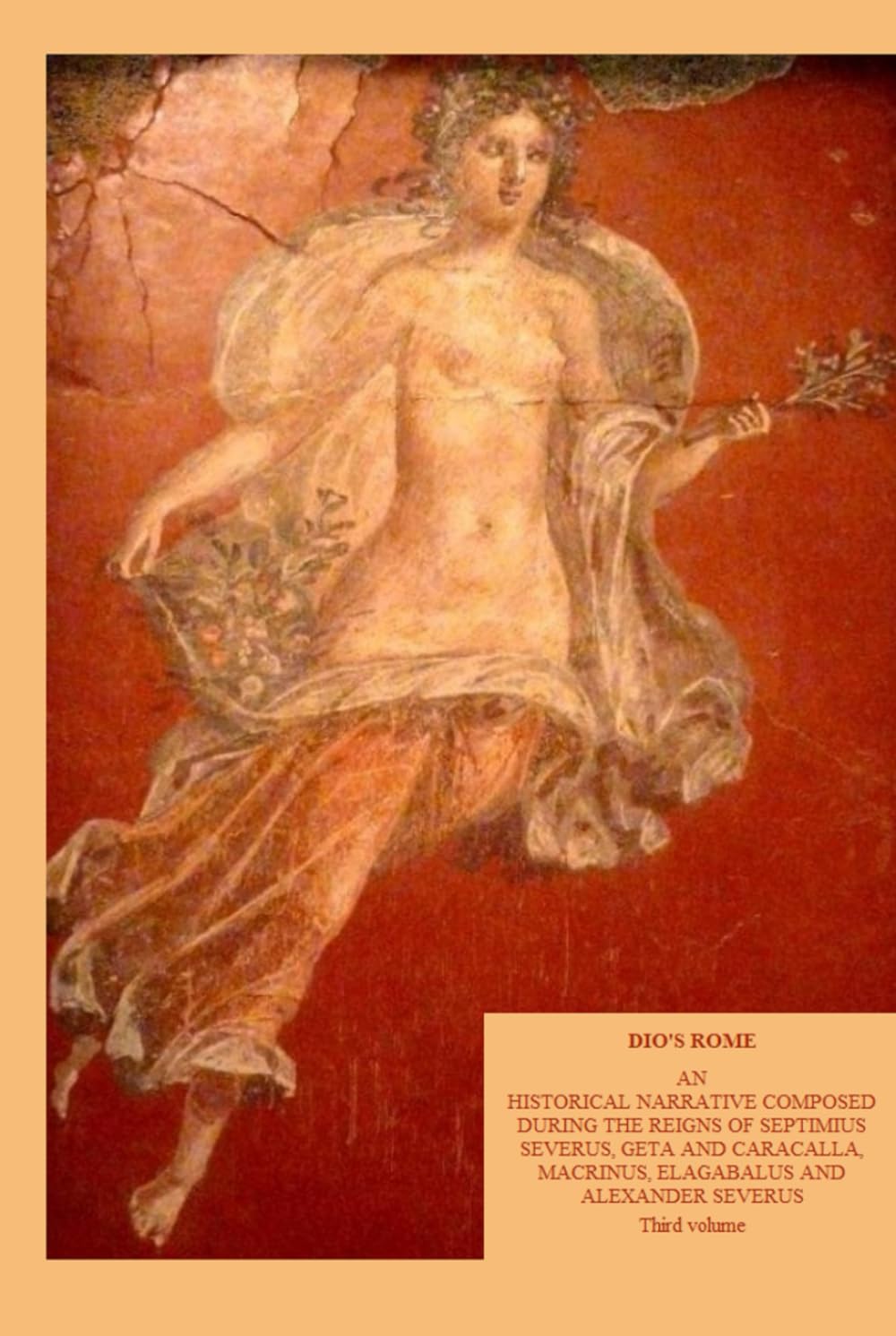
Lucius Cassius Dio (c. 165 – c. 235) was a Roman historian and senator of maternal Greek origin. He published 80 books of the history of ancient Rome, beginning with the arrival of Aeneas in Italy. The booksdocumented the subsequent founding of Rome (753 BC), the formation of the Republic (509 BC), and the creation of the Empire (27 BC) up until 229 AD, during the reign of Alexander Severus . Written in Koine Greek over 22 years, Dio's work covers approximately 1,000 years of history. Many of his books have survived intact, alongside summaries edited by later authors such as Xiphilinus, a Byzantine monk of the 11th century, and Zonaras, a Byzantine chronicler of the 12th century. On the matter of its composition, he writes the following: "I spent ten years in collecting all the achievements of the Romans from the beginning down to the death of Severus, and twelve years more in composing my work. As for subsequent events, they also shall be recorded, down to whatever point it shall be permitted me". The work is one of only three written Roman sources that document the British revolt of 60–61 AD led by Boudica. Until the first century BC, Dio provides only a summary of events; after that period, his accounts become more detailed. The first 21 books have been partially reconstructed based on fragments from other works, as well as the 12th-century epitome of Joannes Zonaras who used Dio's Roman History as a main source. Books 22 through 35, which are only sparsely covered by fragments, were already lost by the times of Zonaras. The books that follow, Books 36 through 54, are all nearly complete; they cover the period from 65 BC to 12 BC, or from the eastern campaign of Pompey and the death of Mithridates to the death of Marcus Vipsanius Agrippa. Book 55 contains a considerable gap, while Books 56 through 60 (which cover the period from 9–54 AD) are complete and contain events from the defeat of Varus in Germany to the death of Claudius. Of the 20 subsequent books in the series, there remain only fragments and the abridgement of John Xiphilinus, a Byzantine monk from the 11th century sponsored by emperor Michael VII Doukas. The abridgment of Xiphilinus, as now extant, commences with Book 35 and continues to the end of Book 80. The last book covers the period from 222 to 229 AD (the first half of the reign of Alexander Severus).