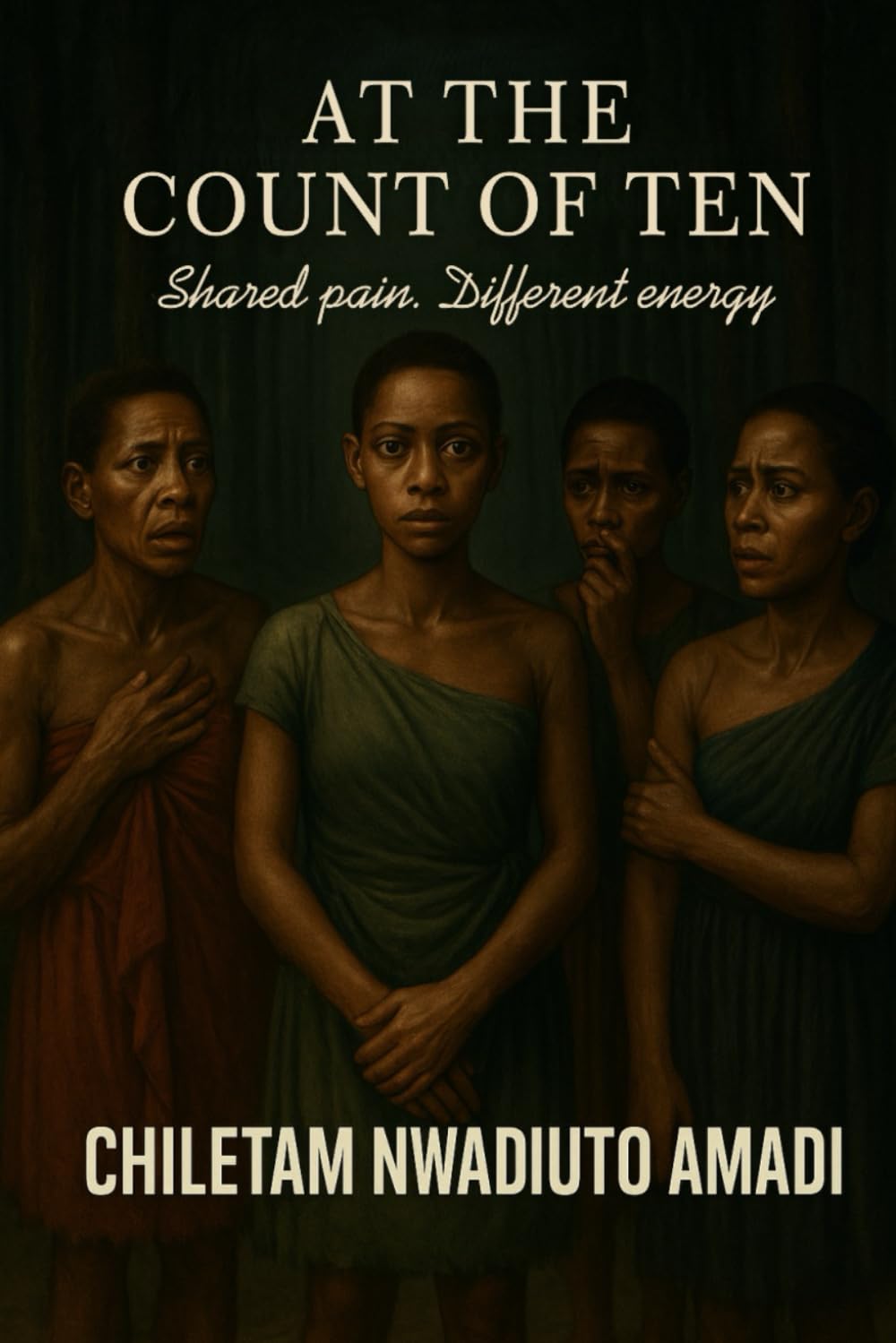
In Afia, women condemned by tradition are stripped of their names and cast into silence. Branded as Igodis , they live under the watch of the Okilis, men charged with enforcing customs that reduce obedience to virtue and suffering to fate. Kenna has learned to quiet her fears and preserve fragile peace. Eleke, shaped by the unyielding strength of her foster mother resists submission even when defiance carries a cost. Around them are other women bound by judgment but divided by how they persist: Nkasi, who survives by becoming invisible; Ijele, a dignified midwife haunted by a forbidden love; and Uliaku, who draws dangerously close to power as a means of protection. Unfolding in a series of measured “Counts,” the novel traces memory, judgment, and awakening as buried truths surface and restraint begins to fracture. What starts as silence shifts toward something more perilous—an unspoken recognition that compliance itself has become a threat. At the Count of Ten is a haunting, quietly defiant debut that explores betrayal, repression, and the slow, irreversible movement toward self-claiming. Rooted in Igbo culture and shaped by lyrical restraint, the novel bears witness to women discovering what it means to choose themselves in a world determined to erase them.