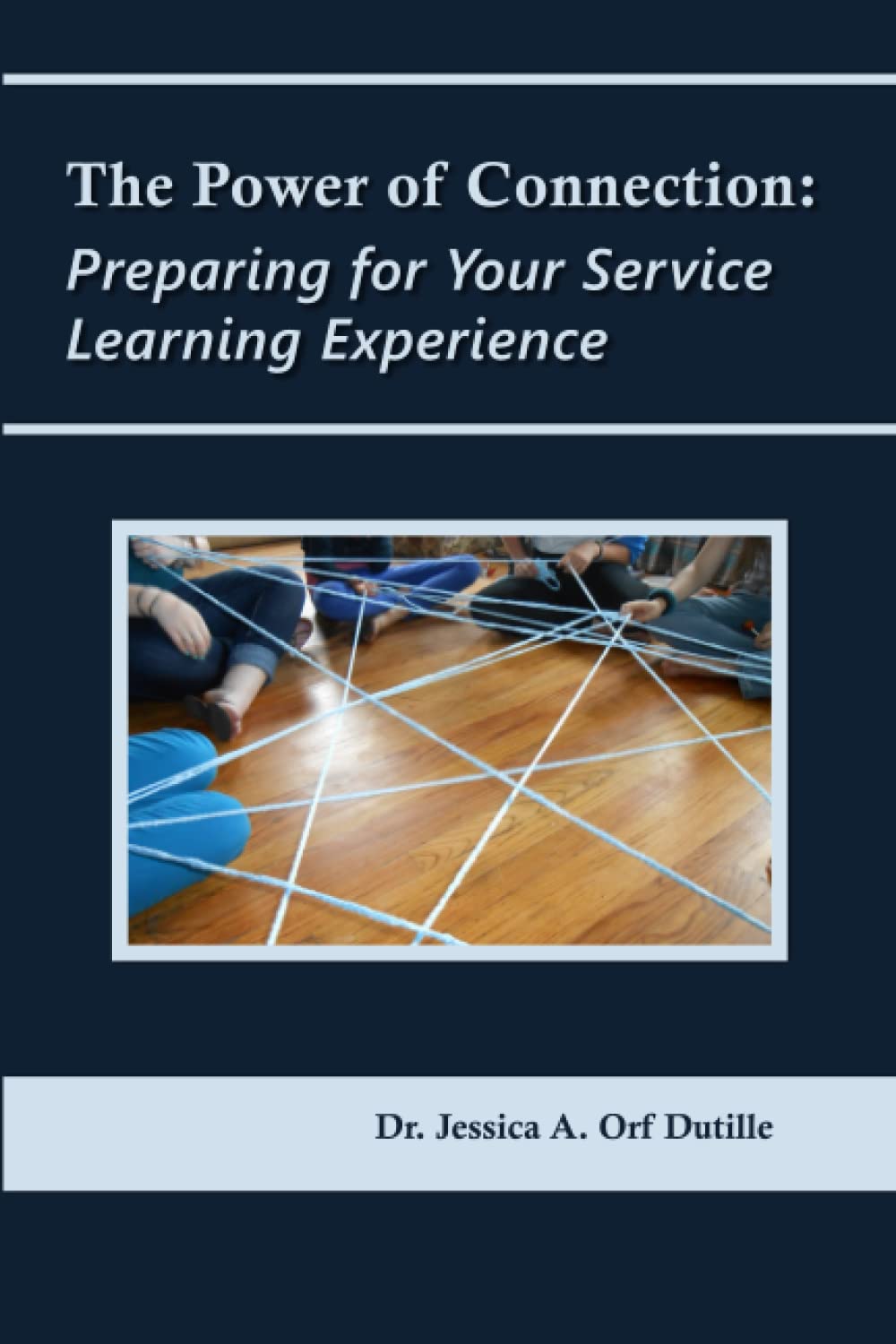
High impact experiential learning includes practices such as community service, service learning, internships, and other pedagogies that connect students with the world around them. This type of learning engages the whole person and requires self-reflection, resulting in elevated self-awareness (Cress, Collier & Reitenauer, 2005). Through these volunteer experiences, you, as a student, gain new perspectives and an enhanced understanding of your personal potential to create positive change while working with a community-based partner. Service learning provides you with opportunities to apply your academic curriculum and develop leadership, communication, and problem-solving skills through practical application (Clayton, Bringle & Hatcher, 2012; Cress, Collier & Reitenauer, 2005; Eyler & Giles, 1999). Effective service learning develops mutually beneficial relationships between students, faculty members, and community partners. A teacher is also a learner, and minds are opened up to the possibilities that come from working together and learning from one another. Service learning allows you to explore career interests, imagine solutions, and inspire personal growth. As you come to understand your unique passions, you learn how they can be applied to advance society for the good of humanity.