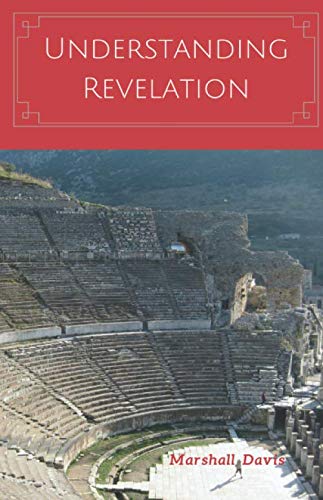
You have to understand what Revelation MEANT before you can understand what it MEANS. We have to know what the Book of Revelation meant to its first-century audience before we can discover how it is relevant to Christians living in the twenty-first century. Yet that elementary principle of biblical interpretation is frequently missing from popular expositions of Revelation. Many Christians uncritically accept the sensationalistic interpretations of the Apocalypse presented by Christian television, radio, and paperback bestsellers. As a consequence the meaning of the book has become lost amidst a flurry of newspaper headlines and end-times charts. This study of Revelation utilizes well-established principles of biblical interpretation to uncover the meaning of this very interesting biblical book. It builds upon sound biblical scholarship to help the reader understand the book of Revelation in a sensible manner. By deciphering literary codes well-known from other apocalyptic literature, Marshall Davis unveils the meaning of Revelation for modern readers. This approach makes Revelation comprehensible, without appealing to prefabricated eschatological systems. The Book of Revelation is a cosmic drama, patterned after the Greek and Roman plays performed in the great theater of Ephesus, the adopted hometown of the apostle John. Revelation was intended to be seen, heard, smelled, felt, and experienced viscerally. When interpreted in this manner, Revelation yields its meaning – and its relevance for today. People have a lot of different reactions to the Book of Revelation. Some are confused by it. Others are afraid of it. Some are obsessed by it. Most are ignorant of it. The average person has likely never heard their pastor preach a sermon from the Book of Revelation. Most mainline pastors have never studied it in depth, much less led their congregation in exploring the last book of the New Testament. But I - in all my naiveté and egotism - took it upon myself to lead my first fulltime church after seminary in a weekly, verse-by-verse, study of Revelation that lasted six months. I had the confidence to attempt this because of a course I took in seminary, which was taught by a young professor (now deceased) named James Blevins. It was an eye-opening course! When I enrolled in the class all I knew about Revelation was what I had read in Hal Lindsey's bestseller The Late Great Planet Earth, published in 1970. (That dates me!) The Left Behind series of books and movies that dominated the 1990's and 2000's were only a twinkle in the eye of Tim LaHaye. I assumed that the only way Revelation could be interpreted was in a futurist manner, meaning that it predicted events to happen in the future - our future. Dr. Blevins showed me another way; it should be read like the prophetic books of the Old Testament. It has to do with events in the time it was written. Most of Revelation is about the near future from the Apostle John's point of view. The author of Revelation says this repeatedly in the prologue and epilogue of Revelation. It takes intentional blindness to miss those verses. But Christians - if nothing else - are very good at self-deception. Blevins presented Revelation as a cosmic drama, patterned after Greek and Roman plays performed at the great theatre in his adopted hometown of Ephesus in Asia Minor (present day Turkey.) He presented this view in his book Revelation as Drama (1984). That idea was not original with him,but it certainly was new to me. It really struck home to me when I later visited the ruins of ancient Ephesus. Revelation was intended to be heard and seen - like John heard and saw it. To demonstrate his point our large seminary class actually performed the whole book of Revelation. (I was the "mighty angel" of Revelation 18:21). I will never forget the experience. Revelation came alive for me, and I actually understood it! It was like seeing a Shakespeare play performed for the first time. Incomprehensible Elizabethan English actually makes sense when heard live on stage. I have never forgotten what I learned in seminary, and what I taught my first church in Southern Illinois.I have kept the notes I used back then and referred to them throughout my forty year ministry. I have preached and taught Revelation in every church I have served. Finally after many years I have published my understanding of the Book of Revelation in a new book entitled Understanding Revelation. In short it says that Revelation is more about Christ with us now than it is about deciphering clues to the date of Christ's Second Coming. That will be disappointing to date-setters, but good news (the literal meaning of the word "gospel") to Christians seeking to make sense of this strangest book of the Bible. Revelation is extremely relevant to today. Not because its prophecies are being fulfilled in today's newspaper headlines, but because Revelation teaches timeless truths applicable to every histori