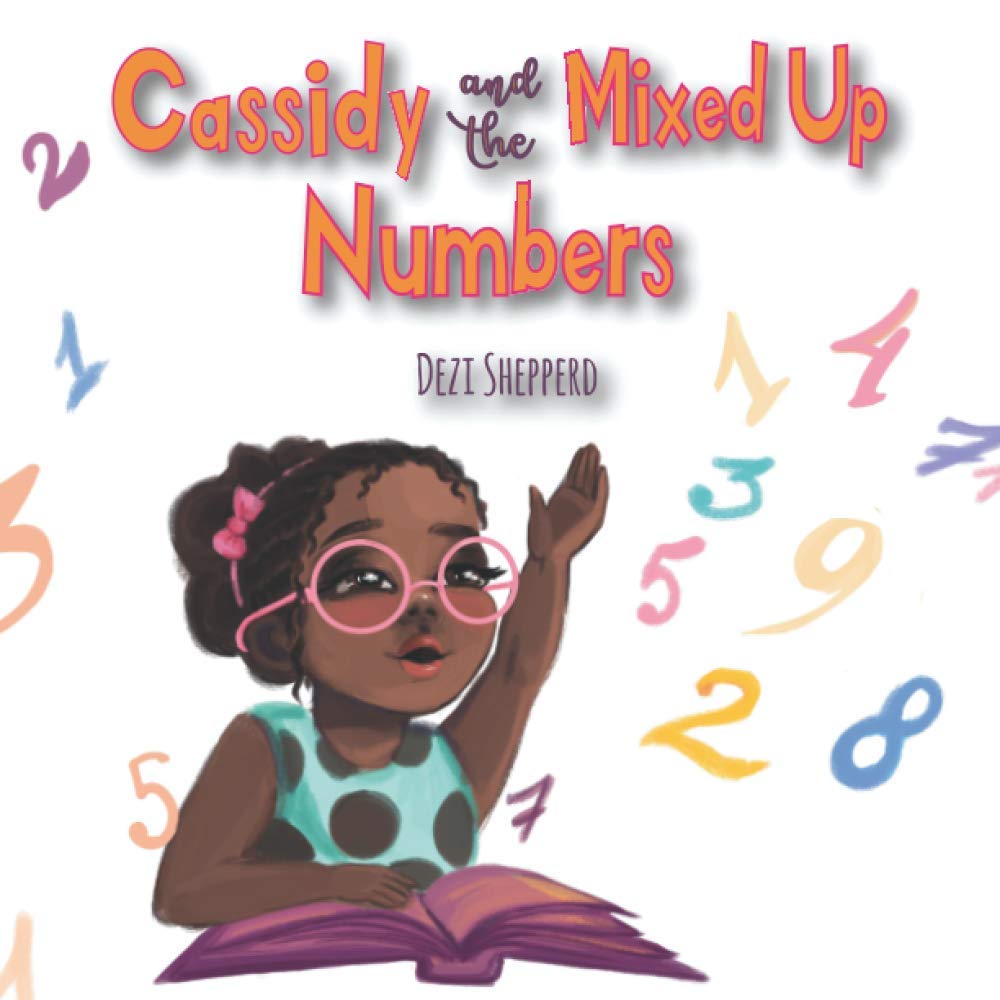
Cassidy and the Mixed Up Numbers, details the first few days of Cassidy’s experience at school. Will she be able to keep up with her classmates or will her learning disability Dyscalculia get in her way? Watch as she overcomes her fears and learns to count like the rest of the children in her class! More than 26% of the population is affected by the learning disability Dyscalculia. Dyscalculia is a learning disability in math that affects one's ability to perform math related facts. Individuals who have Dyscalculia have difficulties with computations and mathematical reasoning. People with Dyscalculia have a difficult time doing the following: * Understanding or remembering mathematical concepts such as fractions, carrying, and borrowing. * A Difficulty performing the order of operation when learning math processes. * Remembering the steps in a math process and learning the sequence in multiplication and division problems.Cassidy and the Mixed Up Numbers features, beautifully colored illustrations that will capture any child’s imagination and attention. It makes use of color to aid teaching children to count from 1-10. The story teaches children compassion for people whose learning process differs from theirs as well as teaching confidence. I am pleased to say that I enjoyed the book and here are the reasons why: 1. I quickly realized that Cassidy had Dyscalculia when she mentioned that she was worried about remembering her numbers. Instantly, I was excited to see that Dezi highlighted a Specific Learning Disability. Before becoming a teacher, I did not realize how many students struggled with learning disabilities and I think that those students who struggle with them also have trouble realizing that they are one of many in the same predicament. I am glad to know that children can pick up this book and know that they are not alone. Also, I like that students, who are not labeled as having a SLD, can read this book and learn to be more understanding of their classmates who may not catch on as quickly as they do. 2. I noticed that there was no mention of Cassidy's dad. Because of this, I assumed that Cassidy's mother was a single mother and there are many students who can relate to Cassidy in this way as well. 3. It's realistic. As I read the book and reached the page where Cassidy raised her hand to agree that seven is more than nine, I had a moment of nostalgia when I thought of all the times my students raise their hands and then quickly put them back down after scanning the room and realizing that they are alone. 4. I liked that Cassidy was taught a different method outside of school that helped her learn to count. In a math classroom, I attempt to stress to students that there is more than one method that can lead them to the correct answer. Cassidy obviously had trouble counting from memory; however, through the use of another method she was able to confidently count to ten. I also enjoyed seeing this because I think there is a misconception that a teacher is the only qualified individual who can teach kids. I say this because I have heard many students say, "Well, my teacher taught it to me like this..." and they are often reluctant to listen to anyone who attempts to teach them differently. 5. I love that Cassidy attempted to teach her classmates about Dyscalculia. Ultimately, many people tend to write others off when they do not understand them when they should use those moments to learn about others. I was glad that Cassidy used her show-and-tell slot as a "teachable moment." 6. Lastly, representation matters and I love that Cassidy is a sweet young African American girl who comes from a loving home... The illustrator did an amazing job as well. - Brittney Leigh-Scott, Teacher Cassidy's first days of school are filled with excitement and confusion. When numbers feel mixed up, she begins to wonder if she belongs. Through encourgagement and self-discovery. Cassidy learns that taking her time is part of learning and that asking for help is strength. This story gentle supports social-emotional learning and invities chldren to see challenges as part of growth. Cassidy wants to do well in school, but numbers do not always make sense. As counting feels harder than she expected, Cassidy begins to doubt herself. With patience and determination, she learns that learnign does not have to look the same fo everyone. This SEL picture book celebrates perserverance, confidence,and self-belief reminding children tat learning differences do not define their abilities. Dezi Shepperd is the founder of Pearlway Press and a proud neurodivergent author who writes picture books that help children feel seen, understood, and celebrated. Drawing from her background in psychology and lived experience with dyscalculia and ADHD, Dezi creates stories centered on social-emotional learning, confidence, and learning differences. Her books, including Cassidy and the Mixed-Up Numbers (selected for the UNC Ch