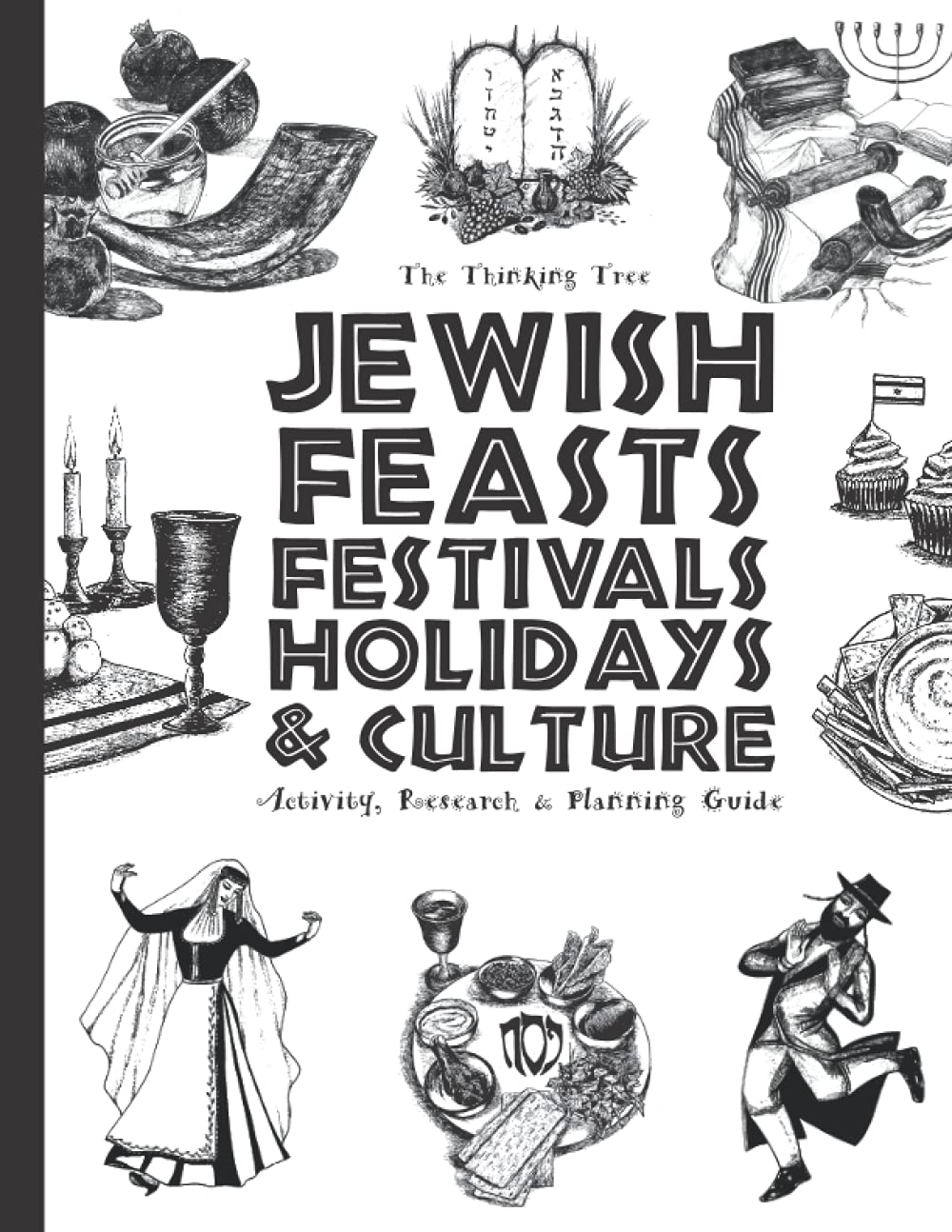
This activity book will guide you, as you research Jewish holidays and plan your celebrations! You will learn about traditions, history, meals, customs, and so much more! This book is recommended for family collaboration, or for students ages 9 and up. This journal is a do-it-yourself research journal. We recommend using Jewish-authored books and websites to learn more about the holidays and celebrations mentioned in this journal. The following websites are full of valuable information and would be a good starting point: www.myjewishlearning.com www.chabad.org www.aish.com www.alephbeta.org www.ou.org There are also many wonderful books written about the Jewish holidays that will help you discover the rich history, culture, and meaning behind each celebration and guide you as you plan your own celebrations and traditions. Table of Contents: 6 How to use this Journal 8 Introduction 10 Shabbat 26 Hebrew vs. Gregorian Calendar 28 Rosh Chodesh 30 Month of Nisan · Yom Ha’Shoah 59 Month of Iyar · Lag B’Omer · Yom Ha’Zikaron · Yom Ha’Atzmaut 84 Month of Sivan · Shavuot 98 Month of Tammuz 100 Month of Av · Tisha B’Av · Tu B’Av 114 Month of Elul 116 Month of Tishrei · Rosh Hashana · Yom Kippur · Sukkot · Shemini Atzeret · Simchat Torah 160 Month of Chesvan 162 Month of Kislev· Chanukah 176 Month of Tevet 178 Month of Shevat· Tu B’Shevat 188 Month of Adar· Purim 204 Lifecycle Events Introduction: Jewish history and culture are remarkably complex. Some holidays are major and some are minor. Some holidays are ancient and some are modern. Some include feasting, some include fasting. As you start studying about the diverse Jewish holidays, it’s important to understand something about the diversity of the Jewish people. In over 4000 years of Jewish living, there has never been consensus on what a Jewish life should look like. Census numbers vary, but there are approximately 14.7 million Jews in the world. About 6.7 million live in Israel and another 5.7 million live in the United States. The rest are scattered across Europe, Central and South America, Africa, Australia, and beyond. For many, Jewishness is more like citizenship than a religion. If you’re unfamiliar with Jewish holidays, you might find the traditions to be strange. As you study, be sure to use Jewish websites for your research. They will have an insight into the culture and Hebrew language that is important. For example, in this book you will see “G-d.” For Jews, the name of the Creator is the most holy word. Some have chosen to omit the “o” as a way of respecting the name by not allowing it to be destroyed or desecrated. Like much in Judaism, there is disagreement about this. For the sake of those who prefer “G-d,” we will use that spelling. Exploring a culture’s holidays can be like visiting a new country without leaving home. As you discover the beauty and diversity of Jewish holidays, maybe you’ll start some new traditions with your family. Shalom!