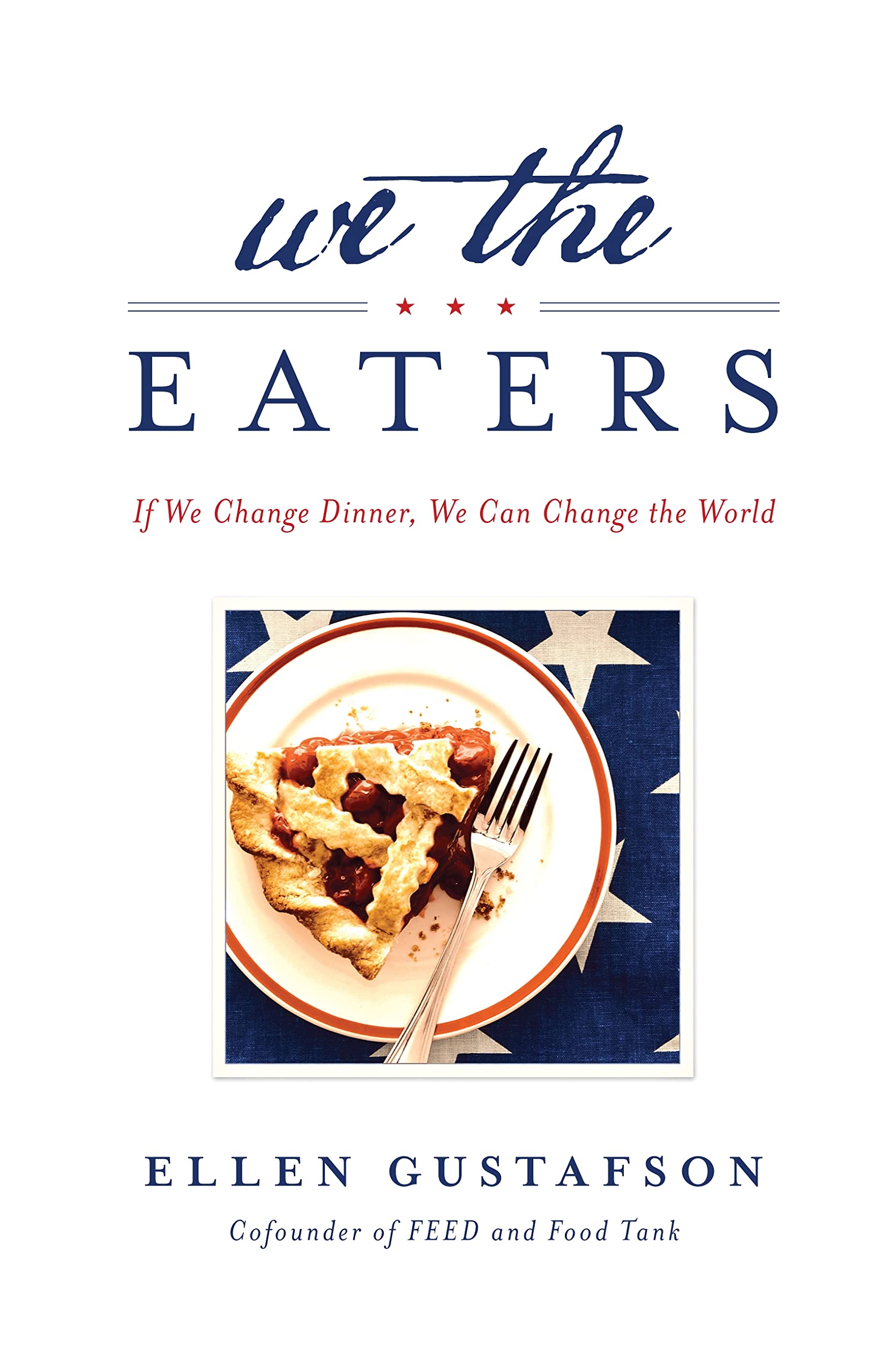
The implausible truth: Over one billion people in the world are hungry and over one billion are overweight. Far from complete opposites, hunger and obesity are in fact different manifestations of the same problem: It's increasingly difficult to find and eat nutritious food. By examining the global industrial food system using the deceptively simple template of a classic American dinner, We the Eaters not only outlines the root causes of this bizarre and troubling dichotomy but also provides a blueprint of actionable solutions—solutions that could start with changing out just a single item on your plate. From your burger to your soda, Gustafson unpacks how even the hyperlocal can cause worldwide ripples. For instance: American agricultural policy promoting corn and soybeans in beef farming means we feed more to cows than to hungry people. This is compounded by the environmental cost of factory livestock farming, rising obesity rates, and the false economics of unhealthfully high meat consumption. The answer? Eat a hamburger—just make it a smaller, sustainably raised, grass-fed one. Gustafson—a young entrepreneur, foreign policy expert, and food policy advocate—delivers a wake-up call that will inspire even the most passive reader to take action. We can love our food and our country while being better stewards of our system and our health. We the Eaters is othing short of a manifesto: If we change dinner, we really can change the world. “ We the Eaters is more than an eye-opening primer on how we consume in the 21st century. Encompassing the full scope of transformation from farm to fork, it's a manifesto for how we should act and unafraid of the radical change we need to get us to a sustainable future.” — Raj Patel, author of Stuffed and Starved “This book is a major lesson on the global food system and how 'we the eaters' plan an essential role in it. You will learn from Ellen Gustafson and feel empowered to change the world simply by being conscious of what you're eating.” — Sophia Bush, actress and activist “A magnificent analysis of what has happened to our food and how it is impacting the health of our loved ones. We the Eaters is a data-driven wake-up call to the current state of our food system and how the most patriotic thing that we could be doing is to build a better one.” — Robyn O'Brien, author of The Unhealthy Truth and founder of AllergyKids “A very smart look at a very complicated and very important issue. No one I know connects the dots to tell this story better than Ellen Gustafson. If you want to know how the power of food can change the world, you must read this book.” — Jose Andres, chef and restaurateur, Think Food Group Ellen Gustafson is a sustainable food systems activist and social entrepreneur. She is the cofounder of Food Tank: The Food Think Tank and lectures around the world on global food issues. The cofounder of FEED Projects and the FEED Foundation, which have provided more than 60 million school meals to children in need, Gustafson has also worked at the U.N. World Food Program, ABC News, and the Council on Foreign Relations. 1 The Husk, the Cob, and a Kernel of Truth The Heart of the Global Problem with Corn FOR MANY EATERS, the iconic American hamburger takes center stage--or center plate--at a backyard summer barbecue. Since Americans eat upward of 40 billion hamburgers a year--that's almost 130 hamburgers per person, or about 2.5 a week--it is evident that the burger takes a star turn on our plates during the rest of year as well.1 What we the eaters have to figure out is how to build a better burger, as part of a better meal, as a means to better health and a better world, so we can still have our burgers-- albeit in a slightly altered but greatly improved form. But we can't talk about how to create a better burger, or discuss how to improve the quality of meat, until we understand corn and the huge role it plays in food production. And the reason is that what we call corn--Zea mays, which descended from the wild native plant found in Mexico, Guatemala, and Nicaragua called teosinte--has evolved into one of the world's most highly cultivated grains. In fact, corn is a significant building block of the vast majority of our food--one that is a critical component of those 40 billion burgers Americans eat each year. The centrality of corn as an agricultural staple is no better demonstrated than by the fact that its name, Zea mays, is derived from the Arawak Indian word mahiz, which means "that which sustains life." The Arawaks weren't the only people to recognize the value in maize cultivation, either. An early account of European settlers observing the maize plant in the New World was published in George Sale's 1763 book, An Universal History: The ear is a span long, composed of eight or more rows of grain, according to the quality of the soil, and about thirty grains in each row; so that each ear at a medium produces about two hundred and forty grains,