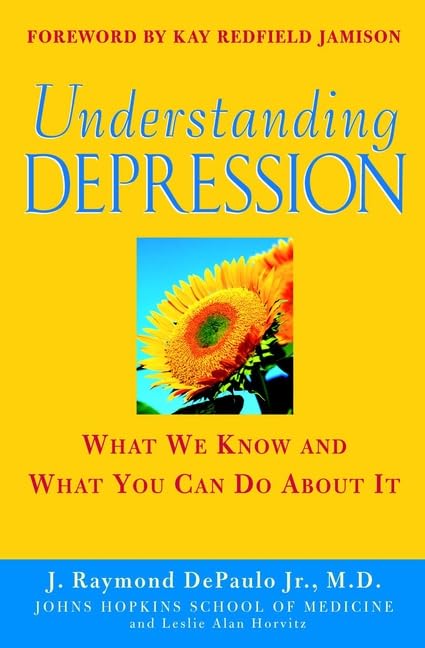
From a leading medical expert at Johns Hopkins, here is an up-to-the-minute, definitive guide to what s known about depression and how it can be treated. Around ten percent of North Americans suffer from depression at some point -- and more than half haven t even sought help. Now, Dr. Raymond DePaulo, one of the world s foremost authorities on depression, provides a sensitive, thorough, and reassuring book for sufferers from depression and those who care about them. This practical guide for individuals with depression and their families -- the only totally comprehensive book in the market -- shows readers how to identify the problem, then directs them to the various forms of treatment, including medications, psychotherapy, support groups, and exercise. It is one of the few books to discuss in depth manic depression, the bipolar form of depression. Dr. DePaulo discusses both mainstream (the latest medications and talk therapies) and alternative paths and reveals the truth about the dangerous fallacies that abound about depression. Comprehensive, compassionate, and grounded in the very latest research into brain chemistry, psychology, and medications, this is a definitive, landmark roadmap to one of the most devastating -- and common -- mental illnesses. "No one system, organ, or other factor is responsible for depression-not one steroid, not one gene, not one neurotransmitter, and not a lesion on one side of the brain or the other. What we seem to have is a stew with lots of different and exotic." So explains DePaulo (How to Cope with Depression), psychiatry professor and director of the Affective Mental Disorder Clinic at John Hopkins School of Medicine, in this thoughtful, exhaustive reference on depression for general readers. DePaulo covers all aspects of the illness-what it feels like; who tends to have it (women are two or three times more likely to be diagnosed than men, not necessarily the same thing); the biology of depression; possible courses of therapy; and psychopharmacology. DePaulo also discusses bipolar disorder (manic depression), and he covers both mainstream and alternative treatments. He believes doctors should involve family and friends of the patient (which, though ideal, is probably impractical for doctors on most health-care plans), and explains how the children and other family members of those with depression are affected by the disease. The chapters on finding the right treatment and how doctors make diagnoses will be extremely useful for those suffering from the disease. Though some of the writing is a touch sloppy and clunky, readers will find this an invaluable resource. (Mar.) (Publishers Weekly, March 4, 2002) There are three audiences for this authoritative book: people who think they may be depressed, those whose condition has already been diagnosed and are in treatment, and those who are concerned about someone who is either in treatment or probably needs to be. Dr. DePaulo, a professor of psychiatry and director of the Affective Disorders Clinic at the Johns Hopkins medical school, not only tells what the experts know, he also reveals the gap in knowledge about the causes, precipitants and treatments. Medical science, he says, is still unclear about the fundamental brain and genetic mechanisms underlying depression. One of the most disabling aspects of the disease is that sufferers often don't even know they have it. Dr. DePaulo examines traditional and alternative therapies and provides other sources that can help. His bottom line is that depression is worse than mere sadness or being in a "bad mood." The hallmark of severe depression, he says, is "an inclination to despair" and the inability of many people to feel anything whatsoever. What Dr. DePaulo calls the "soul of depression" is "a sense of being anesthetized or deadened." He elaborates with an anecdote about Dick Cavett, the talk show host and writer, who suffered from depression. A psychiatrist, comparing depression to the "awful grief" he experienced over the death of his own parents, told Mr. Cavett he understood his problem based on that experience. According to the writers, Mr. Cavett replied: "Do you think grief is anything like depression? Go with grief. It's better. In grief you're at least feeling a rich, deep feeling. In depression you don't even have that, it's just that awful feeling of nullity." (The New York Times Science Times/Health & Fitness Section, Tuesday, May 28, 2002) "I have been privileged to work and teach with Dr. De Paulo at Johns Hopkins for the past fifteen years. He is, without doubt, one of the best clinicians and clinical teachers I have ever known. His understanding of depression is deeply grounded in science, and his treatment approach is characterized by compassion, pragmatism, subtlety, and an obvious affection and respect for the many thousands of patients he has so effectively treated. None of us has a choice about becoming depressed. We do, however, have a choice