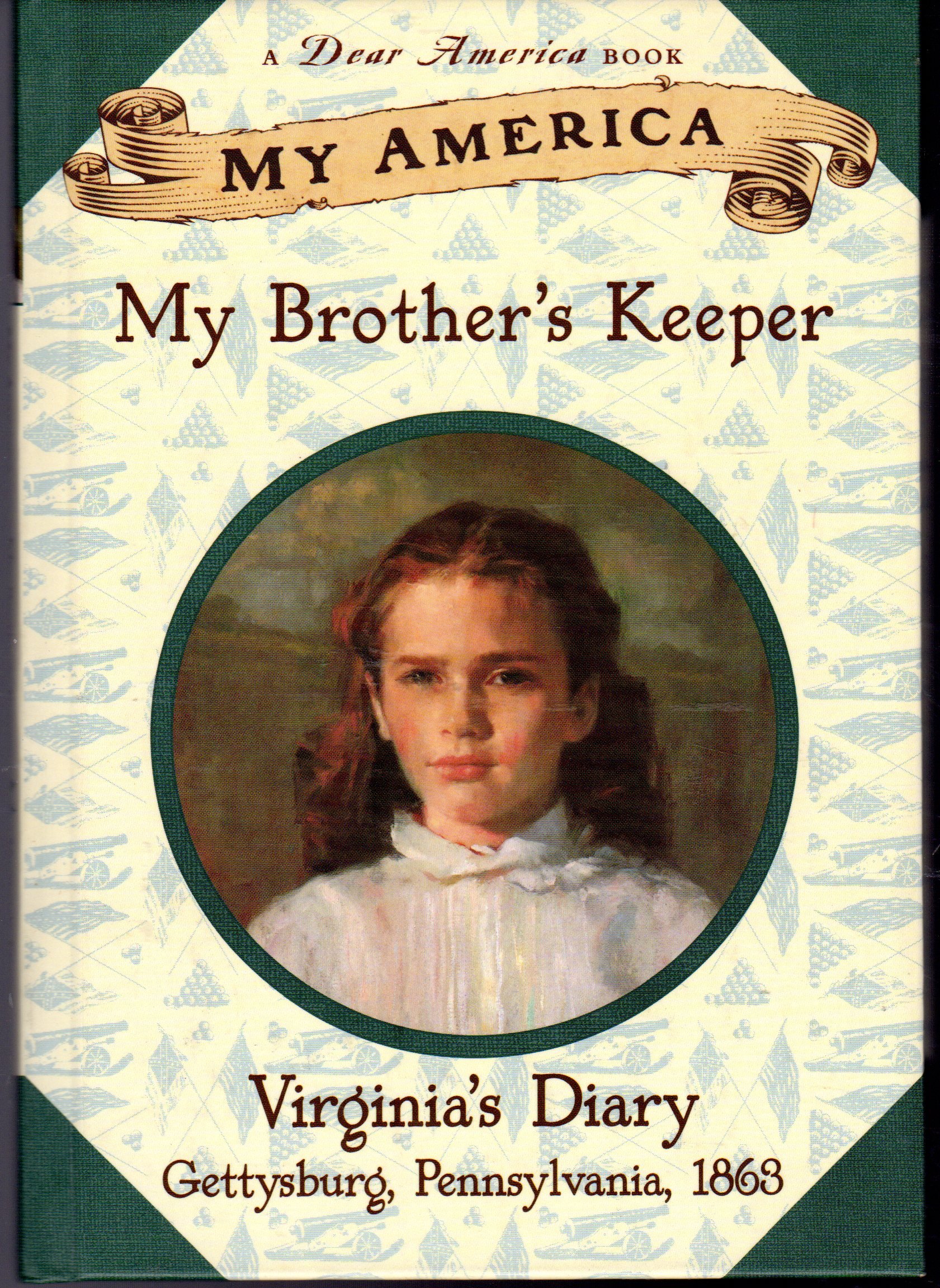
Mary Pope Osborne's book, part of the relaunch of the My America series, tells the story of Ginny, a young girl who keeps a journal during the Civil War's Battle of Gettysburg. Virginia Dickens has promised to keep a journal for her older brother Jed. And Ginny finds plenty to write about: Pennsylvania Volunteers arrive in the town square reporting a big battle in Virginia and calling for more men to join their ranks. Rumors fly that the Rebs are headed to Gettysburg, and the Battle of Gettysburg ensues. Suddenly, Ginny's quiet town is filled with the injured. Ginny's brother Jed has joined the Union army, and they find him wounded in a makeshift hospital. With Ginny's nursing, he recovers, and Ginny is is able to witness the President's Gettysburg Address. Virginia Dickens is angry. Her father and brother Jed have left her behind while they go off to Uncle Jack's farm to help him hide his horses from Confederate raiders. It's the summer of 1863 and Pa and Jed believe 9-year-old Virginia will be out of harm's way in the sleepy little town of Gettysburg, Pennsylvania. Too soon they all discover how wrong they are, as Union and Confederate soldiers descend on Gettysburg for the bloodiest battle of the Civil War. Virginia has front-row seats to this horrific episode of history, and she records every incident and feeling she experiences in her journal (which is actually Jed's; he entrusted it to her when he went away, asking her to be his "eyes and ears in Gettysburg"). Mary Pope Osborne's gripping story is a welcome addition to the popular My America historical-fiction series. Neither Osborne nor Virginia shy away from telling the truth, brutal and painful though it may be. This lends a certain depth, appeal, and integrity to the book that a history textbook could never match. Real players in the Civil War, including Robert E. Lee and Abe Lincoln, make cameo appearances, while the fictional characters seem just as authentic. Osborne has written a wide variety of other engaging stories, including Adaline Falling Star . (Ages 8 to 11) --Emilie Coulter Grade 3-5-Resembling the "Dear America" books (Scholastic), these titles are aimed at a slightly younger audience. In the first book, nine-year-old Elizabeth records her experiences as she, her family, and other colonists adjust to the harsh weather conditions, illness, endless hard work, and nascent social strata in the new land. In the course of three months, Elizabeth meets Captain John Smith, Pocahontas, Gabriel Archer, and George Percy. This is a quick, easy read. Hermes has created a sensitive main character and readers will empathize with her fears and emotions as she adjusts to her new life. In My Brother's Keeper, nine-year-old Virginia Dickens is left in the care of Reverend and Mrs. McCully while her father and brother help her uncle hide his horses from the Confederate raiders. Her journal documents the battle at Gettysburg and the horrors of war. After the battle, she and her father find her brother in a makeshift hospital. The novel ends as the town slowly recovers and Virginia hears President Lincoln's Gettysburg Address. Osborne successfully creates individual characters, and she poses difficult questions about war and the waste of human life. There is a lyrical quality to several passages, and the author slowly builds suspense and release. However, this book seems more fitting for older, more experienced readers, and the intended audience may have difficulty digesting some of the material. Fans of "Dear America" will enjoy it. Shawn Brommer, Southern Tier Library System, Painted Post, NY Copyright 2000 Reed Business Information, Inc. Gr. 2-5. This book in the My America series uses the same diary format as books in the Dear America and My Name Is America series, but it is intended for younger readers. When nine-year-old Virginia's father and brother Jed leave to get horses from Uncle Jack, Jed asks Virginia to keep his journal going. Angry at being left behind, Virginia has no idea what to write. As she witnesses the aftermath of the bloody battle of Gettysburg, she records all she sees and hears, concluding with Lincoln's Gettysburg address. Although Osborne never explains why Virginia's father and 18-year-old Jed aren't fighting, she does a good job of looking at the Civil War from a young girl's perspective. Notes at the end offer brief historical background, and a few black-and-white photos provide visual cues to the events. Karen Hutt Copyright © American Library Association. All rights reserved Civil War