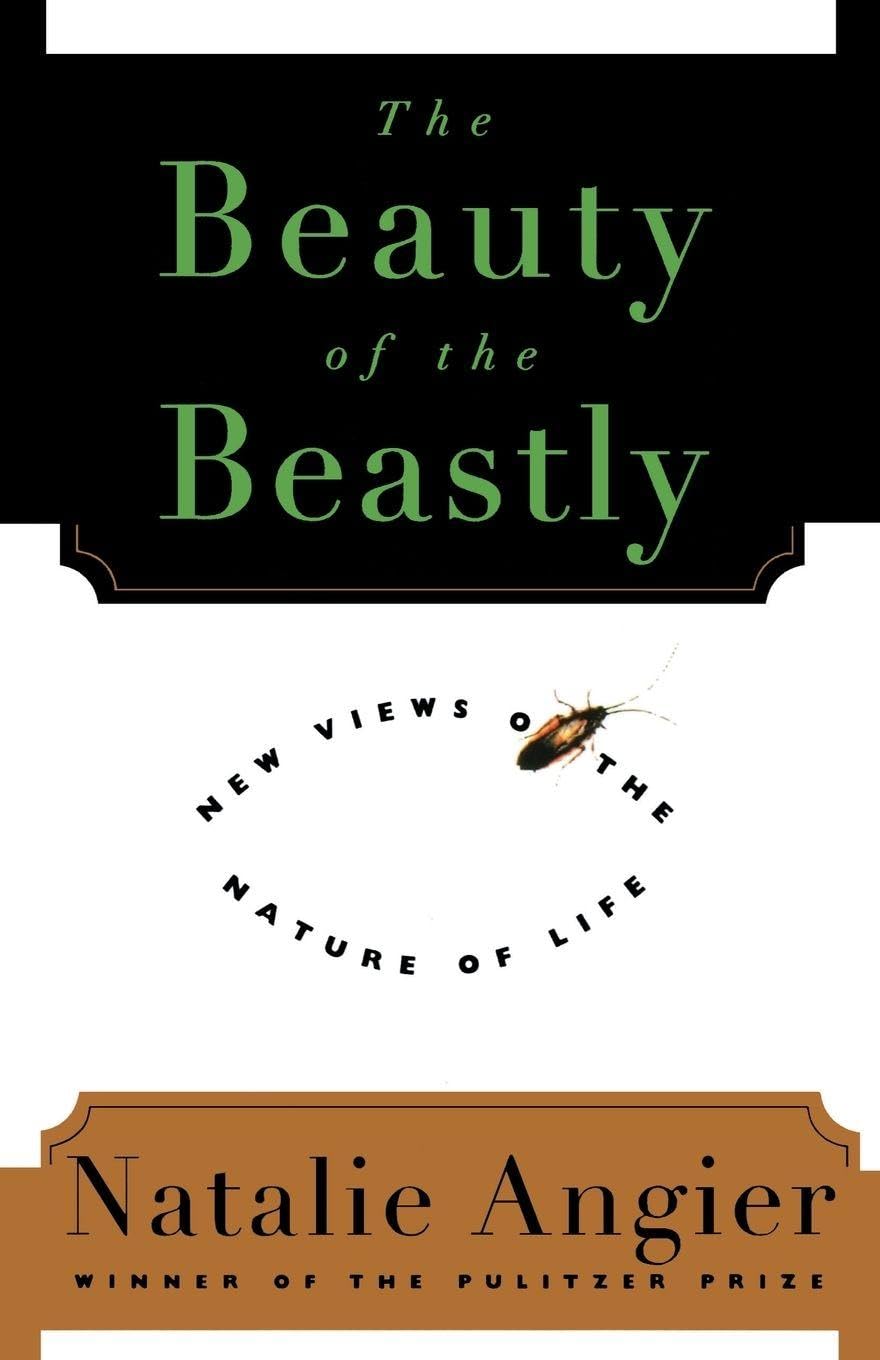
Natalie Angier knows all that scientists know - and sometimes more - about the power of symmetry in sexual relations, about the brutal courting habits of dolphins, about the grand deceit of orchids, about the impact of female and male preferences on evolution. She knows how scientists go about their work, and she describes their ways, their visions, and their arguments. Perhaps most poignantly, she understands the complexities and the sad necessity of death. "The beauty of the natural world lies in the details, and most of those details are not the stuff of calendar art," she points out. Few writers have ever covered so many facets of biology so evocatively in one book. The Beauty of the Beastly tells us how the genius of the biological universe resides in its details and proves why, according to Timothy Ferris, author of the acclaimed Coming of Age in the Milky Way, Angier is "one of the strongest and wittiest science writers in the world today." "More than ever, we need good interpreters (of science), and Natalie Angier is one who is constitutionally incapable of writing a boring sentence." The New York Times "Intimate and dramatic portraits of nature." Publishers Weekly, Starred NATALIE ANGIER is a Pulitzer-Prize winning science columnist for The New York Times . She is the author of several books including The Canon , Woman , The Beauty of the Beastly , and Natural Obsessions . She lives outside Washington, D.C., The Beauty of the Beastly New Views on The Nature of Life By Natalie Angier Houghton Mifflin Harcourt Publishing Company Copyright © 1995 Natalie Angier All rights reserved. ISBN: 978-0-395-79147-9 Contents Title Page, Contents, Front Cover, Dedication, Introduction, I. LOVING, 1. Mating for Life?, 2. The Urge to Cuddle, 3. Tell a Tale of In-Laws, 4. Female Choice: An Eve-olutionary Force, 5. What Makes a Parent Put Up with It All?, 6. Dolphin Courtship: Brutal, Cunning, and Complex, 7. Skin Deep?, 8. The Grand Strategy of Orchids, II. DANCING, 9. The Very Pulse of the Machine, 10. The Wrapping of DNA, 11. Chaperoning Proteins, 12. A Clue to Longevity, 13. What Happens When DNA Is Bent, 14. Blueprint for an Embryo, 15. DNA's Unbroken Text, III. SLITHERING, 16. Admirers of the Scorpion, 17. Parasites and Sex, 18. The Scarab, Peerless Recycler, 19. There Is Nothing Like a Roach, 20. The Pit Viper: Bizarre, Gallant, Venomous, IV. ADAPTING, 21. The Play's the Thing, 22. Hormones and Hyenas, 23. The World's Most Endangered Primate, 24. Plenty of Fish in the Sea, 25. Chasing Cheetahs, 26. Busy as a Bee?, 27. It's Only Human, V. HEALING, 28. A New Theory of Menstruation, 29. Why Vegetables Are Good for You, 30. Unsightly Fat: The Mammals' Fate, 31. The Anatomy of Joy, VI. CREATING, 32. The Artful Doctor, 33. From Madness to Masterpiece, 34. Scientist at Work: Victoria Elizabeth Foe, 35. Scientist at Work: Mary-Claire King, 36. At the Science Museum with Stephen Jay Gould, VII. DYING, 37. Cell Death as the Key to Life, 38. MYC Gene, Arbiter of Death or Life, 39. The Other Side of Suicide, 40. Another Stitch in the Quilt, 41. A Granddaughter's Fear, Index, Connect with HMH, CHAPTER 1 Mating for Life? Ah, romance. Can any sight be as sweet as a pair of mallard ducks gliding gracefully across a pond, male by female, seemingly inseparable? Or, better yet, two trumpeter swans, the legendary symbols of eternal love, each ivory neck one half of a single heart, souls of a feather staying coupled together for life? Coupled for life — with just a bit of adultery, cuckoldry, and gang rape on the side. Alas for sentiment and the greeting card industry, it turns out that, in the animal kingdom, there is almost no such thing as monogamy. As a wealth of recent findings makes as clear as a crocodile tear, even creatures long assumed to have faithful tendencies and to need a strong pair bond to rear their young in fact are perfidious brutes. Biologists traditionally believed, for example, that up to 94 percent of bird species were monogamous, with one mother and one father sharing the burden of raising their chicks. Now, using genetic techniques to determine the paternity of offspring, biologists find that, on average, 30 percent or more of the baby birds in any nest were sired by someone other than the resident male. Indeed, the great challenge these days is to identify a bird species not prone to such evident philandering. Among creatures already known to be polygamous, researchers find their subjects to be far more craftily faithless than previously believed. Mammals, for example, have never been considered paragons of virtue, yet even here revisionism is in order, and experts are recalculating downward the already pathetic figure of 2 percent to 4 percent that represented, they thought, the number of faithful mammal species. To the astonishment, perhaps disgruntlement, of many traditional animal behaviorists, much of t