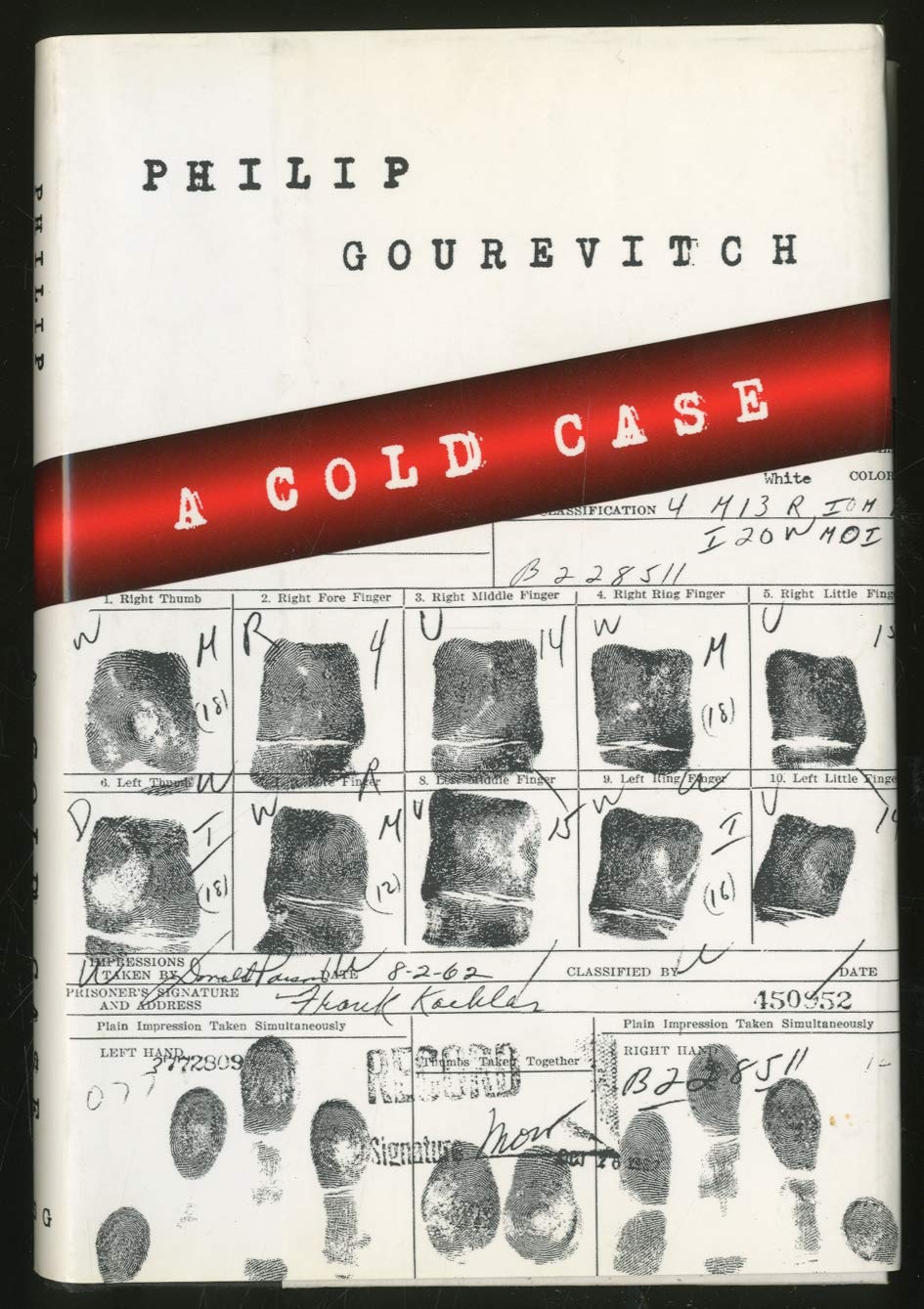
Follows investigator Andy Rosenzweig's three- decades-long pursuit of Frankie Koehler, a brilliant killer who keeps eluding capture. Frank Koehler was only 15 when he shot a friend in the back for double-crossing him. That's the sort of guy he was--violent, Mob-connected, and remorse-free. In the same rough-and-tumble postwar neighborhood on Manhattan's West Side lived a very different young man: Andy Rosenzweig, rigorously straight and determined to become a policeman at a time when cops were more likely to be taking naps or bribes than nabbing criminals. Years later, in 1970, Koehler murdered two men after an argument in a restaurant. One of the victims was a friend of Rosenzweig's. It was a straightforward case, but in a typical show of the NYPD's ineptitude, the case was closed when someone decided to declare Koehler dead, allowing him to slip away. Twenty-seven years after the murders, on the eve of Rosenzweig's retirement as chief of investigations, he reopened the case, determined not to leave without catching the murderer of his friend. Philip Gourevitch, who last examined murder in the award-winning We Wish to Inform You That Tomorrow We Will Be Killed with Our Families: Stories from Rwanda , is more interested in the personalities of killers and those who pursue them than the drama of murder itself. As a result, A Cold Case is short on tension, but it is an excellent character study. Gourevitch immerses us in the "white hoodlum milieu of another time and from a city which no longer really exists," and he conjures up the particular moral universe of each character--Rosenzweig; murder victim Richie Glennon, an ex-prizefighter who walked the fence between the good guys and the bad guys; Murray Richman, the Mob-defending lawyer from the Bronx who likes murder cases because there's "one less witness to worry about"; and Koehler himself, now elderly but still unremorseful. Gourevitch's skillful handling raises intriguing contradictions and questions, not least this one Koehler asks about himself: "Why would people still think good of this asshole?" Now, that's a story. --Lesley Reed Almost 30 years after Frank Koehler murdered two men and disappeared, Manhattan D.A. investigator Andrew Rosenzweig rediscovered the case and set out to solve it. His interest wasn't just professional; Rosenzweig knew the two murdered men and had been on the fringes of the slightly sordid world from which both the victims and the murderer came. New Yorker writer Gourevitch (We Wish To Inform You That Tomorrow We Will Be Killed with Our Families) covers not only the way investigators attack a "cold case" but the lives of both Koehler and Rosenzweig and how a similar milieu could birth both a dedicated lawman and a cold-blooded killer. Koehler's statements about his life, both as a small-time hood and as a good citizen while he was in hiding, are both fascinating and chilling. Gourevitch does a splendid job with this short, focused book, which should find a home in public libraries with true-crime collections. - Deirdre Bray Root, Middletown P.L., OH Copyright 2001 Reed Business Information, Inc. One day in 1997, NYPD detective Andy Rosenzweig passed the site of a long-gone restaurant and recalled the 1970 murders of its proprietor and a companion, the latter of whom Rosenzweig had known. Police knew the killer was Frank Koehler, who had a rap sheet stretching back to his Hell's Kitchen youth, but couldn't catch him and closed the case. Rosenzweig had it reopened and ultimately apprehended the elderly Koehler, who, armed with hollow-point bullets when arrested, was still up to no good. Koehler proved garrulous in his confession, and his convoluted self-justifications are what most concern Gourevitch. In ruminatively asking why a man murders and how he feels about it, Gourevitch continues in the vein of his award-garnering book about genocide in Rwanda, We Wish to Inform You That Tomorrow We Will Be Killed with Our Families (1998). A subtle, skillful storyteller, he also gives his investigation of a good cop and a bad guy some real New York flavor in the person of Koehler's cynical lawyer. Gilbert Taylor Copyright © American Library Association. All rights reserved "I think Philip Gourevitch is an ace researcher and a knockout writer. You'll love A Cold Case ." -- Elmore Leonard "The mystery . . . is not how these murders occurred or . . . the killer was caught . . . rather, the nature of the crime itself." -- Scott Turow Philip Gourevitch is a staff writer at The New Yorker . His first book, We Wish to Inform You That Tomorrow We Will Be Killed with Our Families: Stories from Rwanda (FSG, 1998), won the National Book Critics Circle Award and the Los Angeles Times Book Prize. He lives in New York City. CHAPTER ONE On November 15, 1944, an Army deserter named Frank Gilbert Koehler was arrested for burglary in New York City. Frankie, as he liked to be called, had no criminal record. He had walked off his