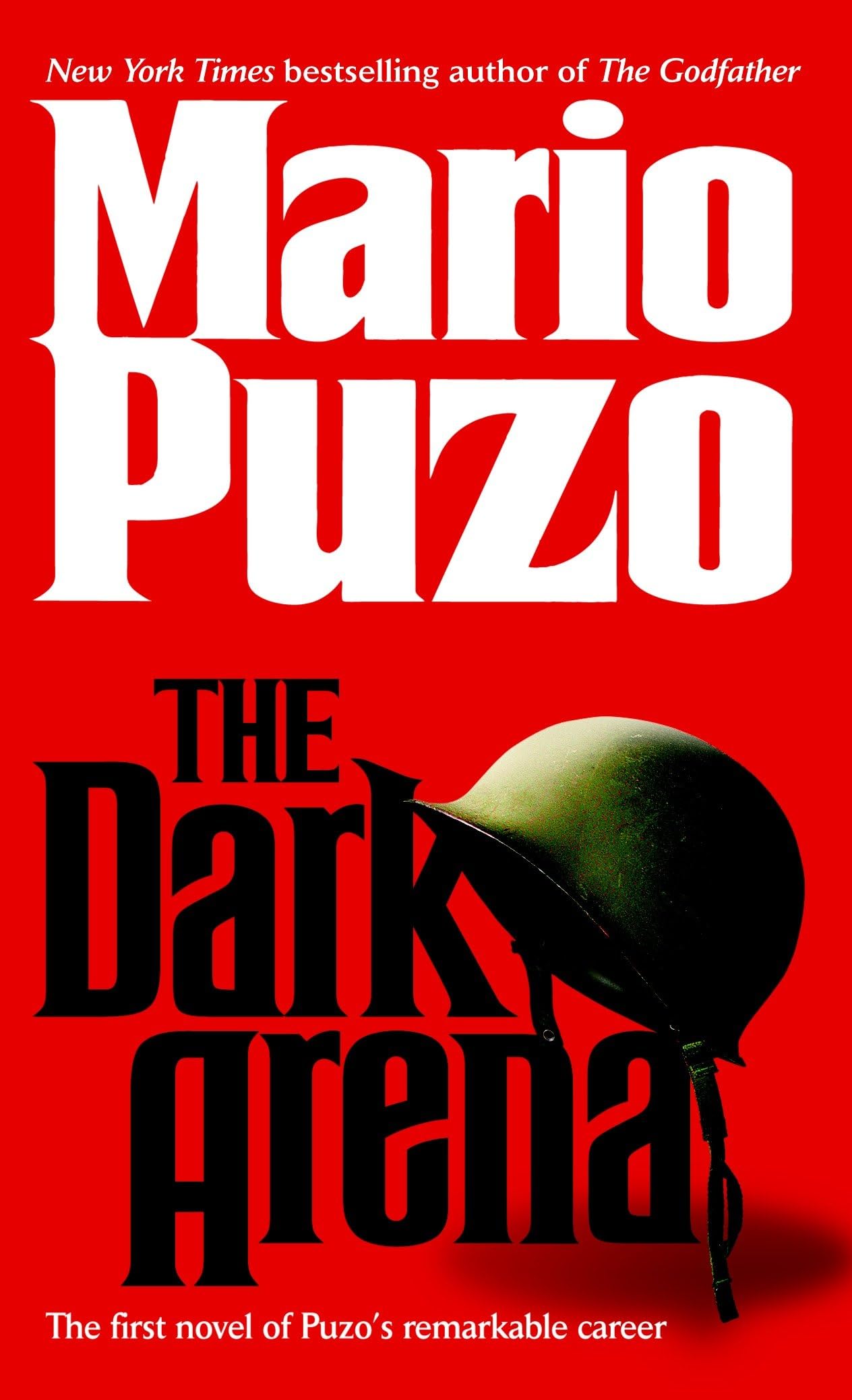
Mario Puzo won international acclaim for The Godfather and his other Mafia novels. But before creating those masterpieces, Puzo wrote his first acclaimed novel The Dark Arena –an astounding story of a war-scarred young American in a battle against corruption and betrayal. . . . After coming home at the end of World War II, Walter Mosca finds himself too restless for his civilian role in America. So he returns to Germany to find the woman he had once loved–and to start some kind of life in a vanquished country. But ahead of Walter stretches a dark landscape of defeat and intrigue, as he succumbs to the corrupting influences of a malevolent time. Now he enters a different kind of war, one in which he must make a fateful decision–between love and ambition, passion and greed, life and death. . . . "Fierce, intense, compelling." - The Boston Globe "ONE OF THE FINEST WORKS OF FICTION TO COME OUT OF THIS COUNTRY’S OCCUPATION OF GERMANY." - The Nation "PUZO TELLS HIS STORY BRUTALLY, VIOLENTLY, AND UNDOUBTEDLY VERY MUCH AS IT ALL MIGHT HAVE BEEN." - San Francisco Chronicle Mario Puzo won international acclaim for The Godfather and his other Mafia novels. But before creating those masterpieces, Puzo wrote his first acclaimed novel The Dark Arena an astounding story of a war-scarred young American in a battle against corruption and betrayal. . . . After coming home at the end of World War II, Walter Mosca finds himself too restless for his civilian role in America. So he returns to Germany to find the woman he had once loved and to start some kind of life in a vanquished country. But ahead of Walter stretches a dark landscape of defeat and intrigue, as he succumbs to the corrupting influences of a malevolent time. Now he enters a different kind of war, one in which he must make a fateful decision between love and ambition, passion and greed, life and death. . . . "Mario Puzo won international acclaim for The" Godfather" and his other Mafia novels. But before creating those masterpieces, Puzo wrote his first acclaimed novel The Dark Arena"-an astounding story of a war-scarred young American in a battle against corruption and betrayal. . . . After coming home at the end of World War II, Walter Mosca finds himself too restless for his civilian role in America. So he returns to Germany to find the woman he had once loved-and to start some kind of life in a vanquished country. But ahead of Walter stretches a dark landscape of defeat and intrigue, as he succumbs to the corrupting influences of a malevolent time. Now he enters a different kind of war, one in which he must make a fateful decision-between love and ambition, passion and greed, life and death. . . . Mario Puzo was born in New York and, following military service in World War II, attended New York’s New School for Social Research and Columbia University. His bestselling novel, The Godfather , was preceded by two critically acclaimed novels, The Dark Arena and The Fortunate Pilgrim . In 1978, he published Fools Die , followed by The Sicilian , The Fourth K , and the second installment in his Mafia trilogy, The Last Don . Mario Puzo also wrote many screenplays, including those for Earthquake , Superman , and all three Godfather movies, for which he received two Academy Awards. He died in July 1999 at his home on Long Island, New York, at the age of seventy-eight. one Walter Mosca felt a sense of excitement and the last overwhelming loneliness before a home-coming. The few ruins outside of Paris were remembered and familiar landmarks, and now on the last leg of his journey he could hardly wait to come to his final destination, the heart of the ruined continent, the destroyed city that he had never thought he would see again. The landmarks leading into Germany were more familiar to him than the approaches to his own land, his own city. The train rocked with speed. It was a troop train with replacements for the Frankfort garrison, but half the car was taken by civilian employees recruited from the States. Mosca touched his silk tie and smiled. It felt strange to him. He would feel more at home with the GIs at the other end, and, he thought, so would most of the twenty or so civilians with him. There were two dim lights, one at each end of the car. The windows were boarded up, as if the car had been built so that its occupants would not be able to see the vast ruins through which they would travel. The seats were long wooden benches, leaving only one very narrow aisle along one side. Mosca stretched out on his bench and put the blue gym bag under his head for a pillow. In the bad light he could hardly recognize the other civilians. They had all traveled on the same Army ship together, and like himself, they all seemed excited and eager to reach Frankfort. They talked loudly to be heard over the roar of the train, and Mosca could hear Mr. Gerald’s voice dominating the rest. Mr. Gerald was the highest ranking civilia