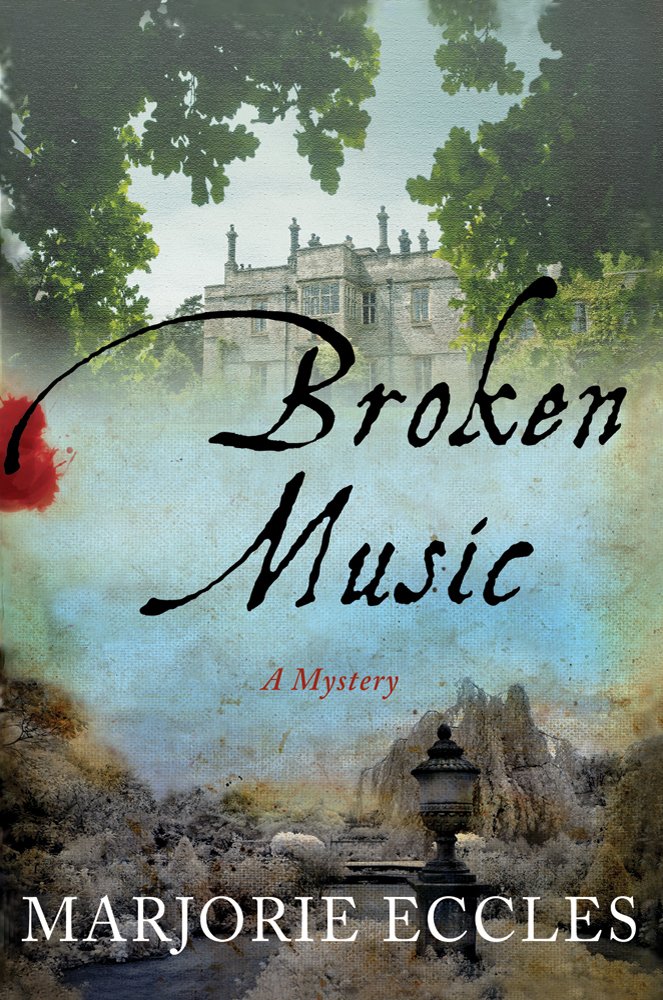
The year is 1919 and the population of Great Britain is still struggling to its feet after being hit by the atrocities of the First World War. Progress is slow, even in quiet spots like the village of Broughton Underhill, on the edge of the Black Country. Gradually soldiers return, wounds begin to heal, and people try to move on with their lives. Former police sergeant Herbert Reardon has returned to the village, determined to solve an old murder--a woman was found drowned in the lake when the war was just beginning. However, as Reardon begins to investigate, it becomes clear that secrets still abound and lips are staying sealed. When Edith Huckaby, a maid from Oaklands Park, is found murdered in exactly the same spot, Reardon is convinced that the two cases are linked. As he endeavors to discover the hidden truth, his suspects and witnesses are painstakingly trying to rebuild their lives, in a world that has been changed and scarred forever. Broken Music is a masterful portrait of the horrors of the front line and the anxiety of the home front, as the loves and losses of wartime Britain are woven together and the truth slowly dawns on a local tragedy. "Fans of Jacqueline Winspear's Maisie Dobbs series, and those interested in the history of the Great War and its aftermath, will appreciate Eccles's skillful portrayal of life in the trenches and on the home front, as well as the novel's complex saga of family secrets, love and loss....A compelling British mystery and family saga set during and after the First World War."--Shelf Awareness Marjorie Eccles was born in Yorkshire and spent much of her childhood there and on the Northumbrian coast. The author of more than twenty books and short stories, she is the recipient of the Agatha Christie Short Story Styles Award. Her books featuring police detective Gil Mayo were adapted for the BBC. Eccles lives in Hertfordshire. Broken Music PART ONEEarly March 1919 Chapter One The crow flies up from the valley on steady wings, making straight for the group of stunted trees crowning the summit of the hill. The one he alights on is a spindly thorn, not tall enough for a nesting place, and a skeleton into the bargain, having been struck by lightning two years previously, but that isn't why the crow has chosen it. From his perch, he surveys the immediate terrain with a bright, cold, practised eye, on the lookout for small animals or birds, worms, insects, anything that moves. Or better still, carrion.He waits, unmoving, biding his time. Directly below him, out of sight, are caves hewn by prehistoric ancients out of the soft red sandstone of the hill. And below that, the village of Broughton Underhill, sitting comfortably as it has done since Saxon times alongside the shallow river which rises at the bubbling springs and the holy well of St Ethelfleda, and after that winds through the length of the village, at one point on its way broadening out to form the lake of the big house, Oaklands Park.Down there, the March afternoon is still, cold and quiet, so quiet its everyday sounds float up to the hilltop:the children's voices as they tumble noisily out of school, and the district nurse's bicycle bell as she makes sedate haste towards the imminent arrival of a new baby; the sound of the church clock striking four, and faintly, the jingle of the harness as old Harry Packer and his great draught horses, busy with the spring ploughing in the ten-acre field at the home farm, turn the rich red earth.Nothing stirs up there on the hillside. Nothing catches the crow's beady eye. After a while he gives up and, with a hoarse croak, spreads his wings again and glides on the thermals back down into the village. The crow was there again, hunched on the washing-line post in the back garden of the rectory, as he had been intermittently for days, like a black Puritan parson, when Amy took the corn out for the hens. It was a task she hated. Senseless creatures they were, screeching like flustered, hysterical old women. The slightest thing agitated them but they had to be tolerated, providing as they did much needed eggs and the occasional boiling fowl.The hairs on the back of her neck rose when she saw the big bird and she clapped her hands to frighten it away, but only succeeded in provoking the silly hens to further squawks; with the same hard, unblinking stare the crow went on regarding her efforts to scatter corn from her basket as far as she could, in order to keep the hens from her feet. She would have crossed herself if she'd been a Catholic, or if she hadn't thought her father might be watching out of his study window.Florrie said crows were bad luck, they brought infection, they were omens of discord, and even death,and after the last years no one wanted any more of any of these, thank you very much. Well, yes, Amy thought - but I for one don't intend to go on being miserable now that the beastly war with the Germans is over, now that I've turned eighteen and might begin to make up