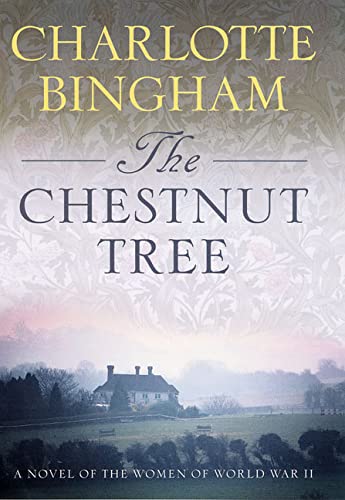
By bestselling British writer Charlotte Bingham, The Chestnut Tree is a sweeping, romantic novel about the women who stayed behind in World War II. It is the summer of 1939, and the residents of the idyllic Sussex fishing port of Bexham are preparing for war. Beautiful but shy Judy Melton, daughter of a naval hero; her determinedly feckless friend, the social butterfly Meggie Gore-Steward; seemingly demure Mathilda Eastcott, and Rusty Sykes, the tomboy daughter of the owner of the local boatyard, are all in their very individual ways determined to play an active part in the defense of their country. But knitting socks and bomb-dodging are not what they have in mind. Under the tree on the green the women of Bexham meet to look back on a landscape that has changed irrevocably, and which they have in their own ways helped to alter. None of them are the same, and yet, with the men returning from war, they are expected to slip back into their simple roles of mother, daughter, grandmother. This, more than anything perhaps, is their greatest sacrifice. Only the chestnut tree planted by Corrie at the edge of the village flourishes in the accepted manner, finally becoming the uniting symbol of all that has passed forever. British writer Bingham follows the lives of four women from the fishing village of Bexham during World War II: Judy, who is married to a solider lost in battle and who works for the war effort in any way she can; Meggie, who serves as a spy in occupied France; Mattie, who works as a driver and falls in love with an American general; and Rusty, who endures heartbreak and hard work while she tries to keep her family intact. The many ways these women react to, participate in, and are affected by the war create a story that is at once harrowing and luminous. Bingham expertly downplays horrific events so that the swiftness and capriciousness of death is stunning and unsettling, while her detailed depiction of home-front life is mesmerizing. The reaction of the men of Bexham to the abrupt emancipation of women during war and the women's perspective on this change shape much of the story as Bingham's quartet of women show breathtaking courage, suffer sorrow, find joy, and together create a haunting, distinctly female portrait of war. Neal Wyatt Copyright © American Library Association. All rights reserved British praise for Charlotte Bingham’s books In Sunshine or In Shadow : “Superbly written.” – Daily Mail Nanny : “Charlotte Bingham’s spellbinding saga is required reading.” – Cosmopolitan To Hear a Nightingale : “A delightful novel ... pulsating with vitality and deeply felt emotions. I found myself with tears in my eyes on one page and laughing out loud on another.” – Sunday Express Stardust : “Charlotte Bingham has produced a long, absorbing read, perfect for holidays, which I found hard to lay aside as the plot twisted and turned with intriguing results.” – Sunday Express Debutantes : “Line up, fans of Edith Wharton’s The Buccaneers, for your copy of Debutantes...[a] dramatic novel of 19th-century ballroom battles for power by marriage.” – Cosmopolitan Change of Heart : “Her imagination is thoroughly original ... a fairy tale, which is all the more delightful as it is not something one expects from a modern novel.” – Daily Mail Charlotte Bingham is a bestselling women’s fiction writer in the UK. She has written comedy and drama series, films and plays with her husband, the actor and playwright Terence Brady. Her many bestsellers include Distant Music, Summertime, and The Season.