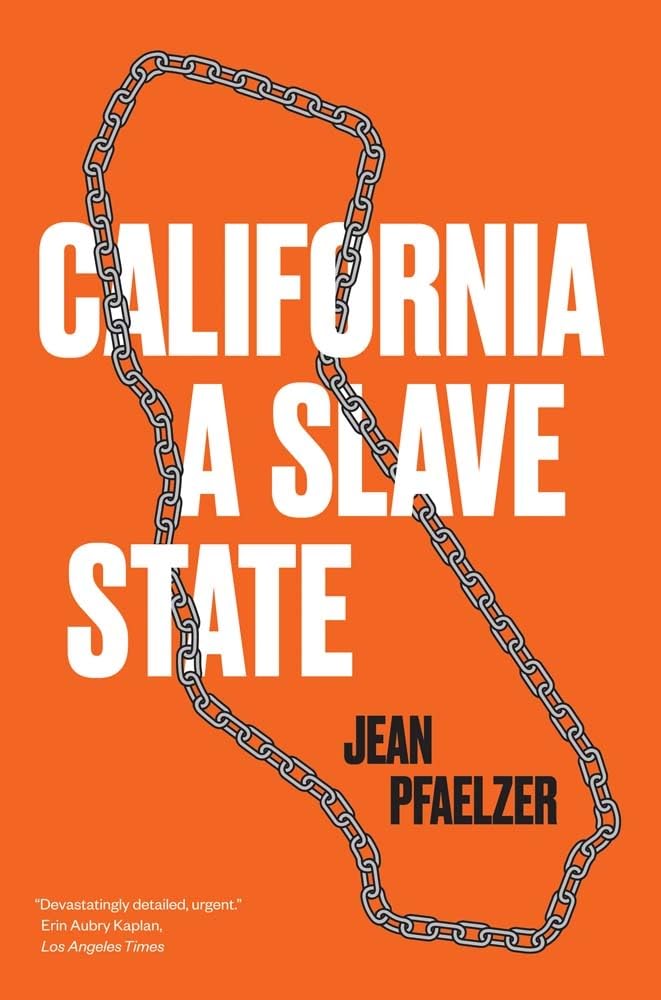
The untold history of slavery and resistance in California, from the Spanish missions, indentured Native American ranch hands, Indian boarding schools, Black miners, kidnapped Chinese prostitutes, and convict laborers to victims of modern trafficking “A searing survey of ‘250 years of human bondage’ in what is now the state of California. . . . Readers will be outraged.” —Publishers Weekly “A devastatingly detailed, urgent, and somewhat regretful confirmation of an inconvenient truth: Far from being the place where everyone got an equal chance, California embraced slavery from the outset.”—Erin Aubry Kaplan, Los Angeles Times California owes its origins and sunny prosperity to slavery. Spanish invaders captured Indigenous people to build the chain of Catholic missions. Russian otter hunters shipped Alaska Natives—the first slaves transported into California—and launched a Pacific slave triangle to China. Plantation slaves were marched across the plains for the Gold Rush. San Quentin Prison incubated California’s carceral state. Kidnapped Chinese girls were sold in caged brothels in early San Francisco. Indian boarding schools supplied new farms and hotels with unfree child workers. By looking west to California, Jean Pfaelzer upends our understanding of slavery as a North-South struggle and reveals how the enslaved in California fought, fled, and resisted human bondage. In unyielding research and vivid interviews, Pfaelzer exposes how California gorged on slavery, an appetite that persists today in a global trade in human beings lured by promises of jobs but who instead are imprisoned in sweatshops and remote marijuana grows, or sold as nannies and sex workers. Slavery shreds California’s utopian brand, rewrites our understanding of the West, and redefines America’s uneasy paths to freedom. “A devastatingly detailed, urgent, and somewhat regretful confirmation of an inconvenient truth: Far from being the place where everyone got an equal chance, California embraced slavery from the outset. . . . That boosterish tale of California’s endless possibility turns out to have been built with sweat, oppression, coercion, and genocide. It was precisely California’s openness, Pfaelzer posits, that allowed greed, cruelty, and hypocrisy to run amok, and it is this bitter irony—not the orange groves or Mediterranean climate—that makes us (that fraught word) exceptional.”—Erin Aubry Kaplan, Los Angeles Times “A historian explains how California ‘welcomed, honed and legalized’ human bondage for 250 years, from the legalized enslavement of Native Americans to forced labor in today’s prisons.”— New York Times Book Review “A searing survey of ‘250 years of human bondage’ in what is now the state of California. . . . Pfaelzer traces the practices of today’s prison system, such as the leasing of convicts to private employers as forced labor, back to the various slave trades that occurred in California, and makes an irrefutable case that unpaid labor was a major engine of the state’s economic growth. Readers will be outraged.” —Publishers Weekly “This book’s chronological ambition is its greatest strength. Pfaelzer traces four waves of conquest to show that diverse systems of forced labor . . . have nourished California’s economy.”—Naomi Sussman, Hispanic American Historical Review “This wide-ranging history encompasses the Spanish conquest of Indigenous peoples and the trafficking of sex workers today, looking underneath the veneer of sunshine to reveal the dark undercurrents that have long powered California’s economy.”— Alta Journal “One of the book’s greatest strengths is its storytelling, using accounts from survivors and oppressors to provide a narrative that is at times bleak and at others hopeful. . . . Highly researched and quick-witted.”—Ishmael Elias, News from Native California “This book contains a lot of uncomfortable truths about how California’s first governor, judges and legislators, some of whom were slave owners, conspired to murder, kidnap and even enslave Native Americans in the 1850s and ’60s . . . [and] how 19th- and 20th-century state laws denied civil rights to Native Americans, Black people and Asian immigrants. It’s a difficult history to acknowledge, but essential to understanding where, as a conscientious people, we should go from here.”—Jill Stanton, California Today “Pfaelzer dispenses with euphemistic qualifiers to chronicle the stolen lives and labor that built the Golden State. Seamlessly linking past to present, and bigotry to bondage, she brings together the enslaved experiences of Indigenous, Black, Chinese, Latino, and incarcerated populations. . . . A powerful body of comparative evidence.”—Terri A. Castaneda, Western American Literature “Monumental. . . . A lucidly written and deeply researched study. . . . Pfaelzer sees California not as an exception but [as] part of national histories of genocide and slavery. Slavery, we are starting to see,