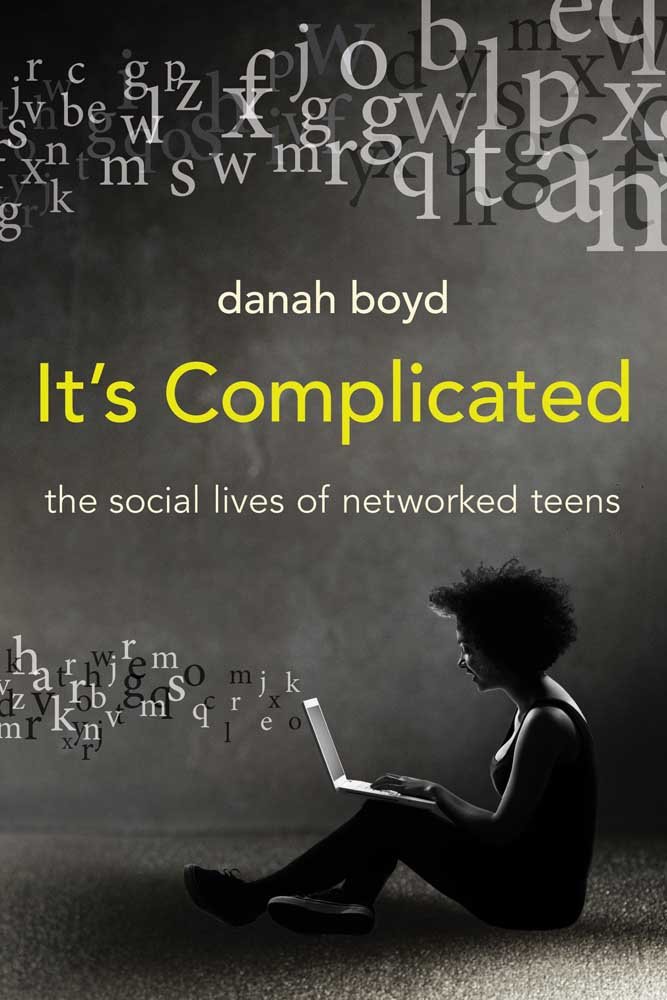
“boyd’s new book is layered and smart . . . It’s Complicated will update your mind.”—Alissa Quart, New York Times Book Review “A fascinating, well-researched and (mostly) reassuring look at how today's tech-savvy teenagers are using social media.”— People “The briefest possible summary? The kids are all right, but society isn’t.”—Andrew Leonard, Salon What is new about how teenagers communicate through services such as Facebook, Twitter, and Instagram? Do social media affect the quality of teens’ lives? In this eye-opening book, youth culture and technology expert danah boyd uncovers some of the major myths regarding teens' use of social media. She explores tropes about identity, privacy, safety, danger, and bullying. Ultimately, boyd argues that society fails young people when paternalism and protectionism hinder teenagers’ ability to become informed, thoughtful, and engaged citizens through their online interactions. Yet despite an environment of rampant fear-mongering, boyd finds that teens often find ways to engage and to develop a sense of identity. Boyd’s conclusions are essential reading not only for parents, teachers, and others who work with teens but also for anyone interested in the impact of emerging technologies on society, culture, and commerce in years to come. Offering insights gleaned from more than a decade of original fieldwork interviewing teenagers across the United States, boyd concludes reassuringly that the kids are all right. At the same time, she acknowledges that coming to terms with life in a networked era is not easy or obvious. In a technologically mediated world, life is bound to be complicated. “danah boyd . . . is one of my favorite people to talk with about teenagers and technology. That’s not because I agree with her all the time. . . . But danah is the best kind of sparring partner because she always tells me something I didn’t know along the way. That holds true with her new book, which offers interviews with teenagers in communities across the country. By filtering them through her distinct danah lens, she gleans valuable insights.”—Emily Bazelon, Slate “boyd’s new book is layered and smart. . . . It’s Complicated will update your mind.”—Alissa Quart, New York Times Book Review “There is something marvellously sensible about Boyd’s resolutely academic style. . . . boyd’s anatomy of teenage life is penetrating.”—Jane Shilling, Sunday Telegraph “The key point is that social behaviour is adaptive, and people in power (i.e., parents) rarely understand the coping strategies being used by others. When adults start worrying about our children’s use of the internet, we should also ask what we can learn from our children—and then look in the mirror at our own behaviour too. And have the courage to give kids more freedom physically to roam in the ‘real’ world—alongside their travels in cyberspace.”—Gillian Tett, Financial Times “The book took a decade to complete, and cites sociologists including Michel Foucault and Erving Goffman, but it’s the voices of the 166 teenagers boyd interviewed across America that make it a truly enlightening read.”—Jane Mulkerrins, Sunday Telegraph “Based on a decade of research and interviews with adolescents from the suburbs to the inner city, It’s Complicated is a persuasive anti-alarmist polemic that should help ease parents’ concerns about all sorts of Internet bogeymen.”—Randye Hoder, TIME Health & Family “ It’s Complicated is both a report from the front lines and a larger social analysis. . . . It probes much deeper than just the latest fads in Twitter gossip or Snapchat goofiness. . . . On one level it is designed to counter the paranoia and anxiety that many parents still feel about their children’s engagement in social media. . . . But on another level it is a poignant critique of contemporary civilization. . . . The briefest possible summary? The kids are all right, but society isn’t.”—Andrew Leonard, Salon “ It’s Complicated , a new book about teenagers and digital technology by the media scholar danah boyd, places today’s smartphones, iPads and laptops in the context of this perennial power struggle between adolescents and parents. In doing so, it adds much to our understanding of a young generation of hyper-connected, hybrid consumer-producers—a cohort whose behaviour often unites parents, educators and investors in collective bewilderment.”—Gautam Malkani, Financial Times “Students, parents, and educators will find this a comprehensive study of how technology impacts teens’ lives and how adults can help balance rather than vilify its inevitable use.”— Publishers Weekly “An exhaustively researched study of how teens use technology . . . and a manifesto on how parents as individuals and society as a whole let young people down when they insist on protection and paternalism over media literacy and critical thinking. Even readers who are not parents, or teens, may well find this one of th