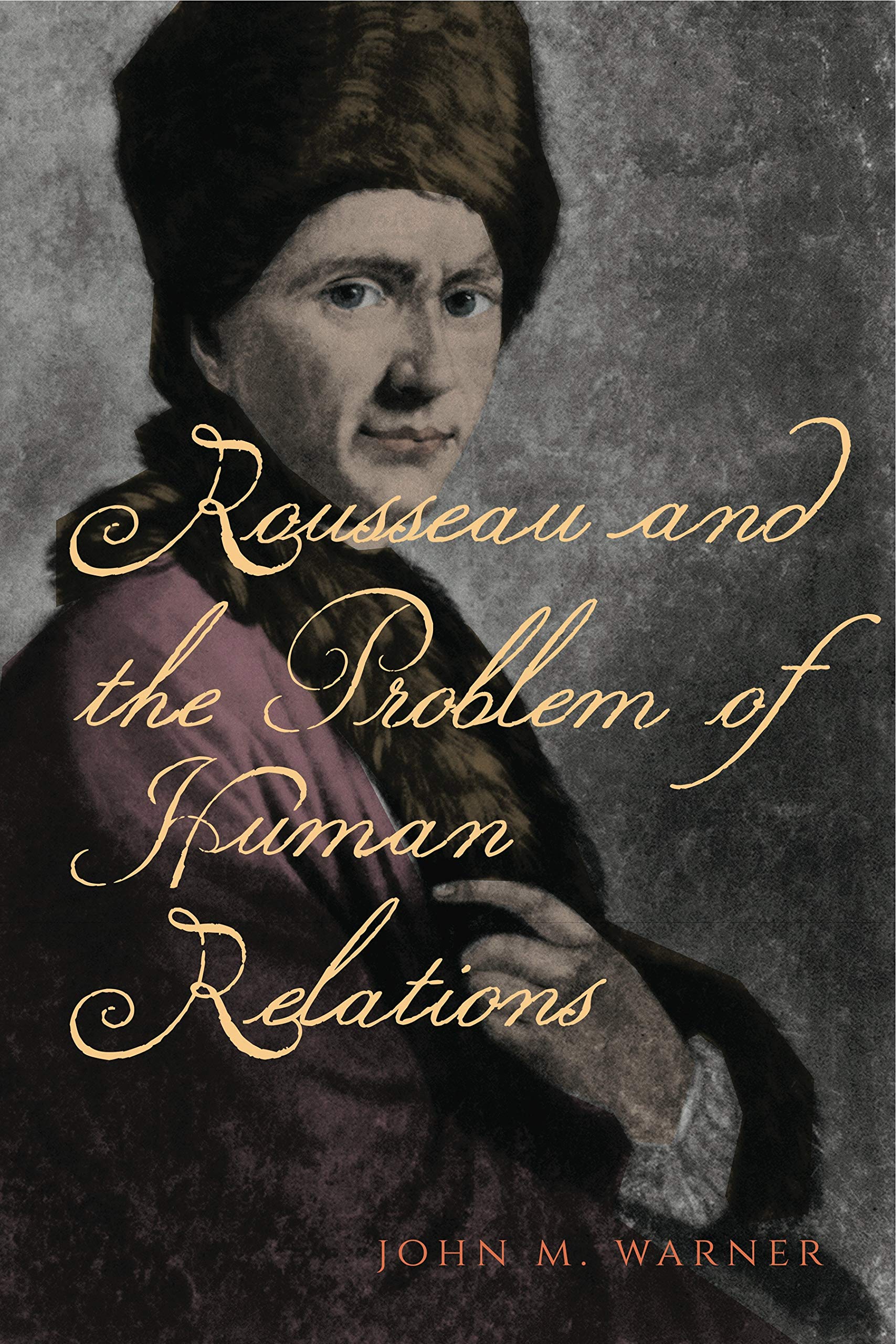
In this volume, John Warner grapples with one of Jean-Jacques Rousseau’s chief preoccupations: the problem of self-interest implicit in all social relationships. Not only did Rousseau never solve this problem, Warner argues, but he also believed it was fundamentally unsolvable―that social relationships could never restore wholeness to a self-interested human being. This engaging study is founded on two basic but important questions: what do we want out of human relationships, and are we able to achieve what we are after? Warner traces his answers through the contours of Rousseau’s thought on three distinct types of relationships―sexual love, friendship, and civil or political association―as well as alternate interpretations of Rousseau, such as that of the neo-Kantian Rawlsian school. The result is an insightful exploration of the way Rousseau inspires readers to imbue social relations with purpose and meaning, only to show the impossibility of reaching wholeness through such relationships. While Rousseau may raise our hopes only to dash them, Rousseau and the Problem of Human Relations demonstrates that his ambitious failure offers unexpected insight into the human condition and into the limits of Rousseau’s critical act. “John Warner is among the few scholars to have carefully analyzed Rousseau's understanding of human relationships, and in Rousseau and the Problem of Human Relations he has done so with great sensitivity and keen intelligence. Warner reveals with admirable clarity how Rousseau both inspires his readers to long for wholeness in harmonious relationships with others but also intimates the tragic impossibility of ever truly satisfying such longings.” ―Joseph Reisert, Colby College “This well-written, well-researched book represents an interpretation of Rousseau’s oeuvre from the standpoint of the longing for ‘wholeness,’ or unity, in the asocial human species, rather than primarily freedom, or moral autonomy, for example. . . . The best parts of the book are the author’s engagement with other interpretations of Rousseau, especially the judicious discussion of the problems with the neo-Kantian–Rawlsian school of Rousseau criticism.” ―W. J. Coats Choice “Warner’s book offers a lucid and intelligent interpretation of Rousseau that understands the challenge of human relations not as a problem to be solved but rather as a fundamental, insoluble condition to be lived with and within. Warner successfully resists the twin poles of the radically individualist and radically collectivist interpretations of Rousseau by emphasizing the dynamic, irreducible tension at the heart of Rousseau’s project. This book makes a significant contribution to our understanding of that tension and its role in Rousseau’s different models of human association.” ―Denise Schaeffer The Review of Politics John M. Warner is Assistant Professor of Political Science at Kansas State University.