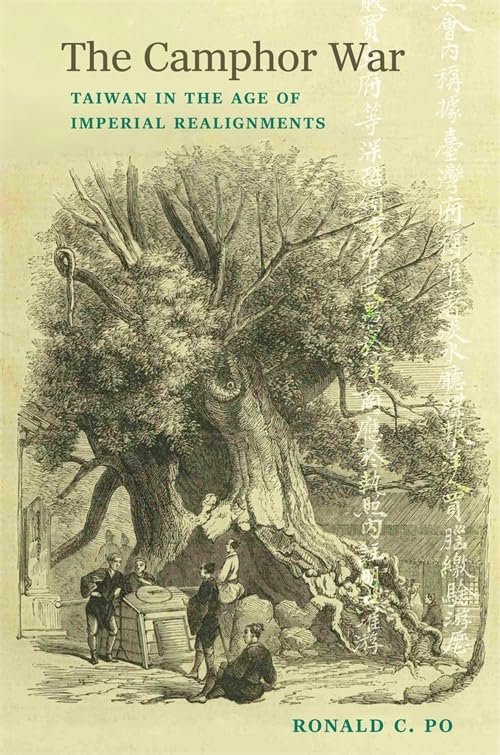
The First Opium War is remembered as the defining conflict between Britain and China in the nineteenth century. In stark contrast, the Camphor War of 1868 has faded into obscurity. Lasting for only a few weeks, the clash arose from British interests in breaking the Qing monopoly over the lucrative trade in camphor, which was cultivated in Taiwan and widely used for medicinal purposes. Despite its small scale, the war brought to light shifting dynamics in China and Taiwan’s engagement with the world. Examining this little-known conflict, Ronald C. Po shows how the Qing and British empires evolved during a period of imperial reconfigurations and border realignments. The Qing adopted more active approaches to controlling their frontiers, regulating trade, and responding to foreign aggression. Situating the war in the early decades of the Self-Strengthening Movement, Po demonstrates how the Qing state reshaped Taiwan from a frontier into a political landscape of negotiation, as well as how camphor became both an object of intense commercial interest and a means for power contests. By centering on this seemingly peripheral war, the book shifts focus from grand confrontations to the subtler mechanisms through which empires adjusted, faltered, and realigned. Synthesizing maritime, commodity, environmental, and imperial history, The Camphor War complicates static notions of empire and reveals Taiwan’s importance in nineteenth-century East Asia. "This is a brilliantly researched study of camphor as a commodity in the world of trade, conflict and diplomacy. By probing many more layers of external challenges and opportunities, it enriches our understanding of commodity economies in the age of imperialism." -- Wang Gungwu, National University of Singapore "Focusing on an international conflict long overshadowed by the Opium Wars, Po deftly challenges the common understanding of imperial encounters as battles for supremacy between rival powers, and weaves instead a complex narrative of the negotiations, adaptations, and even constraint that shaped these contests – and hence provides a lesson for our times." -- Emma J. Teng, author of Taiwan’s Imagined Geography: Chinese Colonial Travel Writing and Pictures, 1683–1895 Ronald C. Po is an associate professor in the Department of International History at the London School of Economics and Political Science. He is the author of The Blue Frontier: Maritime Vision and Power in the Qing Empire (2018), Shaping the Blue Dragon: Maritime China in the Ming and Qing Dynasties (2024), and The Silver Thread of the Deep: A Cultural History of Shark Fin in China and Beyond (2026).