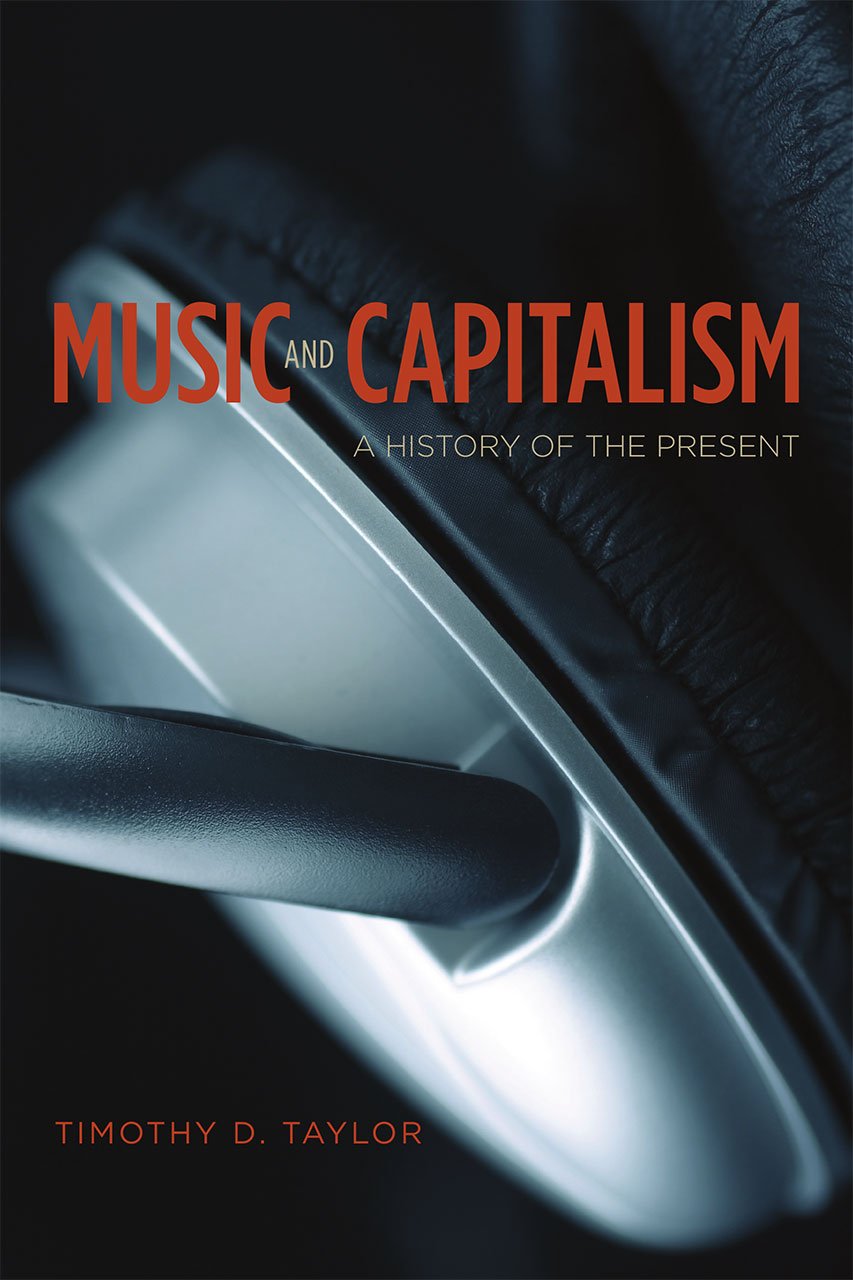
iTunes. Spotify. Pandora. With these brief words one can map the landscape of music today, but these aren’t musicians, songs, or anything else actually musical—they are products and brands. In this book, Timothy D. Taylor explores just how pervasively capitalism has shaped music over the last few decades. Examining changes in the production, distribution, and consumption of music, he offers an incisive critique of the music industry’s shift in focus from creativity to profits, as well as stories of those who are laboring to find and make musical meaning in the shadows of the mainstream cultural industries. Taylor explores everything from the branding of musicians to the globalization of music to the emergence of digital technologies in music production and consumption. Drawing on interviews with industry insiders, musicians, and indie label workers, he traces both the constricting forces of bottom-line economics and the revolutionary emergence of the affordable home studio, the global internet, and the mp3 that have shaped music in different ways. A sophisticated analysis of how music is made, repurposed, advertised, sold, pirated, and consumed, Music and Capitalism is a must read for anyone who cares about what they are listening to, how, and why. "Art, of course, has always to some extent been bought and sold. Even so, as Taylor masterfully argues, the rise of neoliberal capitalism has effected a transformation by which many musics are made as 'cultural commodities,' created for and defined by their role in exchange. Music and Capitalism presents a wide-ranging history and ethnography of this shift. . . . Analysis such as Taylor’s is essential in helping us understand and internalize how capitalism and technology drive the shift—that is, how market forces make music." ― Ethnomusicology “Using a historically informed approach grounded in Marx, Weber and Bourdieu, Taylor’s book is wide ranging but focused, nuanced and clearly articulated.” ― Ethnomusicology Forum “This book addresses a fundamental question: how have changes in capitalism impacted the production and consumption of music? In the first chapter, Taylor (UCLA) offers a brief history of music and capitalism, and in the chapters that follow, he looks at neoliberalism and the cultural industries, globalization, digitalization, and neoliberal capitalism. . . . In contrast to many social scientists who critique present-day society, Taylor is mildly optimistic: he concludes that humans have the potential for better lives. Of interest to those in the culture industries. . . . Recommended.” ― Choice “Taylor convincingly argues we can’t properly look at music in a vacuum that doesn’t consider economics, and provides a framework for understanding the big pictures and unseen hands driving the industry and the people who work within it.” ― PopMatters “First-hand accounts from Taylor’s interviews tie together the wide-ranging topics throughout, revealing how each individual or organization negotiates their own position in the economy and builds their own identity in the cultural value system of the music business. . . . Music And Capitalism builds on the argument put forward by Jacques Attali in Noise: The Political Economy Of Music that capitalism both shapes and is shaped by culture. This approach necessarily invokes systems of value other than the monetary—brand value, edginess, tastemaking, and the construction of identity through conspicuous consumption are discussed. Yet in Taylor’s view of capitalism as a cultural force, it becomes increasingly difficult to distinguish between aesthetic judgments and marketing decisions.” ― The Wire “Comprehensively researched and presented with numerous historical and ethnographic examples, Music and Capitalism is a major landmark in music studies and research on capitalism. Critical, insightful, and erudite, Taylor addresses the production and consumption of music in a work that deeply reveals the social organization of capitalism and its profound impact on music.” -- Jocelyne Guilbault, author of Governing Sound Timothy D. Taylor is professor in the Department of Ethnomusicology at the University of California, Los Angeles. He is the author of several books, most recently The Sounds of Capitalism , also published by the University of Chicago Press.