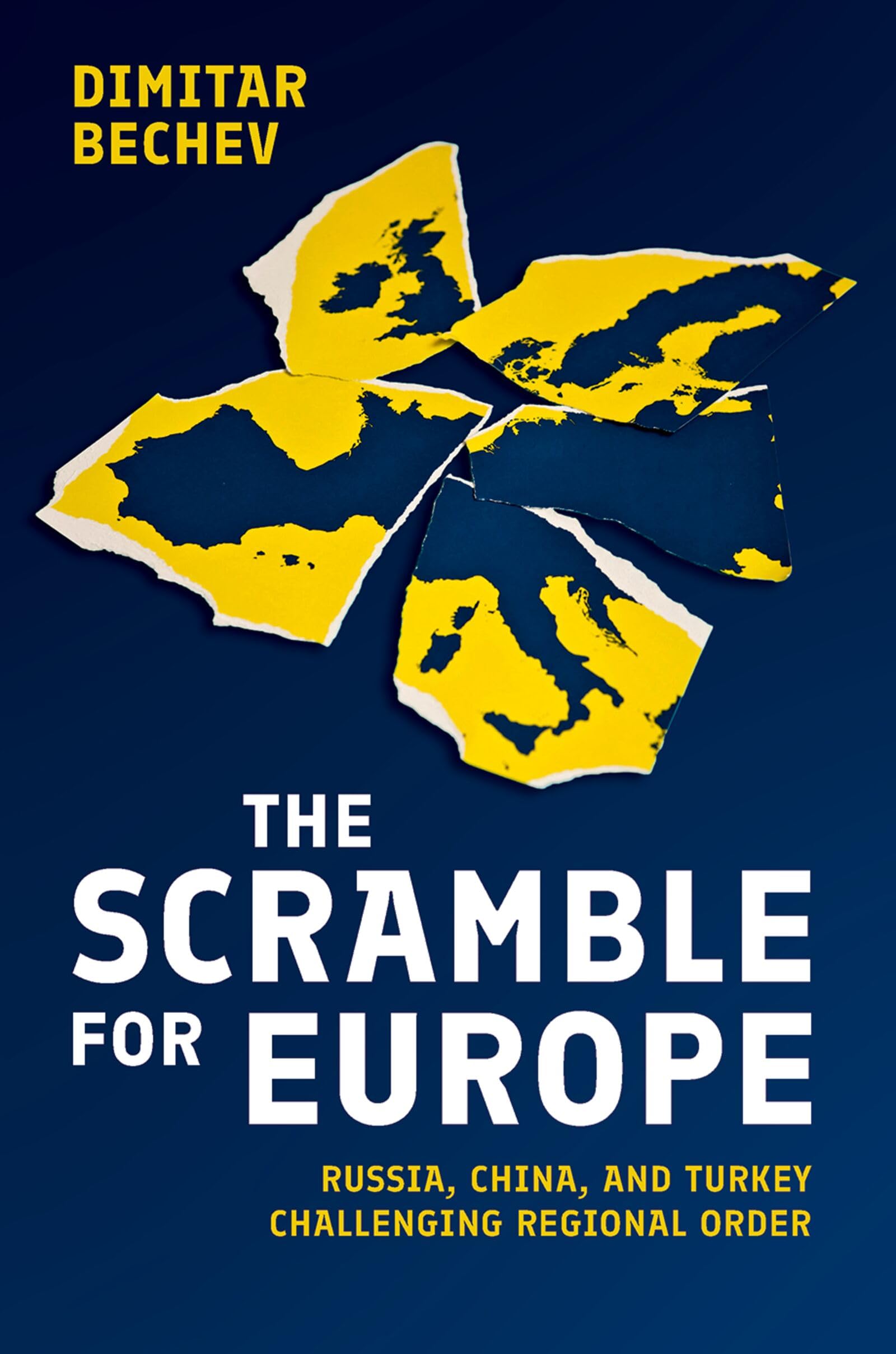
Europe used to be an agenda-setter at the global level but is now on the backfoot, facing rising populism internally as well as pressures from Russia, China, Turkey, and the U.S. that are undermining the European Union's cohesion and international influence. In The Scramble for Europe , Dimitar Bechev traces the consolidation and, starting from the late 2000s, the subsequent crisis of the European regional order anchored in the EU. He argues that authoritarian powers are posing a direct challenge to the latter as they seek to remake Europe in their image. At the same time, their objectives differ. The Ukraine invasion put on display Russia's radical revisionist agenda. By contrast, China aims to co-opt a diminished Europe, largely through economic means, in a future world order that it dominates. Erdogan's Turkey wants to strike a deal where it is recognized as a top-tier stakeholder in Europe, as opposed to an eternal candidate for EU membership. Bechev folds all of these trends into an expansive account of the current regional order's transition, recasting our understanding of the current crises and revealing how external challenges to the EU and NATO will shape Europe's trajectory in the years to come. "How are Russia, China, and Turkey reshaping the European order? The Scramble for Europe advances a compelling account of the ensuing disruption. This powerfully-argued and readable account explores how each challenger is driven by distinct historical legacies, domestic vulnerabilities, and regional ambitions. Coming at an urgent moment, it is an indispensable resource for policymakers and engaged citizens grappling with how to sustain Europe's power and promise in the fraught years and decades to come." --Tino Cuéllar, President, Carnegie Endowment for International Peace "The relationship between Europe and the wider world is now one of the most crucial that the continent faces. Dimitar Bechev brings deep and complex historical perspective and knowledge to the most pressing problems facing Europe today. This book is compelling reading for anyone who cares about how Europe's interaction with Asia has shaped its past, and why it is crucial for the future." --Rana Mitter, ST Lee Chair in US-Asia Relations, Harvard Kennedy School Dimitar Bechev is the Director of the Dahrendorf Programme at the European Studies Centre at St Antony's College, Oxford University. He is also a Senior Fellow at Carnegie Europe and has previously held positions at the University of North Carolina at Chapel Hill, the European Council on Foreign Relations and Hitotsubashi University in Tokyo as well as visiting fellowships at Harvard and the London School of Economics. He has written prolifically on the international politics of Europe, EU enlargement, and Russia and Turkey, including seven monographs and edited volumes. He holds a DPhil (PhD) from the University of Oxford.