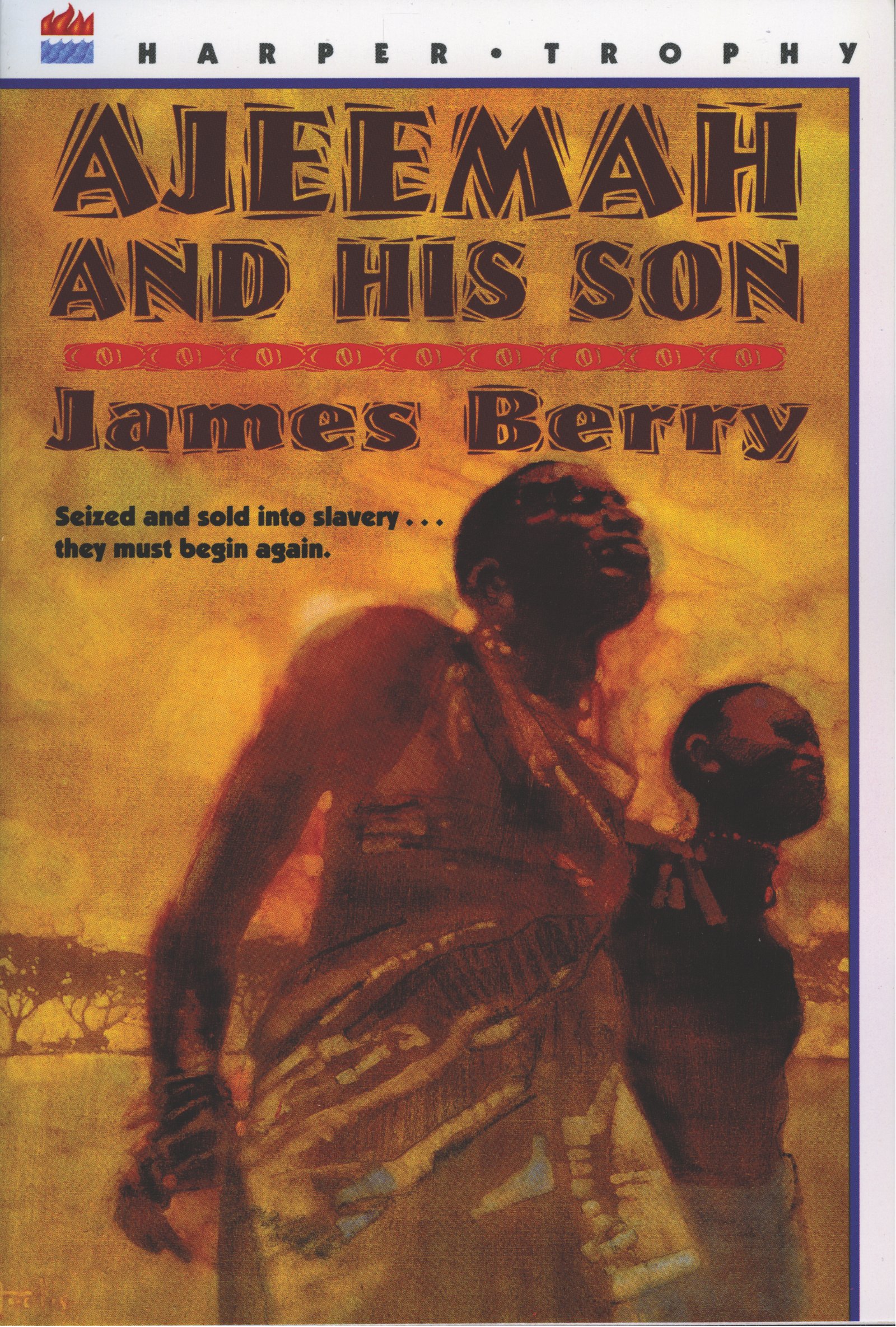
In 1807, at the height of the slave trade, Ajeemah and his son, Atu, are snatched by slave traders from their home in Africa while en route to deliver a dowry to Atu's bride-to-be. Ajeemah and Atu are then taken to Jamaica and sold to neighboring plantations'never to see one another again. "Readers will come away with a new sense of respect for those who maintained their dignity and humanity under the cruelest of circumstances."'SLJ. "Each moment here of the Jamaican-born poet's terse, melodious narrative is laden with emotion. . . . Brilliant, complex, powerfully written."––K. Notable Children's Book of 1993 (ALA) 1993 Best Books for Young Adults (ALA) 1993 Fanfare Honor List (The Horn Book) 1992 Books for Youth Editors' Choices (BL) Notable 1992 Children's Trade Books in Social Studies (NCSS/CBC) Bulletin Blue Ribbons 1992 (C) 1993 Books for the Teen Age (NY Public Library) Children's Books of 1992 (Library of Congress) 1993 Boston Globe-Horn Book Fiction Award "Each moment here of the Jamaican-born poet's terse, melodious narrative is laden with emotion. . . . Brilliant, complex, powerfully written."--" The Kirkus Reviews In 1807, at the height of the slave trade, Ajeemah and his son, Atu, are snatched by slave traders from their home in Africa while en route to deliver a dowry to Atu's bride-to-be. Ajeemah and Atu are then taken to Jamaica and sold to neighboring plantations'never to see one another again. "Readers will come away with a new sense of respect for those who maintained their dignity and humanity under the cruelest of circumstances."'SLJ. "Each moment here of the Jamaican-born poet's terse, melodious narrative is laden with emotion. . . . Brilliant, complex, powerfully written."––K. Notable Children's Book of 1993 (ALA) 1993 Best Books for Young Adults (ALA) 1993 Fanfare Honor List (The Horn Book) 1992 Books for Youth Editors' Choices (BL) Notable 1992 Children's Trade Books in Social Studies (NCSS/CBC) Bulletin Blue Ribbons 1992 (C) 1993 Books for the Teen Age (NY Public Library) Children's Books of 1992 (Library of Congress) 1993 Boston Globe-Horn Book Fiction Award James Berry has received the Order of the British Empire for his contribution to poetry and the Signal Poetry Award for his children's poetry. His previous poetry collections, When I Dance and Everywhere Faces Everywhere, were published to rave reviews in the United States. His many awards and honors include the 1993 Boston Globe-Horn Book Award for Fiction for his novel Ajeemah and His Son and a 1989 Coretta Scott King Honor for his collection of short stories A Thief in the Village and Other Stories of Jamaica. James Berry was born and raised in Jamaica and now lives in Brighton, England. Ajeemah and His Son By James Berry HarperCollins Publishers, Inc. Copyright © 2006 James Berry All right reserved. ISBN: 0064405230 Chapter One That wiping out of Atu and Sisi's wedding was always going to be one of the painful happenings. It was the year 1807. The Slave Trade was on. By way of that trade, with all its distress, Africans were becoming Caribbean people and Americans. But the sale of Africans as slaves would end. In just another year or so a new British law would stop the British slave trade, and the Americans would soon follow. It would stop Africans being sold to be slaves on plantations in America and the Caribbean. It was only the importing that would end, not slavery itself, nor the selling of slaves by their existing owners. Stopping the importing was a beginning, and a very welcome start to the end of slavery altogether. Yet even that beginning stirred up wild rage, resistance and awful reactions. The new law soon to be enforced made people who benefited from the trade all angry, anxious and bitter. The new law made plantation owners cry out. It made them furious at the idea of an end to their regular supply of a free labor force. It caused panic among the ship-owning slave traders and the local African dealers. All ground their teeth in fury and rage at the coming end of their money-making from selling slaves. And the slave traders became determined to work with new vigor. They became determined to beat that end-of-slave-trade deadline, when no more slaves could be shipped; they would get and supply as many more slaves as they could in the short time left. Remember here too that young people and children came into the slave treatment all the time. They too had to endure a life of no freedom for their parents and for themselves. All was personal for them. The teenage couple Atu and Sisi came into it. They were going to have to face their wedding plans ruined -- gone, wiped away as dust. Truly, European slave buyers would buy. Truly, African traders would obtain their prisoners for sale into slavery. They would find them, even if they had to make their own riots and wars to get prisoners to sell. The slave-trader groups geared and equipped themselves. Their surprise attacks became mo